
What Type of Water Damage Needs Immediate Attention
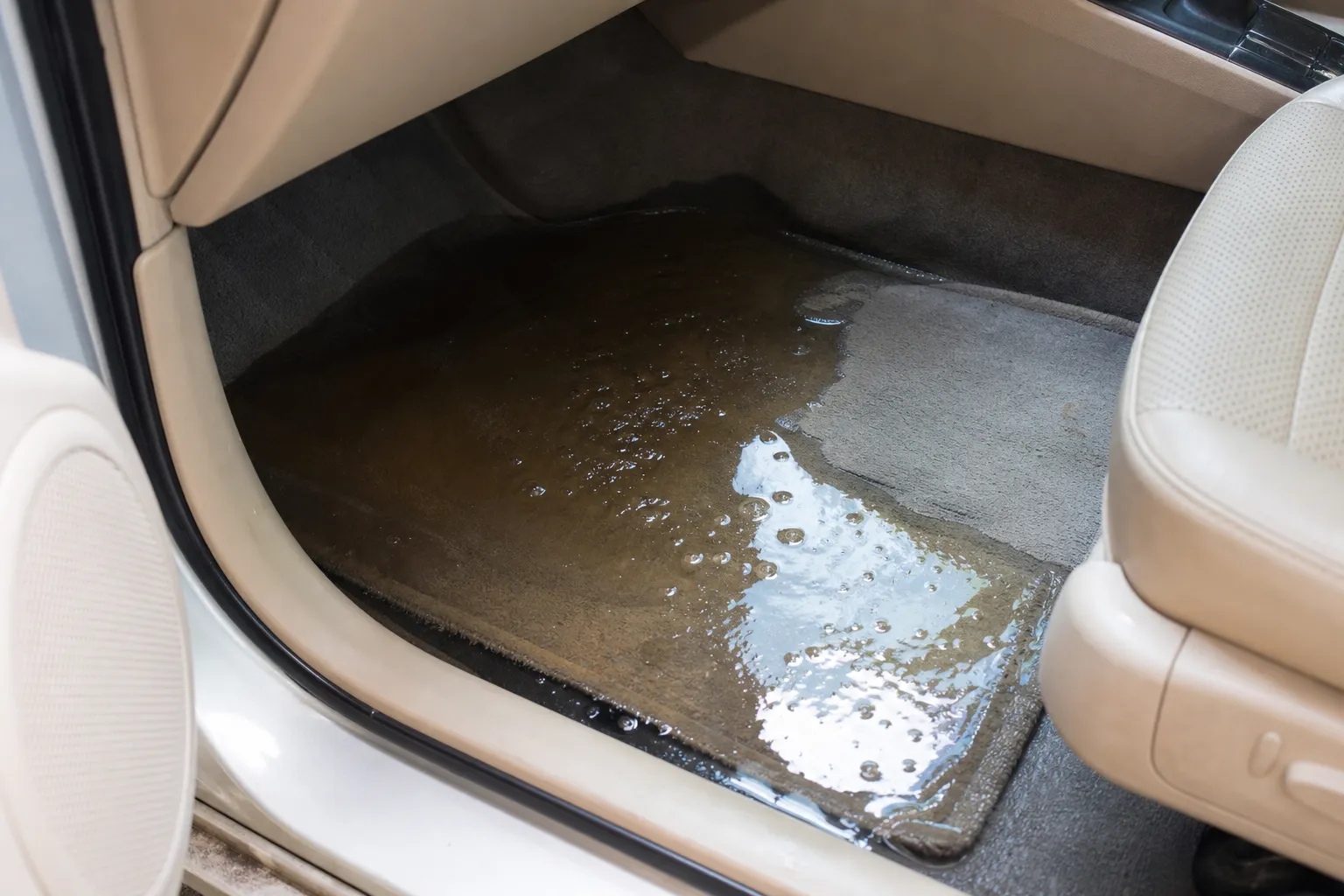
There are two common ways water gets into a car. The first is when it rains and you forget to close a window — water gets onto the seat or the carpet by the door, but not a huge amount. If you act fast and blot it out right away, you can usually handle this one yourself. The second type is when floodwater rises under the car and seeps into the cabin, soaking the entire floor carpet. Sometimes the water sits trapped under the foam padding beneath the carpet while the surface still looks dry.
The danger with the second case is that moisture hides deep inside. If you press your hand onto the carpet and it feels unusually soft or a little water seeps up, that means the foam padding underneath has already absorbed a full load of water. Leave it for more than 24–48 hours and the musty smell will start setting in. Go past 72 hours and the chances of mold growing are very high.
Equipment You Need Before You Start
Get everything ready before you begin — there's nothing worse than stopping halfway through because you're missing something. Here's what you'll need:
- Four or five microfibre cloths or old towels
- A wet and dry vacuum — if you don't have one, a sponge to press the water out will do in a pinch
- A table fan or a heat blower (a hair dryer with a narrow nozzle attachment works even better)
- An enzymatic odor eliminator or diluted white vinegar (1 part vinegar to 3 parts water)
- One box of baking soda
How to Blot and Vacuum Water Out of Car Carpet
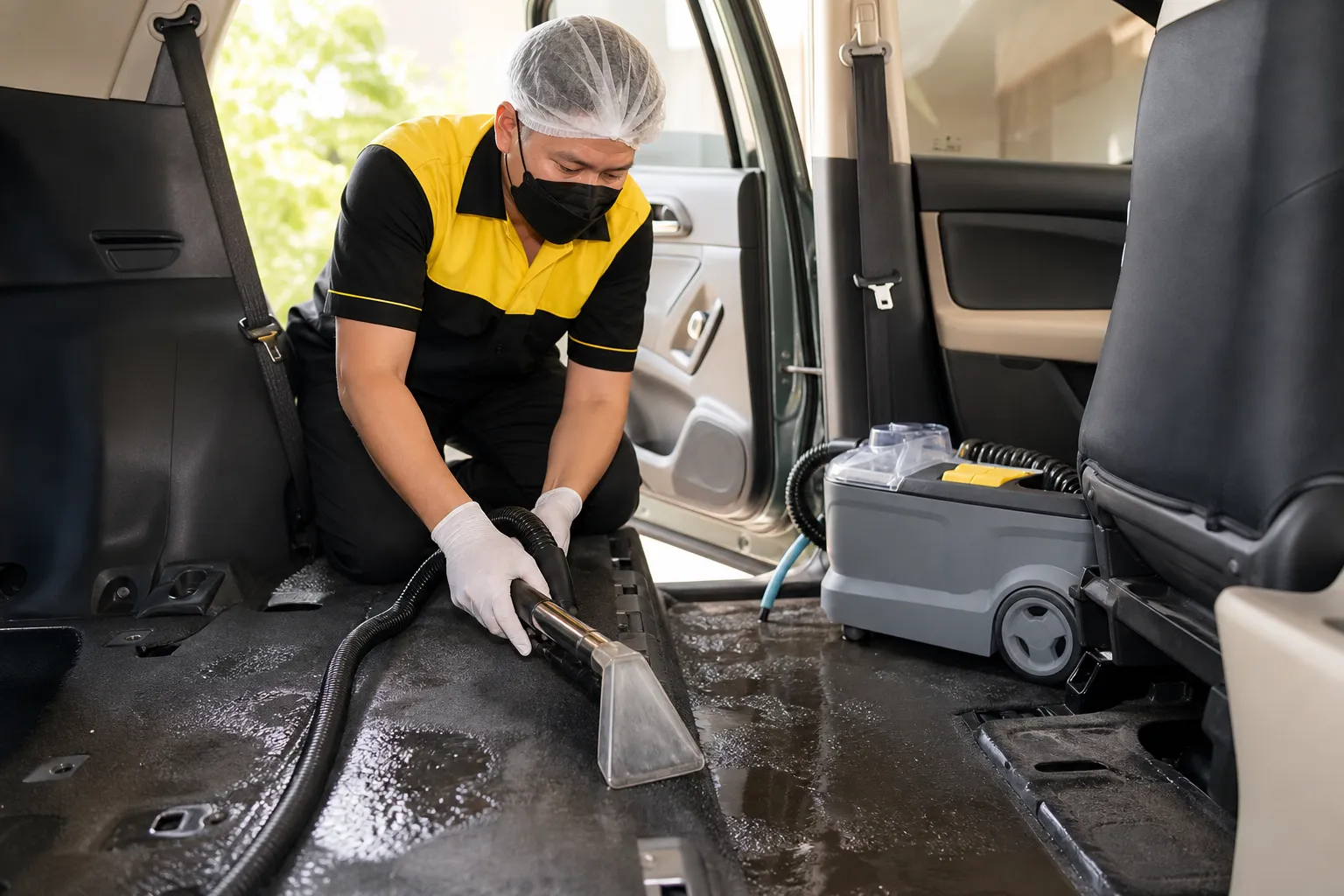
The first step is getting as much water out as possible. Don't spray any product or do anything else yet — that will only add more moisture. If you have a wet vacuum, run it slowly over the wet area, pressing the head firmly against the carpet and moving forward at a slow pace. Go over the same area 2–3 times.
If you don't have a wet vacuum, lay a towel flat on the wet area and press down firmly with your knee, holding for about 30 seconds per spot. The towel will draw the water up. Swap to a dry towel and repeat until the towel barely picks up any more moisture. Do not scrub or rub the carpet at this stage — that will push the water deeper into the padding.
If the carpet is a removable piece, take it out and lean it against a wall or hang it so the water can drain out on its own. Then vacuum up any water left on the floor underneath, because the foam padding on the car floor can hold a surprising amount of water without you realizing it.
Dry It Properly — Opening a Window Isn't Enough
A lot of people think leaving the car doors open in the sun is enough. But if the air is humid or the sky is overcast, the outside temperature won't be enough to pull moisture out of the foam padding in time. What actually works is keeping air moving continuously.
Point a fan directly into the car, and open a door or window on the opposite side so the air has somewhere to exit. Two fans are even better — one blowing in, one drawing air out. Keep this going for at least 4–6 hours, and if possible leave it running overnight. A hair dryer works fine for small spots like edge seams or door corners, but keep the nozzle at least 15–20 centimetres away from the carpet or you risk fading the colour or warping the foam underneath.
Eliminating the Musty Smell After the Carpet Dries
If you acted within 24 hours and the carpet is fully dry, there may be no smell at all. But if it sat wet for longer than that, the musty odour usually comes from mold and bacteria that have taken hold in the carpet and foam padding. You need to treat the source — not just spray air freshener over the top.
The DIY approach is to sprinkle baking soda over the entire carpet, leave it for 30–60 minutes, then vacuum it up. Baking soda will absorb a reasonable amount of odour. If the smell is still there, try spraying diluted white vinegar (1:3) lightly over the area and then dry it immediately with a fan. Don't let the carpet get soaking wet again.
An enzymatic cleaner, which you can find at pet shops or online, will work better. The enzymes in the product break down the bacterial proteins that are causing the smell directly. Spray it on, leave it for 10–15 minutes, and let it air-dry on its own. No need to wipe it off.
Should You Clean the Car Seats at the Same Time?
If the water that got in was clean rainwater, seats that weren't directly soaked may not need cleaning. But if the water was floodwater with sediment and odour, if the seats have already started to smell, or if they got splashed and are noticeably wet, cleaning the car seats at the same time as dealing with the carpet is much more worthwhile — you get it all done in one go and don't have to pull the car apart twice.
For fabric seats that took on a lot of water or already smell, doing it yourself won't go deep enough. Household products generally only clean the surface layer, not the foam cushion inside. A technician with a steam machine or a high-pressure water extractor can pull dirt out from deep inside and dry it much faster, which significantly reduces the risk of mold growing in the seat.
| Situation | Can You DIY? | Recommendation |
|---|---|---|
| A small amount of rainwater splashed in | Yes | Blot it, dry it, sprinkle baking soda |
| Carpet soaked through completely | Difficult | Remove the carpet, dry for 1–2 days, consider calling a technician |
| Floodwater with seats affected too | Not recommended | Call a technician to clean seats and carpet together |
| Musty smell already present for more than 3 days | Partially | Enzymatic cleaner, then call a technician if the smell doesn't go away |
When to Call a Technician — No Need to Push Through It Alone
There are clear signs that it's time to pick up the phone. If the carpet is dry but the smell is still there after two or three DIY attempts, if it still feels damp after two days of drying, or if you can see dark or grey spots appearing under the carpet or along the door seals — that's mold. At that point, doing it yourself won't cut it.
Hurryclean technicians deal with this kind of job regularly — car seat cleaning, extracting water from carpets, and eliminating musty odours after flooding. The team uses high-pressure steam machines and professional-grade water extractors that reach all the way down into the floor foam, not just the surface. If you've tried and it's still not fixed, or you want it sorted in a single day, send a message on LINE@hurryclean and let them know the carpet is wet or water got into the car. The technician will assess the job for you at no charge.