
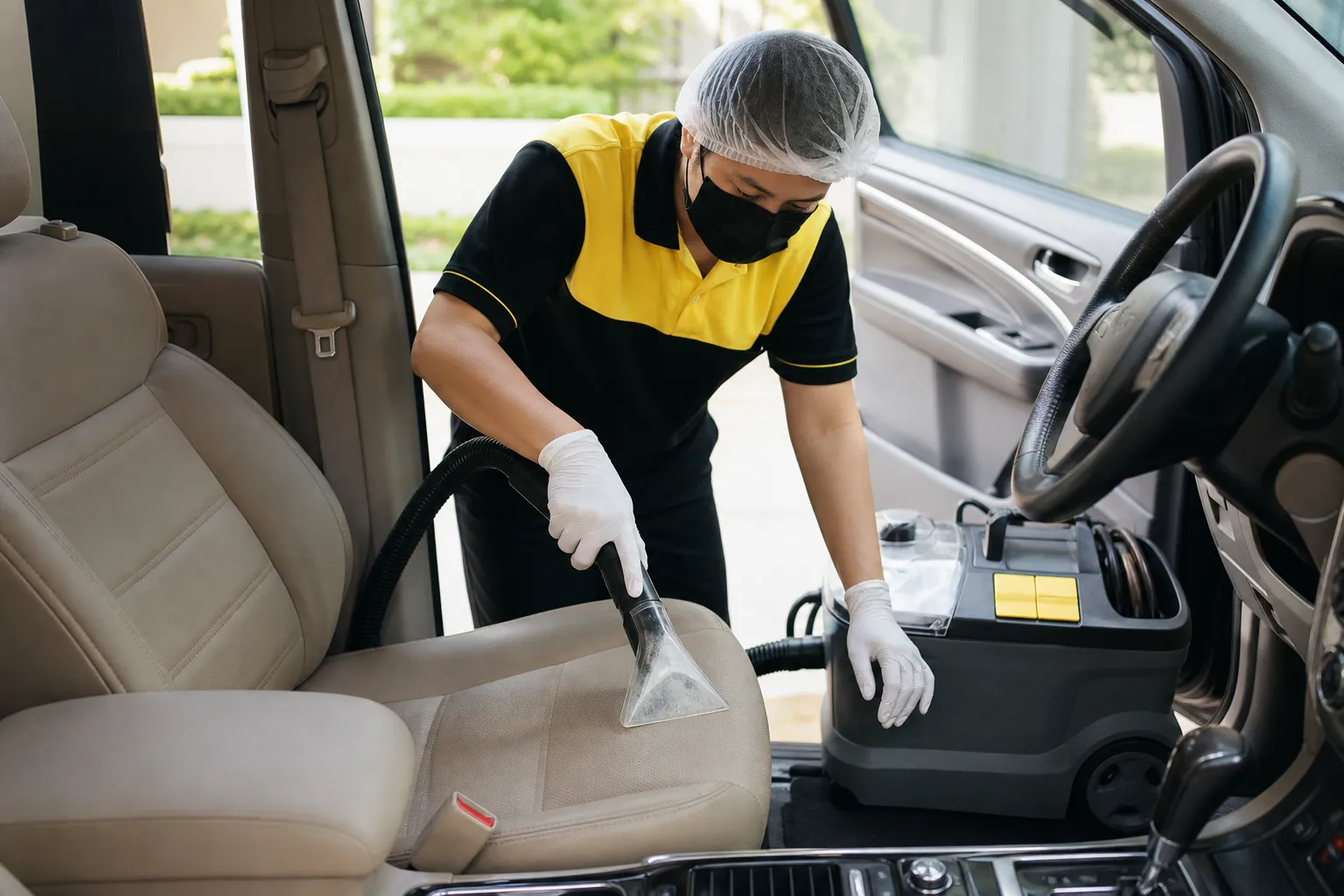
What determines the cost of cleaning car seats?
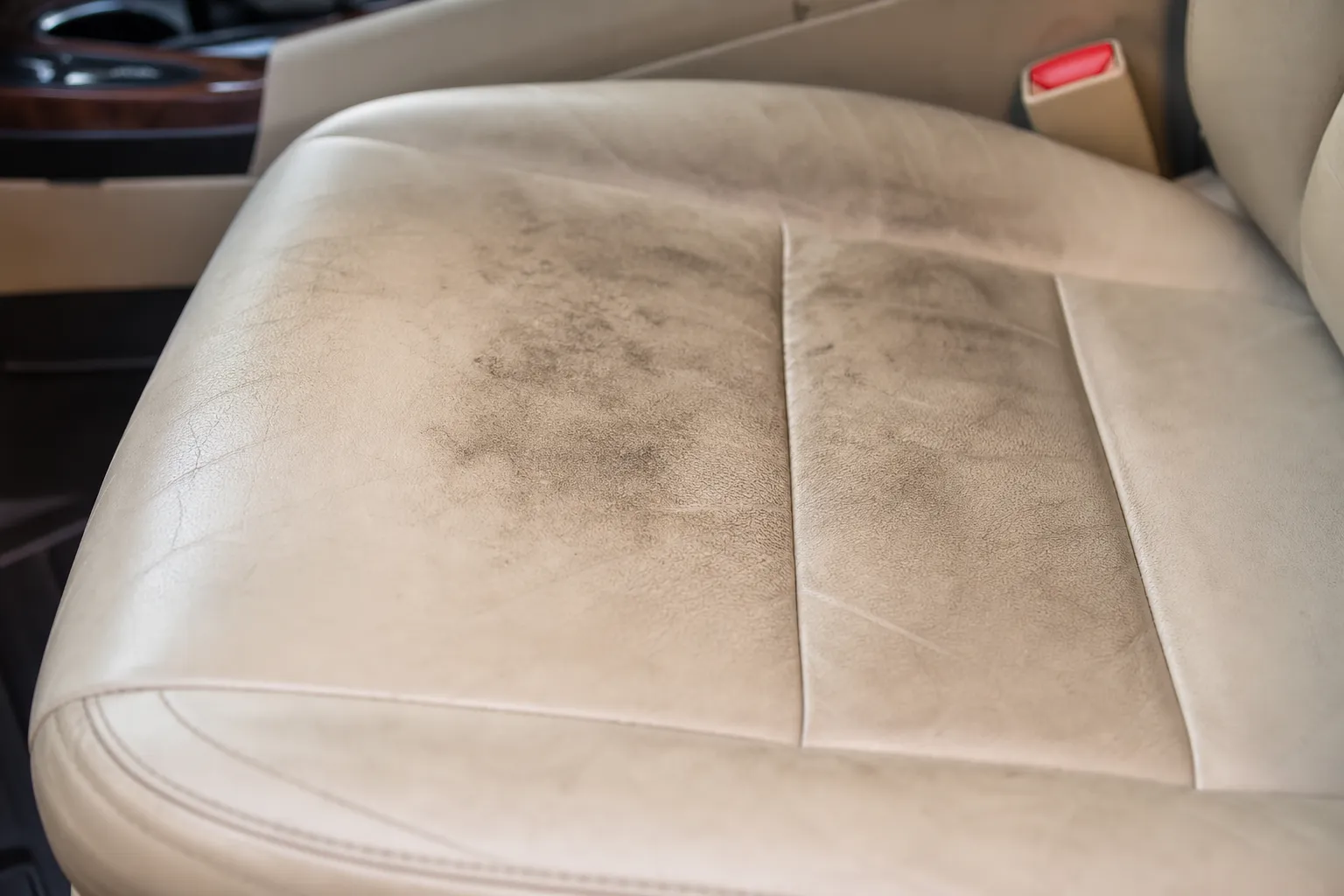
The question is:How much does car seat cleaning cost?The answer is not based on the number of seats alone. From the jobs I handle on-site, even the same vehicle model can receive a different estimate if the stains, materials, or scope of work are different.
There is no single car seat cleaning price that applies to every vehicle. I do not want to give a rough, guessed figure because I need to see whether you want only the seat cushions cleaned or also the backrests, headrests, carpets, and gaps beside the seats. Sending photos of the vehicle and stains makes it easier to agree on the exact scope than asking for one all-inclusive price.
When preparing an estimate, I look at four things together: the vehicle model and structure, the number of seats to be cleaned, the materials involved, and the type of stains. Fresh coffee stains require a different process from yellow sweat rings or cat urine that has soaked into the foam.
How do the vehicle model and number of seats affect the car seat cleaning price?
The vehicle model matters because of its structure more than its badge. Some sedans provide easier access to the seats than SUVs, MPVs, vans, or pickup trucks with second- and third-row seats. Tight spaces and many folding points mean more time is needed to position equipment and extract moisture.
The number of seats should be counted based on the seats the customer actually wants cleaned, not just the seating capacity listed in the brochure. For example, some vehicles need only the two front seats cleaned, while others include the second row, captain’s chairs, and individually removable headrests. The scope of work therefore differs even within the same model.
I will also ask whether the seats fold, whether anything must be removed or moved to reach the rails, and whether there are stains on the carpet beneath the seats or on the door panels. These small details help distinguish seat cleaning from cleaning the entire interior.
If you want a technician to prepare a car seat cleaning estimate quickly, send the following basic information at the same time. This helps reduce several rounds of follow-up questions.
- Vehicle model and year, including whether it is a sedan, SUV, MPV, van, or pickup truck
- Number of rows or seats to be cleaned, such as the two front seats, second row, third row, or captain’s chairs
- The material visible on the seat surface, such as fabric car seats, cotton, linen, velvet, genuine leather, or PU leather
- Wide-angle photos of the cabin and close-ups of the stains, along with whether they are coffee, yellow sweat rings, cat urine, or another type of stain
Close-up stain photos should show the color and the edge of the ring, while wide-angle photos help show how many pieces need to be cleaned. If you have previously sprayed a cleaning product or tried scrubbing the stain yourself, tell the technician as well. Residue from an earlier product can cause patchiness or color loss when the area is treated again.
Each car seat material requires a different cleaning method
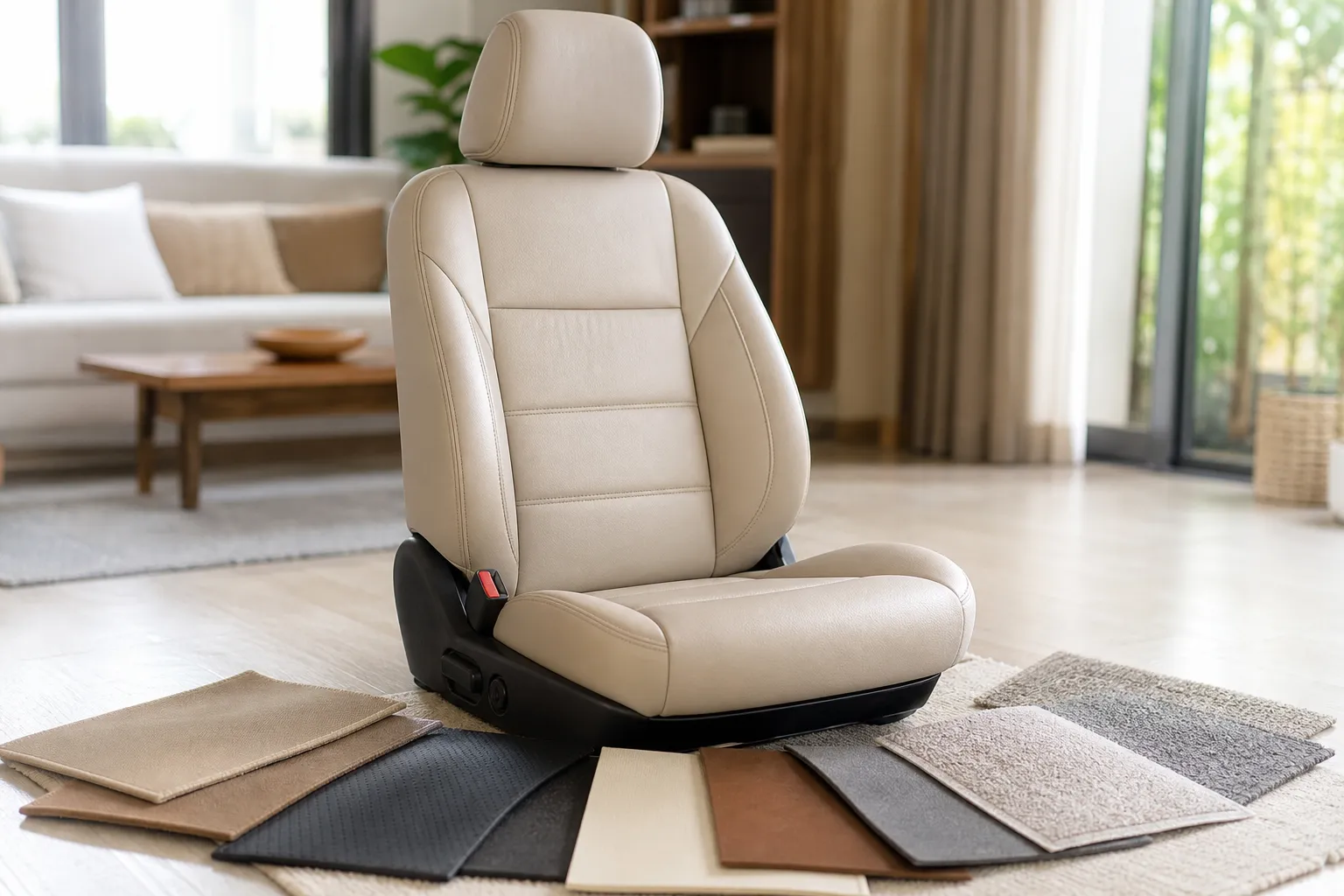
Material is an area where people often use the wrong method. Fabric seats require careful control of water quantity and drying time, while leather seats require care around the coating and seams. Using the same product throughout the vehicle can leave some materials dull or stained.
Fabric car seats, cotton, and linen
Fabric car seats hold dust and drink stains in their fibers. Cotton and linen absorb water easily. I vacuum first, test the color in a hidden area, then apply a fabric-safe product and extract it. I do not spray until the foam is soaked, as this can cause water rings or a musty smell after the vehicle is closed.
Velvet, genuine leather, and PU leather require different methods
Velvet has a clearly visible pile direction. Using a stiff brush or scrubbing one spot aggressively in circles can permanently flatten the pile. I use a soft brush and work with the direction of the pile, while keeping moisture as low as the material can safely tolerate.
Genuine leather should be cleaned with a leather-safe product, and all product residue should be wiped away. PU leather, meanwhile, does not react well to alcohol or strong stain-removing solvents, as its coating may become dull, crack, or peel. Its cleaning method must therefore be different from that used for fabric seats.
Coffee stains, sweat stains, and cat urine do not take the same amount of time to treat
The stain type determines both the process and the risk of the mark returning. A fresh spill is more likely to be blotted out than an old stain that has dried into the fibers. With cat urine, you must consider the smell that has penetrated the foam, rather than wiping only the seat surface.
For coffee stains, use a cloth or paper towel to blot from the edge toward the center. Do not rub in circles and spread the ring. For yellow sweat rings, I apply a targeted product and leave it for 10-15 minutes, then use a soft brush and an extraction machine. Spraying a large amount of water to hide the ring often leaves a patchy edge instead.
Cat urine that has seeped into seams or foam must be reported from the start, as an enzyme-based product approved for that material may be required, along with repeat treatment of the affected area. Never mix bleach with any other product, and do not close the vehicle while the seats are still damp, as the smell will remain in the cabin.
If the stain is still on the seat surface and covers only a small area, try the following steps first, using a product labeled as suitable for the seat material.
- Blot coffee or other liquid immediately with a clean cloth, pressing to absorb it rather than dragging the cloth back and forth.
- Vacuum around the seats, in the seams, and beneath the headrests before applying any product.
- Test the product in a hidden area and wait to confirm that the color does not bleed and the surface does not become patchy.
- Apply only a thin amount, use a soft brush only on fabric seats that can tolerate it, and wait for the time specified on the label.
- Extract as much product and moisture as possible. Open the doors or windows for ventilation until the seats are completely dry before using the vehicle.
If color transfers to the cloth, the stain spreads into a ring, the seat becomes saturated and spongy, or a cat urine smell remains after drying, stop first. Do not add several products, because proper stain treatment must begin with knowing the material and what has already been applied.
Let Hurryclean assess your car seat cleaning needs at home
If you want to know the cleaning price for your actual vehicle, I first need the vehicle model, the number of seats or rows to be cleaned, the material, and photos of the stains. This allows me to distinguish fabric seats, genuine leather, PU leather, and cat urine treatment.
Hurryclean provides at-home car seat cleaning in Bangkok and surrounding provinces. The technician will choose a method based on the material and stain condition, while clearly confirming whether you want only the seats cleaned or also the carpets and other cabin areas.
To request a car seat cleaning estimate, send wide-angle photos, close-up stain photos, the vehicle model, vehicle year, and the number of seats you want cleaned via LINE @hurryclean. If there are coffee stains, yellow sweat rings, or cat urine, mention them in your first message so the technician can recommend a method suited to your seats.