
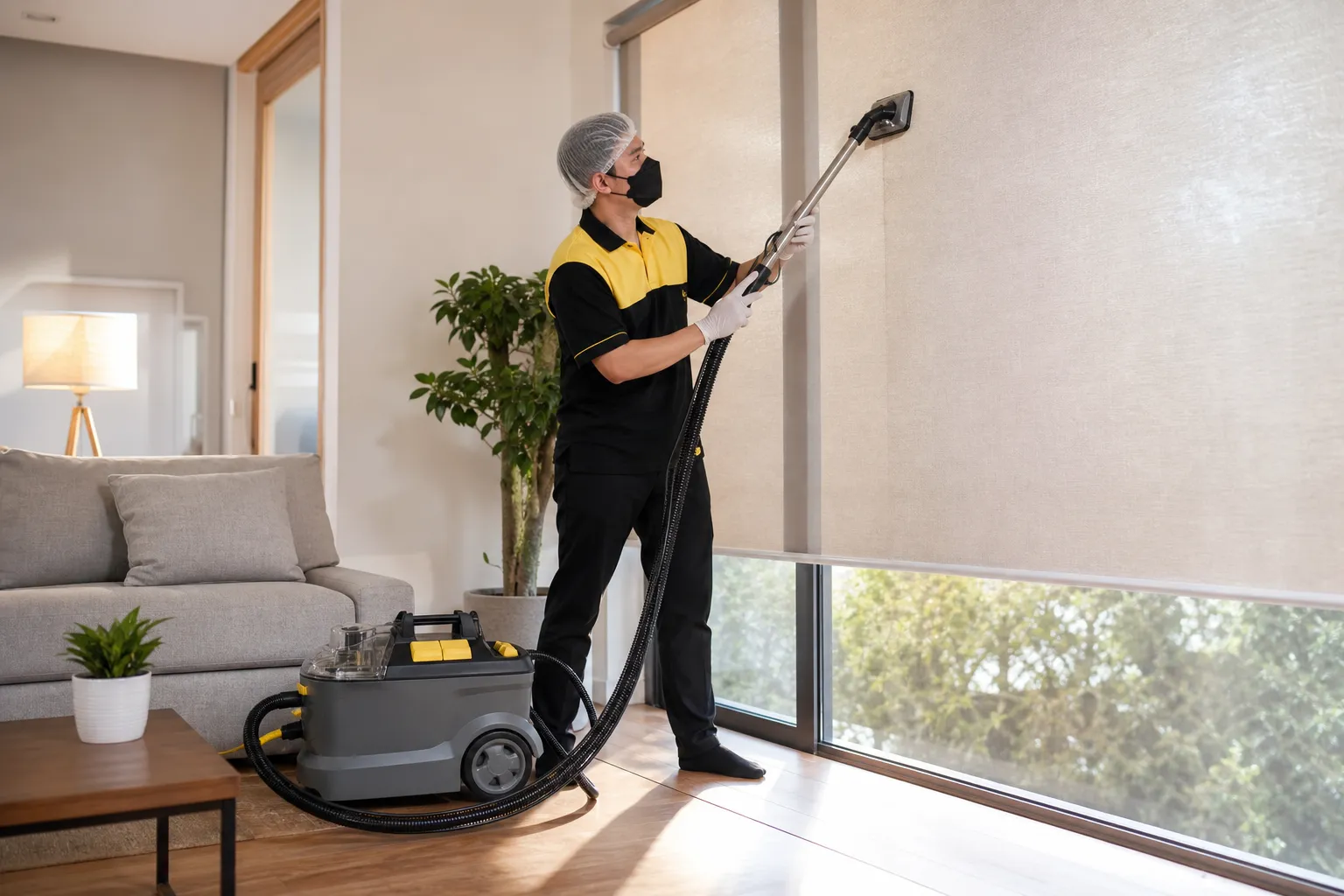
Can Roller Blinds Be Cleaned? — A Question Technicians Hear Every Day
The short answer is yes — but it depends on what type of roller blind you have. A fabric roller blind and a blackout-coated roller blind require completely different care. Use the wrong method and you risk warping, colour fading, or the coating peeling off.
This article is written from real on-site experience cleaning hundreds of roller blinds. It tells you straight: what you can safely do yourself, and when you should hand the job over to a professional.
Know Your Roller Blind Before Choosing a Cleaning Method
Roller blinds on the market fall into two main groups. The first is plain woven fabric — cotton or polyester with no special coating. This type handles moisture reasonably well and can be washed with water if you're careful.
The second group is blackout or coated fabric — one side has a white or silver film bonded to it. This type must never be soaked or scrubbed hard, because the coating will peel away in sheets. Once it peels, it cannot be repaired; the entire blind must be replaced.
Cleaning Roller Blinds at Home: 3 Levels That Actually Work
Here are three levels based on the real dirt conditions we encounter on the job — not just theory.
Level 1: Ordinary Dust Build-Up — Brush or Vacuum
Roller blinds used in air-conditioned rooms accumulate noticeably more dust every 2–3 months. The easiest method is to roll the blind all the way up, then use a soft-brush vacuum attachment and work from top to bottom. Do this while the blind is still on the rail — no need to take it down.
If you don't have a brush attachment, a dry microfibre cloth works too. Don't rub back and forth — always wipe in one direction, from top to bottom. Some finely woven fabrics will mat if you stroke against the grain.
Level 2: Small Spots and Stains — Spot-Wipe with a Damp Cloth
For water splashes, fingerprints, or minor food stains, dampen a microfibre cloth with clean water and wring it out well, then gently dab the stained area. Let it dry completely before rolling the blind up — rolling it while still damp will cause mould.
For slightly stubborn marks, add a small amount of diluted mild multipurpose cleaner to the water. Never use bleach, high-concentration alcohol-based products, or chlorine-based cleaners — they will fade the fabric in a ring within a few hours.
Level 3: Heavy Stains or Mould — Remove and Wash
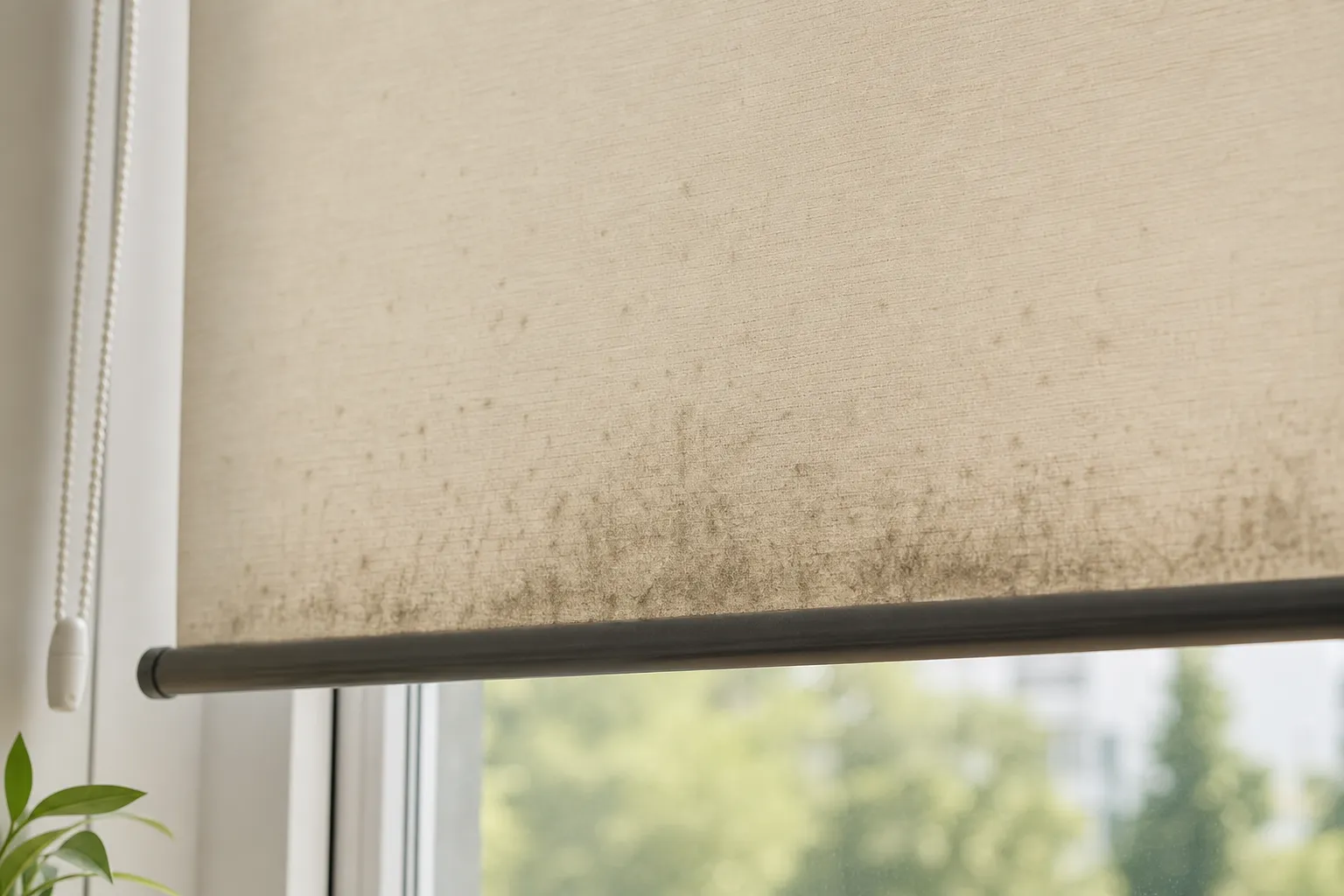
Roller blinds in bathrooms, kitchens, or poorly ventilated rooms often develop small scattered black mould spots. Left alone, the mould penetrates deeper and becomes much harder to remove.
At this level, detach the fabric from the roller tube first, then soak it in water mixed with a mild laundry detergent for about 10–15 minutes. Gently scrub the stained areas with a soft brush, rinse with clean water, then hang vertically to dry in a shaded, well-ventilated spot. Do not tumble-dry or expose to direct sunlight — the fabric may shrink or warp.
How to Clean a Blackout Roller Blind

This is the type that causes the most problems on the job. Many customers have already soaked or machine-washed their blackout blind before calling us — by that point the coating on the back is peeling off in pieces and nothing can be done.
For blackout blinds, the golden rule is: always wipe dry. Use a dry microfibre cloth and wipe in one direction only. If there is a stubborn ingrained stain, wipe with a cloth that has been dampened and wrung out very thoroughly, then immediately follow with a dry cloth. Never let moisture sit on the coated surface.
If the stain is on the front face of the fabric and is still fresh — a water mark or food splash — blot it off immediately. Don't let it dry and then try to deal with it later. A dried stain requires more moisture to remove, which damages the coating even more than the original stain would have.
When Should You Use a Professional Roller Blind Cleaning Service Instead of DIY?
DIY works well for ordinary stains and dust build-up, but there are situations where it's better to let a professional handle it.
The first situation is mould that has appeared in more than one spot, or mould that covers a large area of the blind. This kind of mould needs specialist products and a washing process where the temperature is controlled. Doing it at home often produces mixed results.
The other situation is large roller blinds that are difficult to remove, or a home with many blinds to clean at once. The cost of a professional at-home roller blind cleaning service is often more reasonable than people expect — especially compared with the cost of replacing blinds that were damaged by incorrect DIY washing.
How Often Should Roller Blinds Be Cleaned?
Based on the jobs we carry out, roller blinds in a typical air-conditioned room should be vacuumed or dusted every 2–3 months and given a thorough wash or deep wipe every 6–12 months, depending on the condition of the room.
Rooms with children or pets, kitchens, or rooms facing a busy road accumulate dust and grime much faster. In some homes, cleaning every 6–8 weeks is needed to prevent the build-up from getting out of hand.
Hurryclean Provides At-Home Roller Blind Cleaning — No Need to Remove Them Yourself
If the roller blinds in your home are heavily soiled, have mould, or you're unsure whether washing them yourself will cause damage, the Hurryclean team comes directly to your home in Bangkok and the surrounding provinces. We assess the condition of the fabric first and then choose the method that suits each blind's material.
For pricing and bookings, contact us on LINE@hurryclean
Just let us know how many blinds you have and roughly what type they are, and the team will give you a price and available dates straight away — no long wait.