
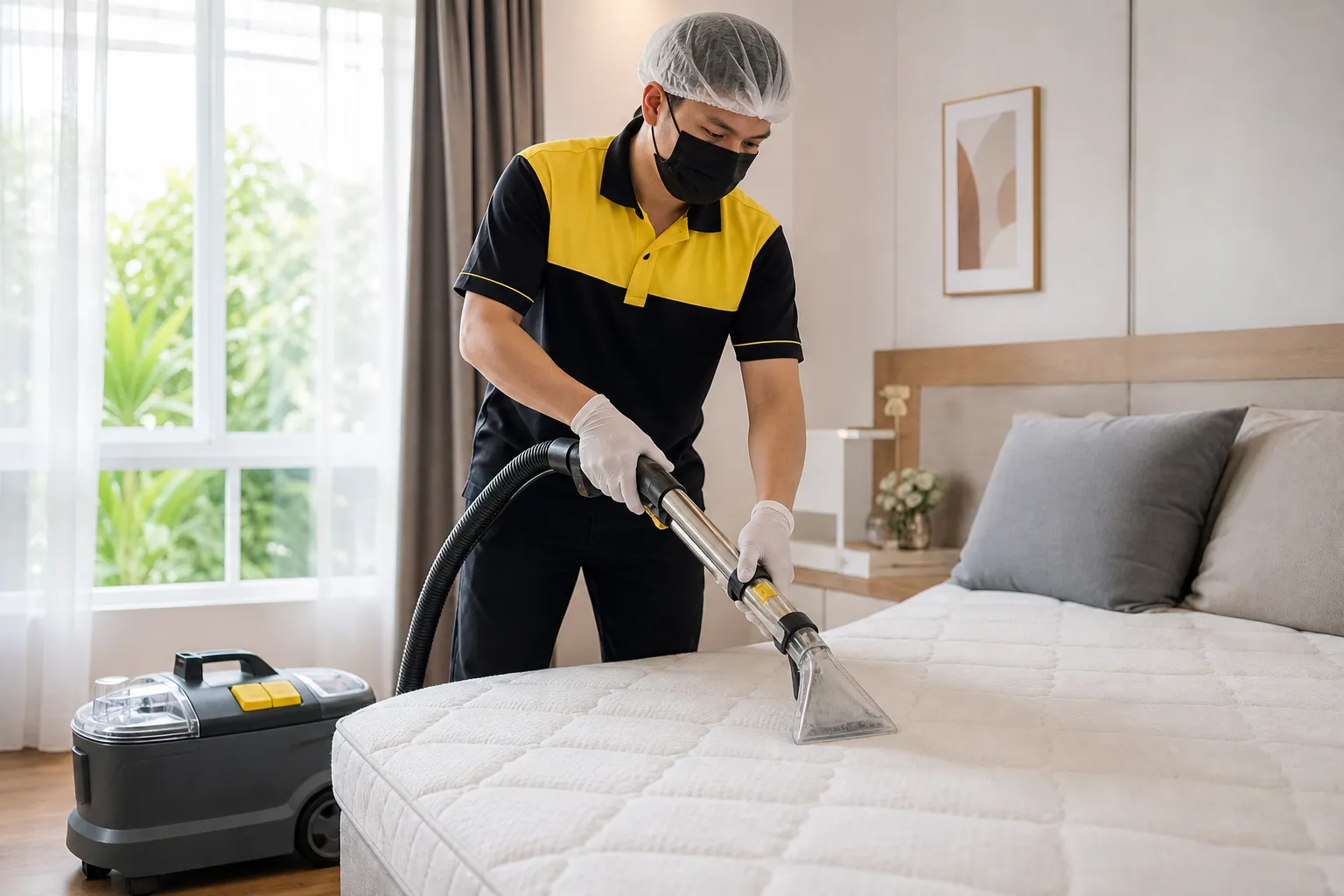
What Is Mattress Lint and Where Does It Come From?
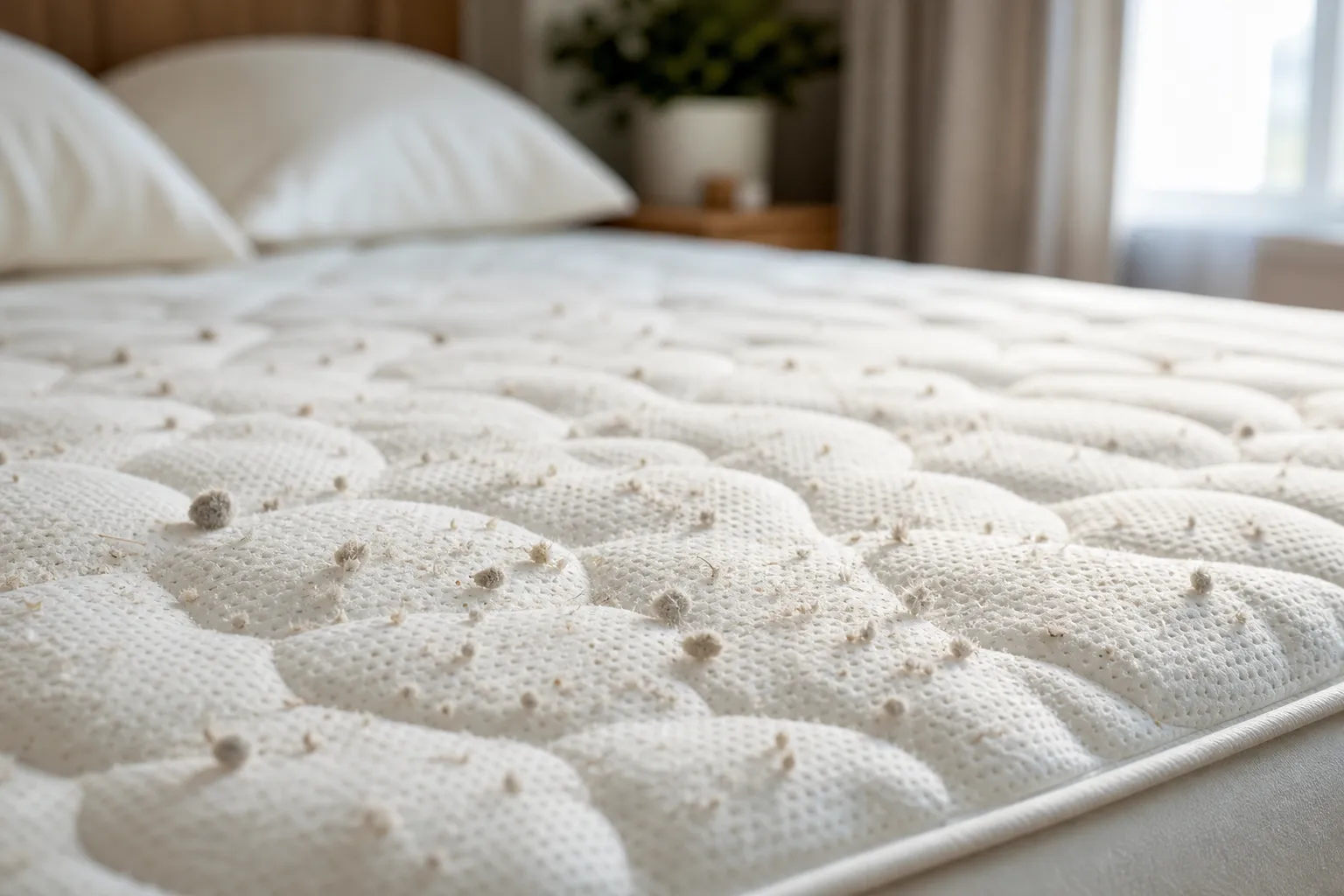
The fluff you see sitting on the surface of your mattress or packed into the seams is not ordinary dust. It is mostly fabric fibres that have shed through everyday use, mixed with pet hair (if you have dogs or cats), strands of human hair, and skin cells that fall off your body every night. Left long enough, this buildup compacts into the seams and fabric grooves and becomes a breeding ground for dust mites.
Mattresses that shed the most lint tend to have covers woven from synthetic or microfibre yarns. Higher-quality fabric sheds less, but still sheds given enough time. Spring mattresses, latex mattresses, and memory foam mattresses are equally prone to lint problems, because the lint comes from the cover, not the filling.
How Much of This Can You Clean Yourself?
You can do quite a bit yourself, but the results vary a lot depending on your tools. The easiest approach is a vacuum cleaner fitted with an upholstery brush head. Move it slowly in straight lines along the length of the mattress. Do not move it in circles — that pushes lint deeper into the fabric instead of lifting it out.
If lint is packed into the seams, loosen it first with a stiff-bristle brush and then vacuum it up. You will pick up far more that way. Some people use a lint roller, but rolling it repeatedly across the mattress surface can wear out the cover fabric faster. Use one if you like, just do not overdo it.
What you cannot do at home is eliminate dust mites buried deep in the mattress layers or remove musty odours that have soaked into the filling. A standard household vacuum reaches the surface but no further. For anything deeper, you need a high-suction extractor or a steam cleaning machine.
Basic Steps for Cleaning Your Mattress at Home
If you want to try it yourself first, gather these supplies: a vacuum cleaner with a brush attachment, a barely damp cloth, baking soda, and a mild laundry detergent. Follow these steps in order.
- Strip off all bedding and pillows and wash them separately.
- Use a soft-bristle brush to loosen lint from the seams and fabric grooves first.
- Attach the brush head to your vacuum and work slowly in straight lines from the head of the mattress to the foot, covering both sides.
- Sprinkle a thin, even layer of baking soda over the mattress surface, leave it for 15–20 minutes, then vacuum it off. This does a good job of neutralising musty smells.
- For any stains on the cover, dab with a cloth dampened with diluted laundry detergent, then follow up with a clean damp cloth. Do not let the mattress get too wet.
- Let it air out completely in a well-ventilated room or near a fan before putting the bedding back on.
This approach helps to a point — surface lint disappears and the smell fades — but if the mattress has not had a deep clean in more than 1–2 years, doing it yourself may not be enough. There is still accumulated material hidden inside that you cannot see.
Signs That It Is Time to Call a Professional
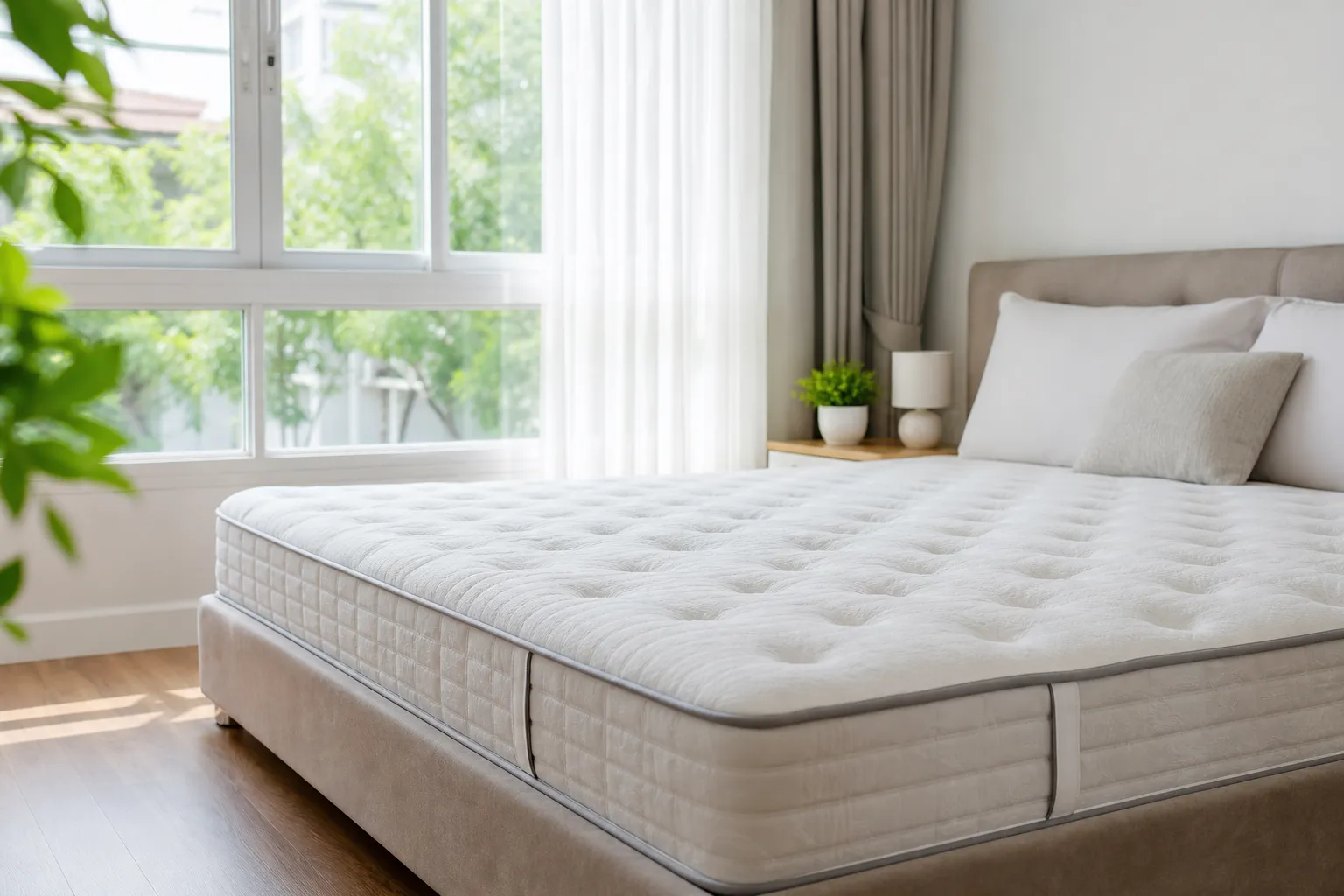
A number of customers call us with the same story: they have vacuumed themselves but the smell stays, or someone in the household has started sneezing regularly for no obvious reason. Some mattresses look clean to the eye, but when our technician shines a torch across the surface up close, there is a heavy layer of lint and dust mites trapped in the fabric.
Clear signs that you should bring in a professional: a musty smell that persists even after you put on fresh bedding; yellow ring-shaped stains on the mattress surface (usually accumulated sweat); pet urine that has soaked into the inner layers; or a mattress that has been in use for more than 2 years without ever having a deep clean.
Different Stains Behave Very Differently
Sweat stains that leave yellow rings are the most common thing we see on the job. They form when proteins in sweat soak into the fabric and oxidise under heat. The approach that works is applying an enzyme cleaner, leaving it for 10–15 minutes, then extracting it with a wet-vacuum machine. If the stain has been sitting there for more than 6 months, it has set and may only fade partially.
Cat or dog urine soaks in fast and goes deeper than other stains. The smell comes from bacteria and uric acid crystals that have crystallised inside the mattress fibres. Standard cleaning products suppress the odour temporarily, but once the mattress gets damp again the smell comes back. You need a specialist enzyme cleaner and a hot steam machine to destroy the bacteria embedded inside.
Coffee or fruit juice stains can be wiped out with plain water and laundry detergent if you get to them immediately. If they have dried for several days, the colour has already bonded to the fibres and home cleaning will only fade them, not remove them.
| Stain Type | Can You Handle It Yourself? | Notes |
|---|---|---|
| Yellow sweat rings | Partially | Requires enzyme cleaner left on for 10–15 minutes |
| Pet urine | Recommend calling a professional | The smell returns if you do not eliminate the source of the problem |
| Coffee / fruit juice (fresh) | Yes, if treated immediately | Blot straight away and always use plain water first |
| Accumulated lint and dust mites | Partially | A standard vacuum cannot reach the inner layers |
Keeping Your Mattress Lint-Free Day to Day
The single most effective thing you can do to reduce lint is use a zip-up mattress protector as a separate layer between the mattress and your sheets. The protector catches lint and sweat instead of the mattress itself, and you can simply throw it in the washing machine. That means you do not need to haul your mattress out for cleaning nearly as often.
Flipping or rotating your mattress every 3–6 months also helps the cover wear down more slowly, distributes pressure evenly, and lets moisture that builds up underneath escape. That trapped moisture is exactly what causes mould to grow in mattresses placed directly on the floor.
When You Need Help — Hurryclean Comes to Your Home
If home cleaning has not solved the problem, or you simply do not want to spend time experimenting, our team offers in-home mattress cleaning across Bangkok and surrounding provinces. We use high-suction extraction equipment and specialist enzyme cleaners, matched to the type of stain and the type of mattress.
There is no need to carry the mattress anywhere — our technicians do everything at your home. It takes approximately 1–2 hours per mattress depending on size and how soiled it is. For pricing based on your mattress size and type, get in touch viaLINE @hurryclean. Our technician will assess your situation before booking — no charge to enquire.