
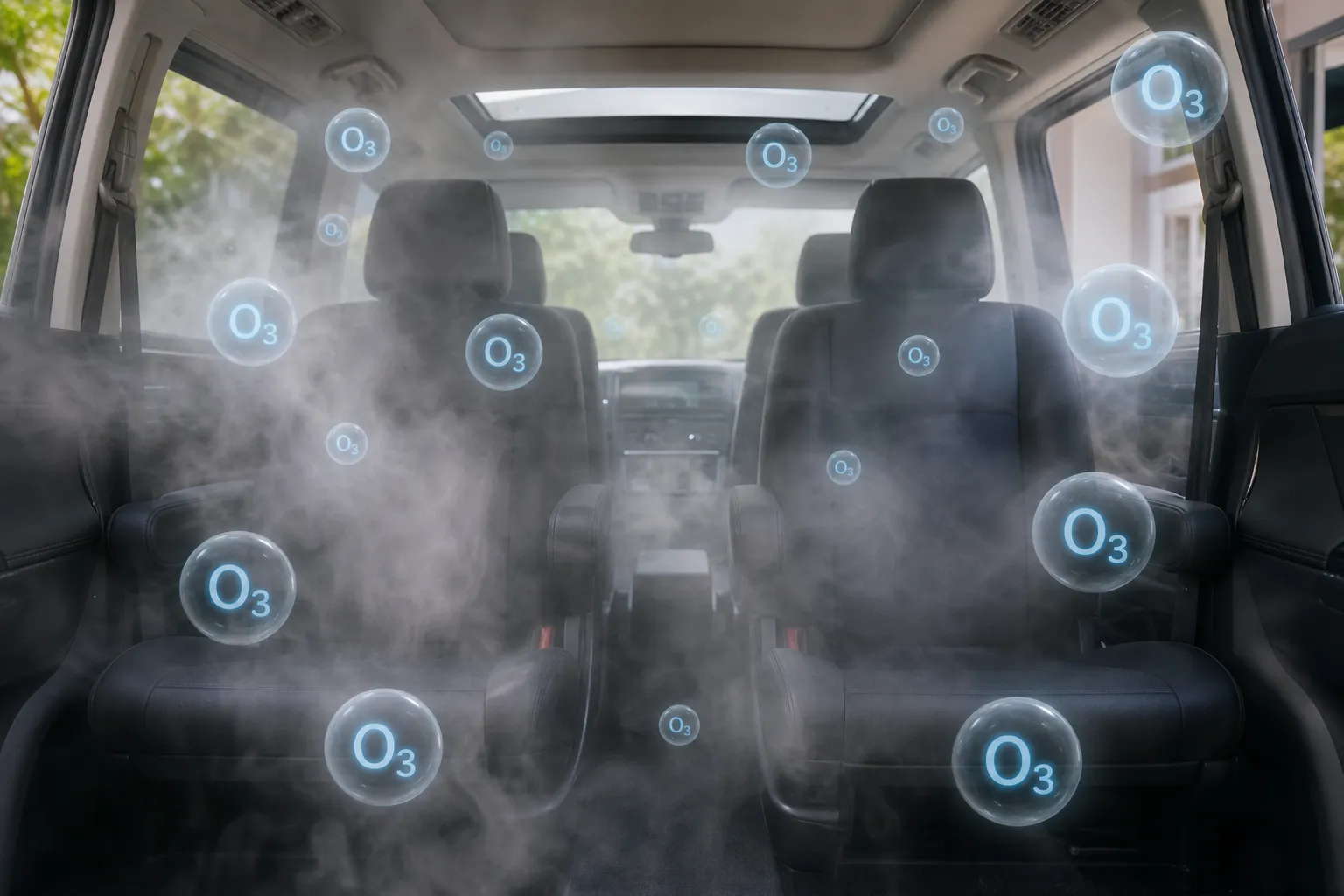
Vans and Musty Odors — Why They're Harder to Fix Than Sedans
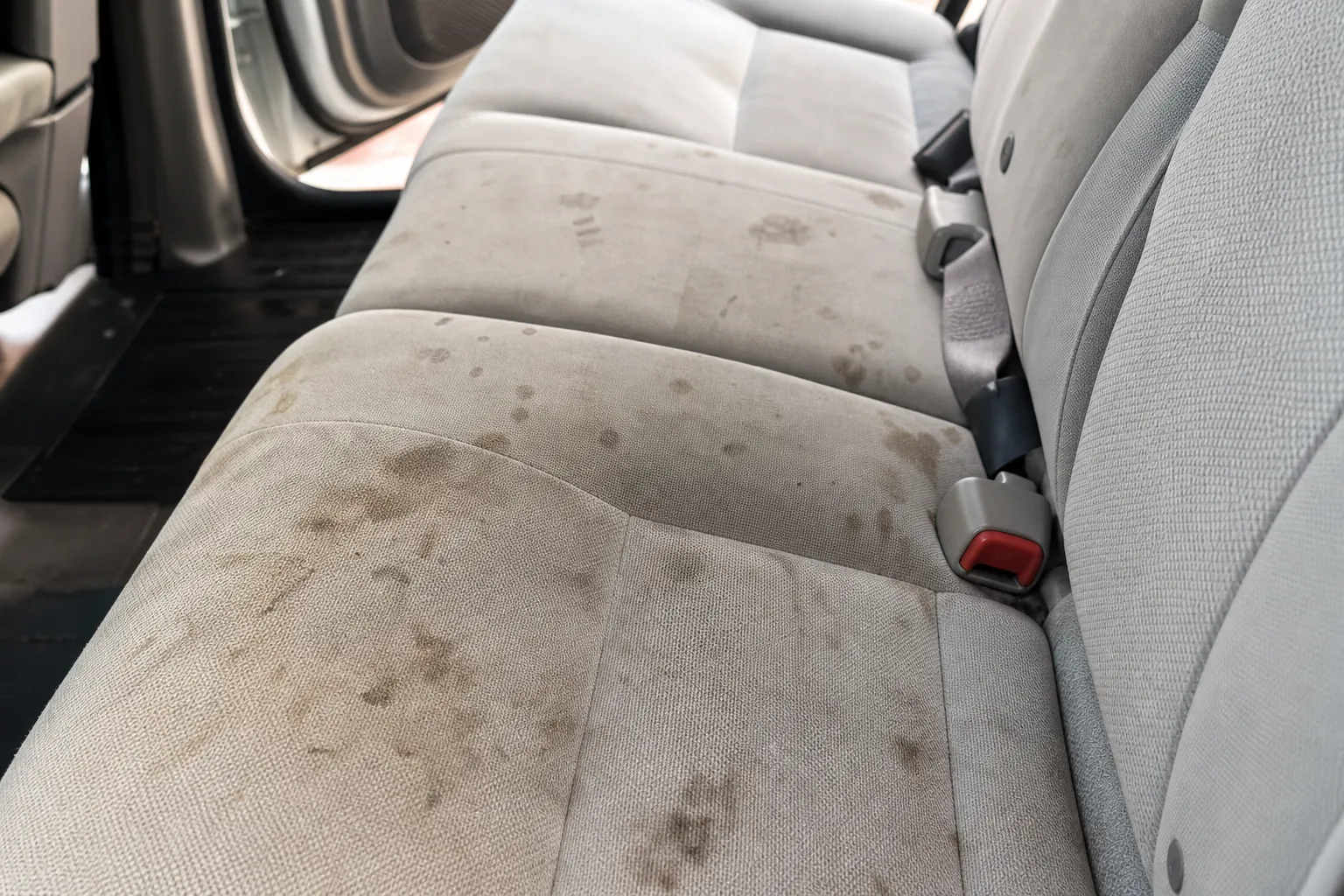
If you've ever ridden in a public van or a staff shuttle, you've probably been hit by that musty smell — built-up sweat, stale air, or sometimes a rancid odor strong enough to make you lean toward the window. It happens because vans carry multiple passengers in an enclosed space with limited airflow, and the fabric seats and carpet lining the interior absorb odors extremely well.
A typical sedan has a cabin volume of around 2–3 cubic meters, but a standard van can be more than twice that size. The rows of fabric seats running the full length of the vehicle also mean far more material for odors to sink into, which is why they embed deeper and take much longer to go away.
How Ozone Treatment Works in a Van
Ozone (O₃) is oxygen with one extra atom. That extra atom is unstable — when it encounters odor molecules or the cell walls of bacteria, it oxidizes and breaks them apart. Odors from organic sources — sweat, food, cigarette smoke, pets — all react to ozone in exactly this way.
In practice, the technician places an ozone generator inside the van, seals all doors and windows, then runs the machine for a length of time calculated based on the cabin volume. A standard van takes considerably longer than a sedan because the interior is larger and the rows of seats mean the ozone needs to distribute much more thoroughly.
After the machine stops, you need to wait for the ozone to break down back into O₂ before anyone enters the vehicle. This typically takes around 30–60 minutes depending on the vehicle size and the concentration used.
What Types of Odors Does Ozone Handle Well?
Based on real van jobs we've completed, ozone works best on odors from organic sources — accumulated sweat, food smells embedded in seats or carpet, cigarette smoke soaked into fabric, and mustiness caused by moisture.
Urine odors from people or pets can also be treated, but if the stain is still present on the seat or carpet, ozone alone won't be enough. Ozone only handles odors suspended in the air and on surfaces — odors that have penetrated deep into the fabric require cleaning first, followed by ozone treatment. Skip that step and the smell will return as soon as moisture levels rise.
Which Types of Vans See the Best Results?
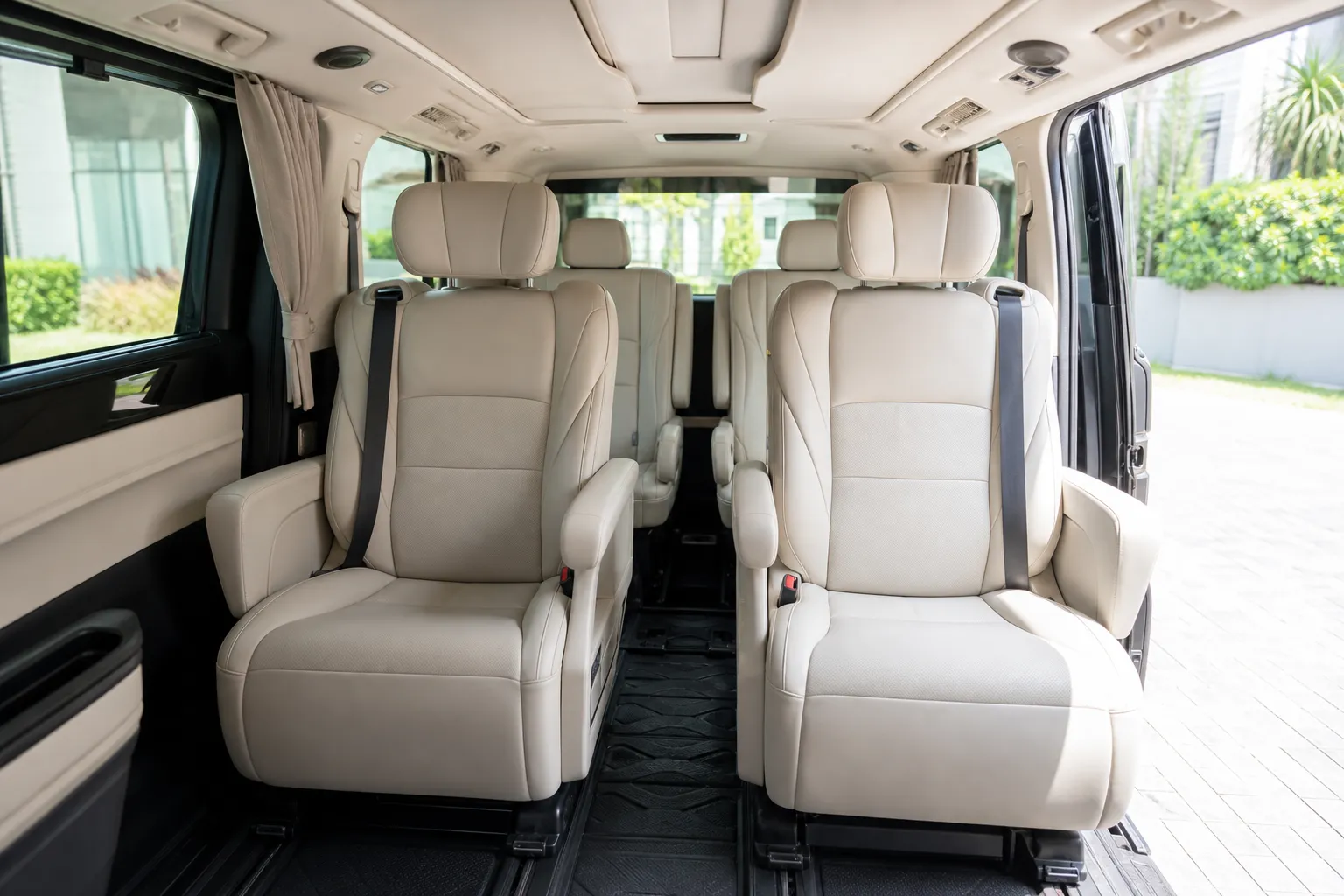
Staff shuttle vans used daily with months of accumulated sweat odor — ozone treatment works very well as long as the seats are clean and there are no deep moisture stains. Vans that have transported pets or had young children urinate on the seats require seat cleaning first, followed by ozone treatment. Without that step, you're only masking the odor temporarily.
Vans where moisture or mold has developed in the carpet — ozone treatment can eliminate mold spores to a degree, but if the carpet is still damp, mold will return within days. The carpet must be thoroughly dried before treatment every time.
How Is Ozone Treatment Different from Odor Eliminator Sprays?
Most odor eliminator sprays work by masking or suppressing odors with another scent. Some formulas do bind to odor molecules, but they don't cover every type. Ozone is different — it oxidizes and destroys odor molecules outright rather than just hiding them.
Another advantage of ozone is that it disperses into every corner of the vehicle, including air vents and the ventilation system that sprays can never reach. Odors coming from dirty air conditioning ducts or uncleaned filters are something ozone handles far better than any spray.
| Method | Mechanism | Limitation |
|---|---|---|
| Odor eliminator spray | Masks or binds odor molecules | Cannot reach vents and tight spaces |
| Activated charcoal | Absorbs accumulated odors | Works slowly, does not kill bacteria |
| Ozone treatment | Oxidizes and destroys odor molecules | Deep fabric odors require cleaning first |
Can You Treat Larger Vehicles Like Buses and Trucks with Ozone?
Yes, but you need a machine with enough output to match the space. A full-size bus or minibus has a cabin significantly larger than a van — more than twice the size. Using a single low-powered machine may not provide sufficient coverage. An experienced technician will assess the space first and adjust the machine output and treatment time accordingly.
For long-haul trucks where the cab is smaller but odors are heavy from extended driving, the process isn't much different from a van. However, if the odor comes from cargo residue or oil stains on the seat, the seat needs to be cleaned first regardless — ozone does not dissolve oil-based stains.
How to Prepare Your Vehicle Before the Technician Arrives
For the best results, clear everything out of the vehicle before the session — especially food, plastic bags, or anything that can decay. If there are visible stains on the seats or carpet, let the technician know in advance, as some cases require the stains to be cleaned out before the ozone treatment follows.
After the treatment is complete, open the vehicle doors and ventilate for at least 30 minutes before getting in. Ozone itself has a distinct smell — similar to rain or the air after a storm — which will naturally fade once the air circulates.
If You'd Like Hurryclean to Treat Your Van
Hurryclean provides on-site ozone treatment for vans and large vehicles — no need to drop the vehicle off. Service covers Bangkok and surrounding provinces. Areas our technicians work frequently include Chatuchak, Pathum Wan, Bang Rak, Watthana, and Huai Khwang, but if you're outside those areas feel free to ask, as our actual service coverage spans all of Bangkok and the greater metro area.
Pricing starts at 490 baht, but the final cost depends on the vehicle size and the condition of the job. Some vehicles with heavy odors or seats that need cleaning first may be quoted an adjusted price on-site. To get an accurate price or have a technician come take a look before committing, message us on LINE@hurryclean