
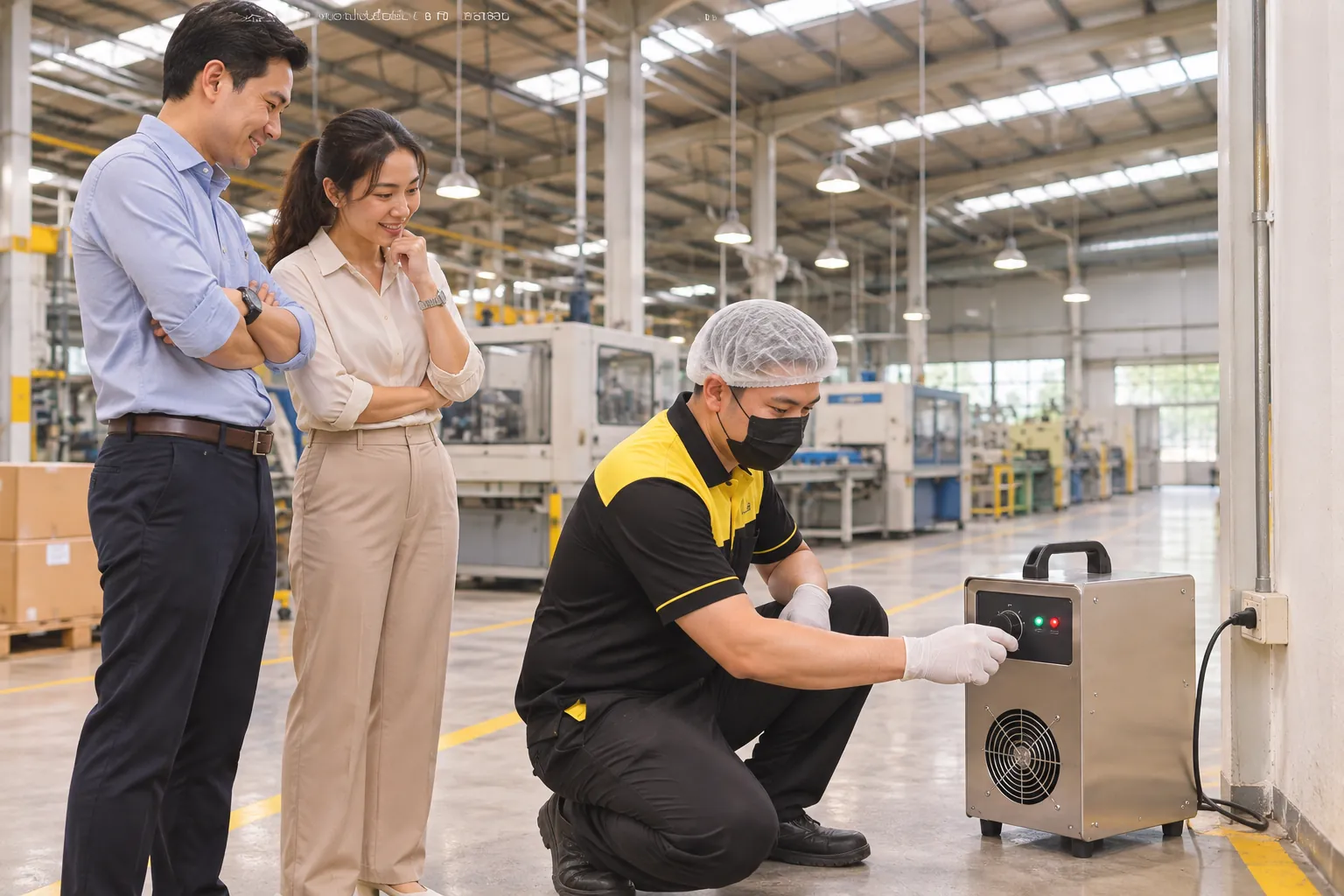
Can factory ozone treatment fix odors and failed air tests?
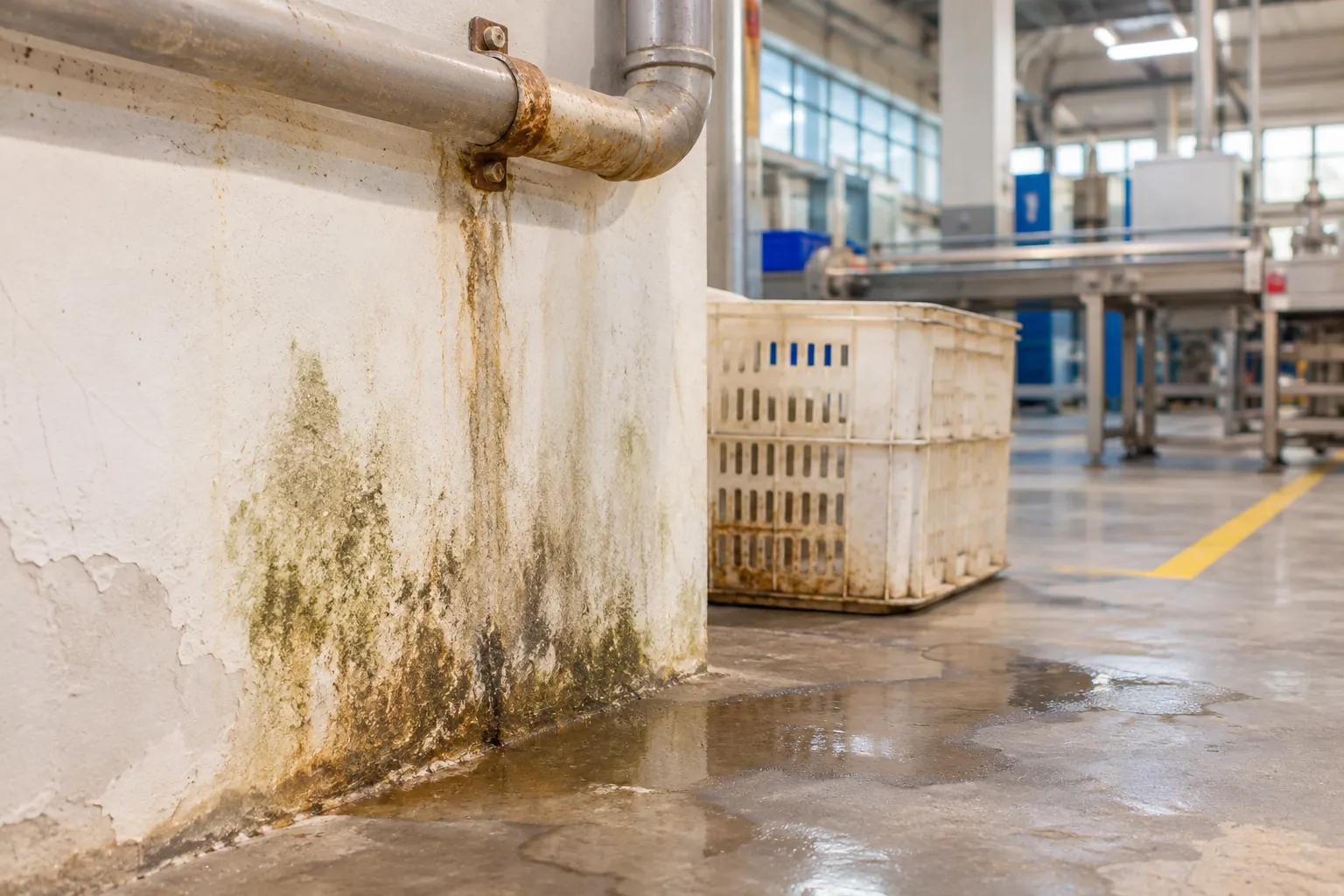
When a factory has an odor, many people may first think of ozone treatment or disinfectant spraying. But odors and failed air quality tests are not always caused by germs. The source could be vapors from production processes, waste, moisture, or the ventilation system.
The answer depends on what was detected and where the odor is coming from. Ozone treatment or disinfection may have a role in some cases, but neither should replace finding the source, and neither guarantees a passing test result.
Start by reviewing the test results and finding the source of the odor
Before choosing a factory odor removal method, check the report to see which parameter failed, what units were used, where the samples were taken, and what the machinery or processes were doing at the time. What you can smell cannot tell you which substances are in the air or at what levels; that requires measurement.
Check where the odor occurs or becomes stronger, such as around machinery, raw material and waste storage areas, drains, damp or poorly ventilated spaces, and air-conditioning return-air vents. This information helps specialists develop more focused hypotheses about the source without jumping to conclusions that the problem is mold, germs, or a particular chemical.
If a test result fails, ask the person responsible for safety or an occupational health and environmental specialist to review the sampling method and plan a retest. Choose a laboratory whose testing scope matches what you need to measure, and ask the service provider to explain which part of the problem each proposed measure is intended to address.
When is factory ozone treatment appropriate, and what are its limitations?

Ozone can react with other substances, but using ozone is not the same as ventilating a factory or removing a pollution source. So you should not expect a single ozone treatment to address odors, contaminants, and failed air tests all at once.
Ozone is hazardous to breathe. Using ozone equipment requires consideration of the risks, area controls, and how safety will be verified before people return. Never use an ozone generator in an area where people or animals are present, and do not guess when it is safe to re-enter based on the odor disappearing. Smell is not a safety measurement.
If the odor comes from a production process or an emission source that is still operating, measures such as fixing the source, enclosing it or using local exhaust ventilation, and managing the air as appropriate usually need to be assessed before methods that reduce odors at the end of the process. The right approach depends on the process and test results; there is no single method that suits every factory.
Factory disinfectant spraying is not the same as removing odors or pollutants
Disinfection aims to control microorganisms on surfaces or in areas specified on the product label. It is not a general method for removing vapors, chemicals, or airborne dust. Spraying a disinfectant should not be used instead of identifying the substances that caused the indoor air quality test to fail.
If disinfection is necessary, check the product label to confirm which surfaces and uses it covers, as well as the specified application method and contact time. Never mix different products yourself. Consider ventilation and worker protection in accordance with the label and the facility's safety requirements.
Odors may return if the source remains or if the process releases odors again when production resumes. An assessment after corrective work should therefore consider both actual operating conditions and new measurements of the same parameters, rather than relying only on the impression that the odor has become weaker.
How to choose a service provider for a clear assessment
Before agreeing to the work, ask the provider to clearly explain the scope: what they will inspect, which methods they will use, which areas are affected, and whether their proposed solution is intended to address odors, microorganisms on surfaces, or failed test values. Do not choose based only on the terms ozone treatment or disinfection; the name of a method does not show that it suits the source of the problem.
If there is not enough information to assess the price, share the test report, process details, a floor plan, and the locations where odors have been noticed before asking for an estimate. There is no single price that applies to every case. Ask clearly whether the price includes inspection, materials, area controls, and retesting.
Ask about the safety plan, how long the area must be shut down or have restricted access, the conditions for re-entry, and what documents confirming the results will be provided. If the work is guaranteed, ask for written details about what outcome is guaranteed and under what conditions. Do not assume that an odor guarantee means the air test results are certified.
Reviews can offer insight into communication and service experiences, but they do not confirm that a provider has specialist expertise in factories. Ask for details about their work methods and evidence relevant to the specific scope, and find out who will review the test results and decide when the area can be used again.
First steps when a factory has odors and failed test results
Before ordering factory ozone treatment or disinfectant spraying, organize the information needed to make a decision as follows:
- Gather the test report and identify the failed values, sampling locations, and operating conditions during testing.
- Record where and when the odor occurs, along with the process or activity taking place at the time.
- Ask the person responsible for safety or an appropriately qualified specialist to identify the source and assess the risks.
- Request a proposal that specifies how the source will be controlled and defines the scope of work, while listing anything else that needs to be inspected or addressed.
- Set a verification method for after the work that matches the original parameters and testing conditions.
If the test results identify substances or risks that could affect health, follow the advice of the person responsible for safety and the relevant authorities before allowing people back into the area. Do not use a reduction in odor as a substitute for an assessment.
Hurryclean provides at-home cleaning of sofas, mattresses, carpets, curtains, and car seats in Bangkok and surrounding provinces. It does not assess or resolve air quality problems in factories. To ask about Hurryclean's cleaning services, contact LINE @hurryclean and provide the type of service and the area where it will be used so the team can give you a relevant answer.