
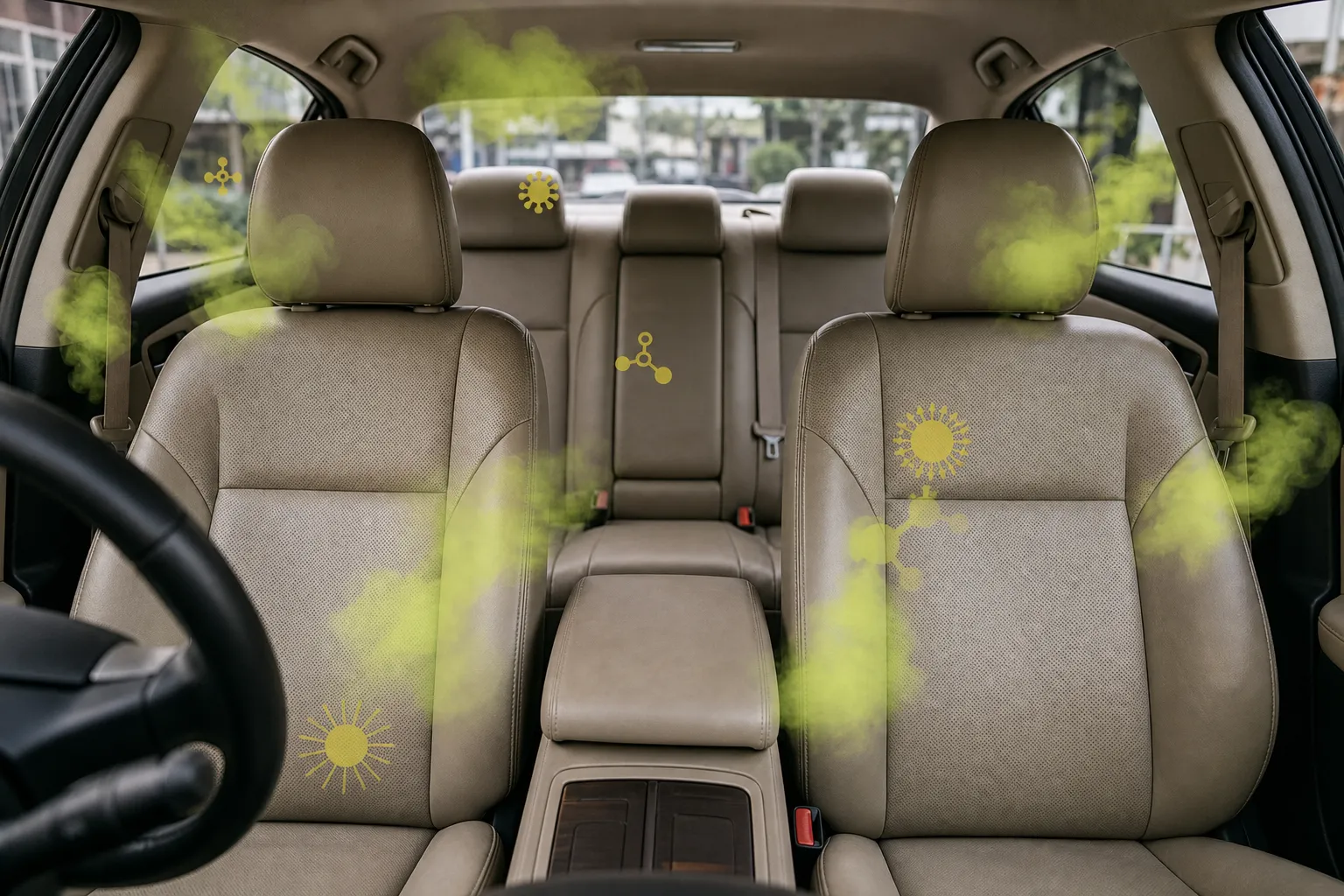
What causes chemical smells in used cars?
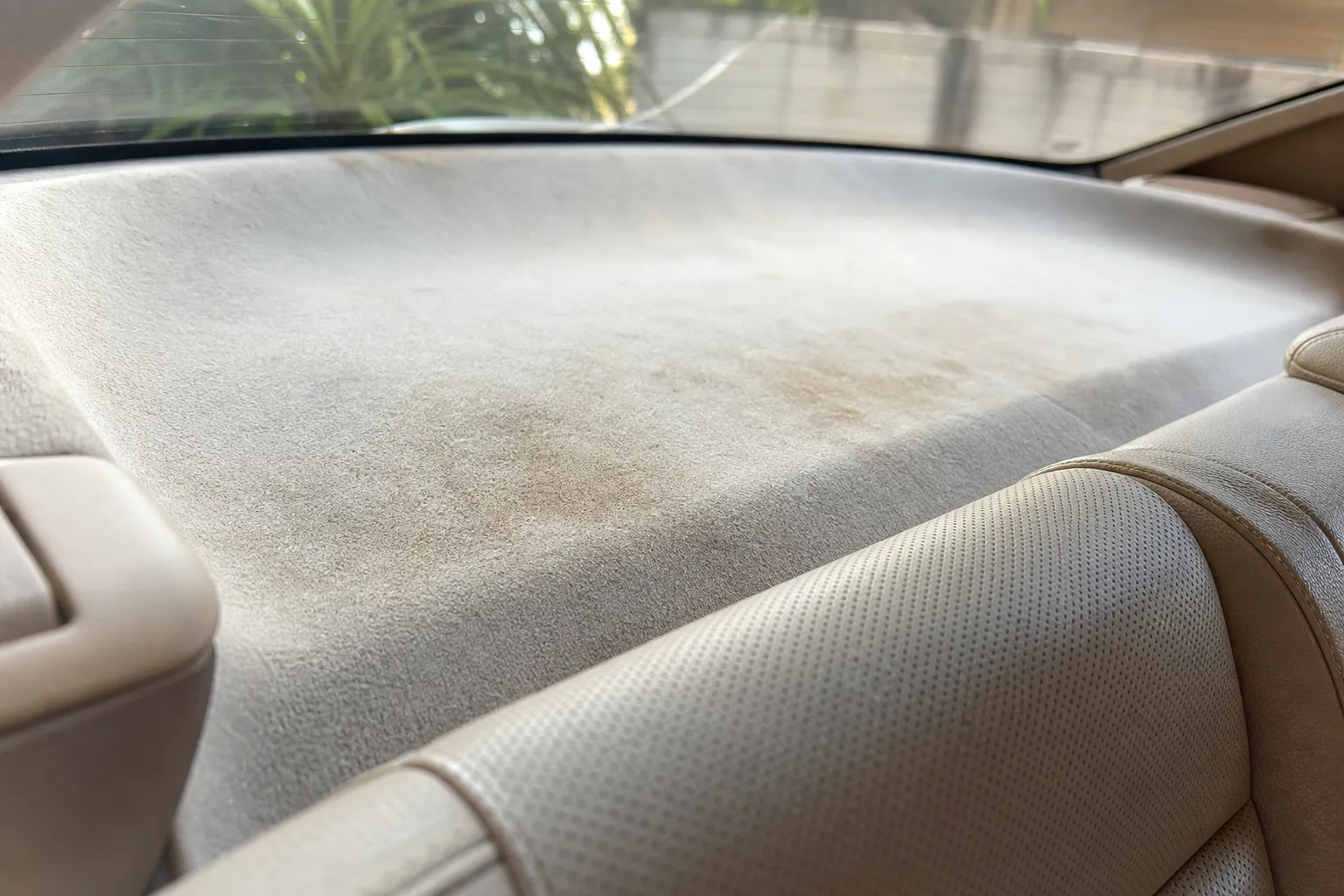
When you first open a used car and notice a sharp smell resembling glue, polish, or new plastic, it is easy to think that leaving the windows open will be enough. However, from my experience cleaning car seats, odors that linger for several days often come from hidden sources in the seats, foam, carpets, or air vents—not just the air inside the cabin.
Common sources include glue and interior padding materials that release odors when the car gets hot, overly concentrated cleaning products, shine sprays, and seat-repair products or silicone left over from previous repairs. If the smell becomes stronger after parking in direct sunlight, suspect materials that are still releasing odors rather than dust on the seats.
Some cars have been sprayed with perfume to mask the original smell. Once cleaning begins, the result may be a mixture of chemical odors, cigarette smoke, coffee stains, yellow sweat rings, or cat urine in the carpets and foam. If there is an unusually strong smell resembling burning, fuel, or thinner, stop using the car and have an auto technician check the electrical system or fluids first. Do not try to mask the smell alone.
Identify the source of the smell before cleaning
I would not start by spraying products throughout the car, because the smell in each area can point to a different source. Open the car doors in a shaded area, then check each area separately without bringing your face too close—starting with the air vents, seats, carpet beneath the seats, trunk, and door panels.
Next, turn on the fan without turning on the air conditioning. After a short while, turn on the air conditioning and change the airflow direction. If the smell becomes stronger as soon as the fan runs, check the cabin filter, evaporator coil, and air ducts. If the smell is strongest around the floor or beneath the seats, lift the carpet to inspect the foam and old stains, because surface-only cleaning may not reach hidden areas.
If the smell is trapped in fabric seat surfaces and there are stains, choose a method suited to the material. Cotton or linen seats absorb water more readily than synthetic fabric, while velvet has a directional pile that can become distorted. Genuine leather and PU leather have different types of protective coatings, so one product should not be sprayed on every surface.
Try dabbing the suspected area with a damp white cloth and check whether any color or residue transfers. Do not scrub vigorously in circles to test the stain, because dark fabric or velvet may develop shiny marks, while PU leather can become dull in patches. A gentle inspection helps determine whether the seats should be cleaned or the air-conditioning system should be checked first.
How to remove chemical smells from a car without damaging its materials
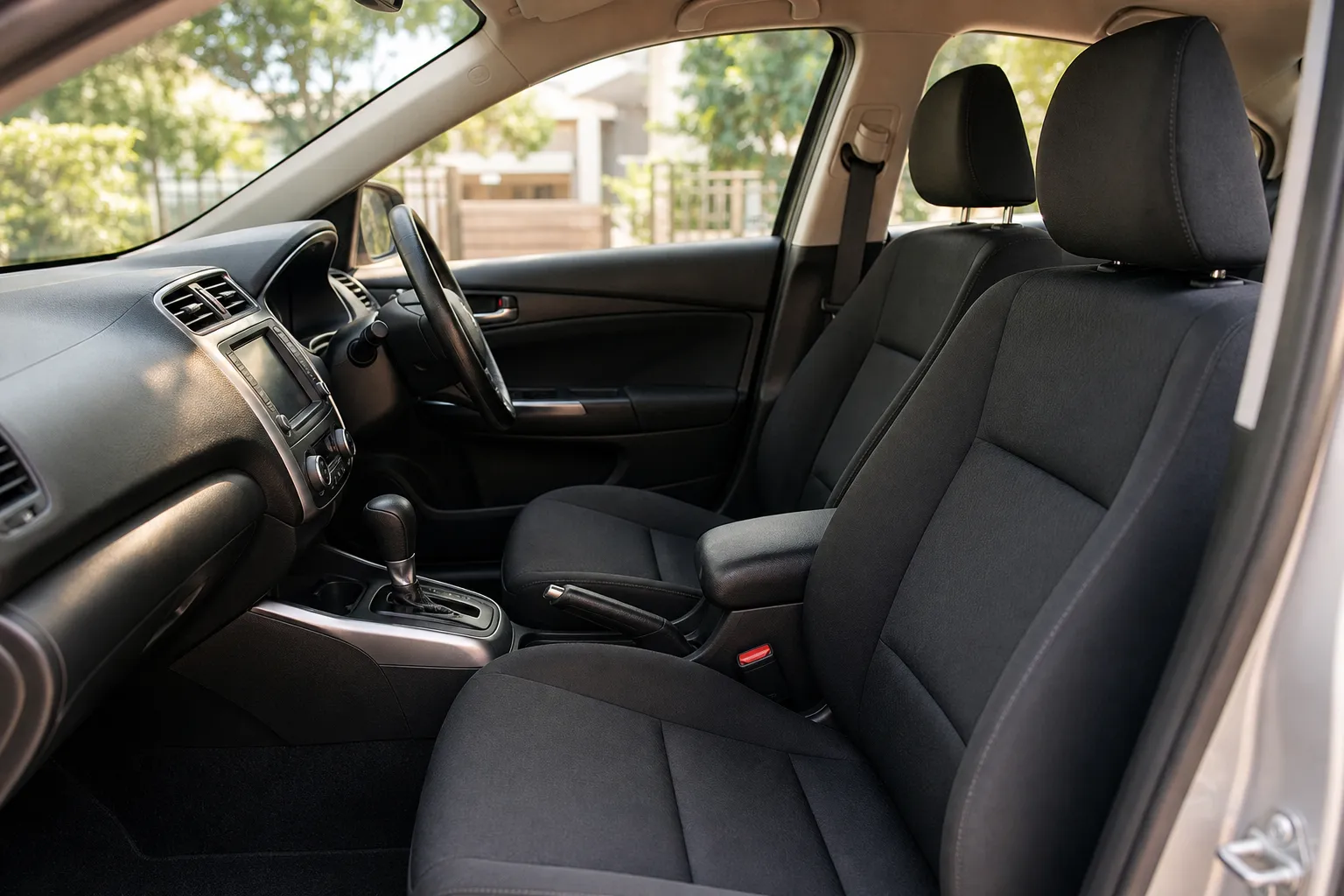
Cleaning a used car to remove chemical smells should proceed from dry methods to wet methods, using only as much moisture as necessary. The goal is not to make the seats as wet as possible, but to remove as much dust, residue, and leftover cleaning product as possible without pushing it deeper into the foam.
If you plan to do it yourself, prepare a vacuum cleaner, a white microfiber cloth, a soft-bristled brush, a product suitable for the material, and a wet vacuum if available. Then follow these steps:
- Remove the floor mats and anything stored in the car. Open the doors or windows for ventilation, then check beneath the seats, along the carpet edges, and in the trunk for wet stains or sticky materials.
- Thoroughly vacuum the seats, seat seams, carpets, and gaps beneath the seats, especially fine dust that traps perfume and polish residues.
- Always test the product in a hidden area first. Then spray a light mist onto the cloth—not directly onto the seat. Leave it for 10-15 minutes, then work one section at a time with a soft-bristled brush or damp cloth.
- For coffee stains or yellow sweat rings on fabric seats, use a fabric cleaner according to its label and extract the moisture. For cat urine, use a product specifically designed for urine stains. Never mix multiple products to speed up the results.
- Extract the water until the surface is no longer soggy, then wipe surrounding materials dry. Leave the car open to ventilate before replacing the mats or closing the windows.
Immediately after cleaning, you may notice a temporary product smell or damp odor because the materials have not dried yet. Do not judge the result too quickly while the seats are still cool and damp. If the foam has absorbed water or the underlay carpet is wet, closing the car immediately can cause the smell to return and create a musty environment. Actual drying time depends on the seat material, the amount of water, and ventilation.
Cotton and linen seats should be cleaned with minimal water and extracted quickly, because their fibers draw moisture deep inside. Velvet should only be brushed gently in the direction of the pile. Vigorous scrubbing can permanently flatten the pile, and the resulting tracks or shiny marks are difficult to reverse.
Wipe genuine leather with a leather-specific product and dry it immediately. For PU leather, avoid thinner, acetone, and concentrated alcohol, as they may make the coating dull or sticky. For fabric headliners, use very little spray and do not saturate them, or the adhesive underneath may loosen.
Odor absorbers such as activated charcoal or baking soda can temporarily absorb smells in the air, but they do not remove odors from foam, glue, or lingering cat urine. Sprinkling powder on damp fabric seats can also cause it to settle into the seams and make it difficult to vacuum up. Use these as aids after cleaning, not as the main treatment.
How effective is ozone treatment for chemical smells in cars?
Ozone treatment can help manage residual odors in the cabin in some cases, especially after stains and odor sources have been removed. However, it will not stop glue, new plastic, wet foam, or a dirty air-conditioning coil from releasing odors. If the source remains, the smell will return when the car gets hot or the air conditioning is turned on.
The safe order is to vacuum and clean or wipe the materials first, let them dry, check for sources in the air vents, and then consider ozone treatment based on the car's condition. During treatment, people, children, pets, and items that should not be exposed to ozone must be removed from the car. Afterward, open the doors to ventilate the car according to the service provider's instructions.
Signs that the source has not been fixed include the smell disappearing when the door is opened but returning immediately when the car is closed, becoming stronger in sunlight, or changing into a musty odor after cleaning. If this happens, do not repeat ozone treatment several times simply to mask the smell. Go back and inspect the foam beneath the seats, the underlay carpet, and the air-conditioning airflow source.
Before returning the car, I check it with the air conditioning both off and on, and smell the areas where stains were found once the materials are dry. I also let the owner sit inside and describe their own experience. Testing the result on site according to the customer's satisfaction matters more than making the car smell strongly of perfume, because perfume may only be masking the problem.
What should you ask before choosing a nearby car seat cleaning service?
The search term "nearby car seat cleaning prices" may lead you to many providers, but for chemical smells, you should not look only at the price or the words "ozone treatment." Ask first whether the technician will identify the source in the seats, carpets, air vents, and headliner, and whether separate methods are used for fabric, genuine leather, PU leather, and velvet.
Before booking, ask clearly whether seat cleaning, odor removal, and ozone treatment are included in one service or treated as separate steps. Ask what situations incur additional charges, how long the work will take, how long the car should be ventilated, and how the smell will be checked again afterward. If the technician can explain the process step by step and provide a clear price, it can greatly reduce concerns about unexpected costs.
At Hurryclean, the team uses modern equipment meeting European standards and tests the result on site according to customer satisfaction. The brand's service information also states that heavy stains, musty odors, and urine odors do not incur additional charges. However, for chemical smells, details should be sent to the team so they can assess the actual source first.
If you are wondering whether the brand is trustworthy, Hurryclean's review page shows a Google Review score of 5.0 from more than 1,700 reviews. Common praise mentions clean work, polite technicians, clear explanations, fast admin replies, and transparent pricing. This information can support your decision better than looking at advertising claims alone.
If the smell resembles fuel, burning, or an abnormal air-conditioning odor, have an auto technician inspect the car before cleaning the seats. For smells coming from the seats, carpets, or cleaning products, take photos of the suspected areas and mention whether the smell becomes stronger when the air conditioning is turned on or when the car is parked in the sun. You can ask Hurryclean about the process and price for at-home service in Bangkok and surrounding provinces via LINE @hurryclean.