
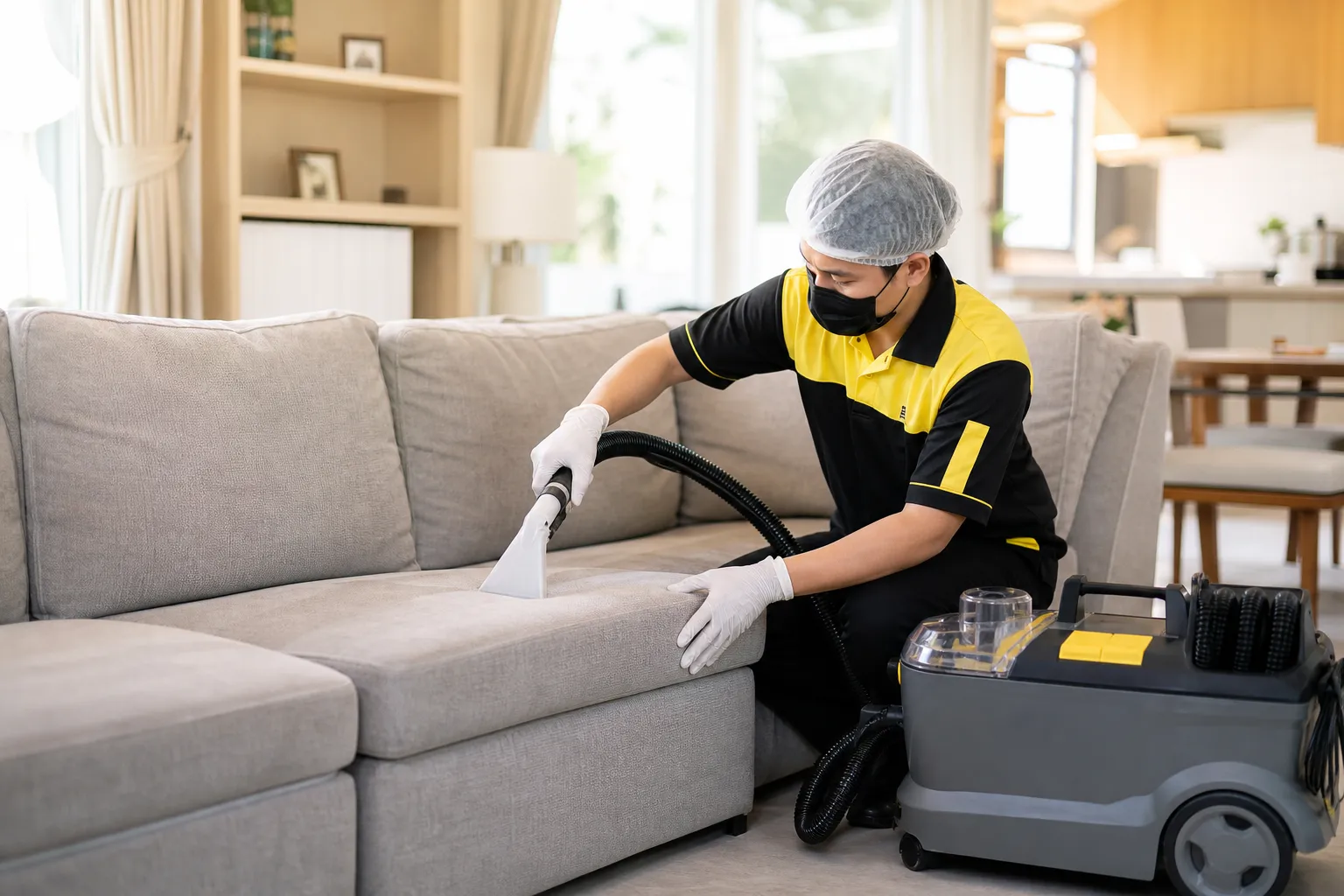
How long does sofa cleaning take on an actual job?
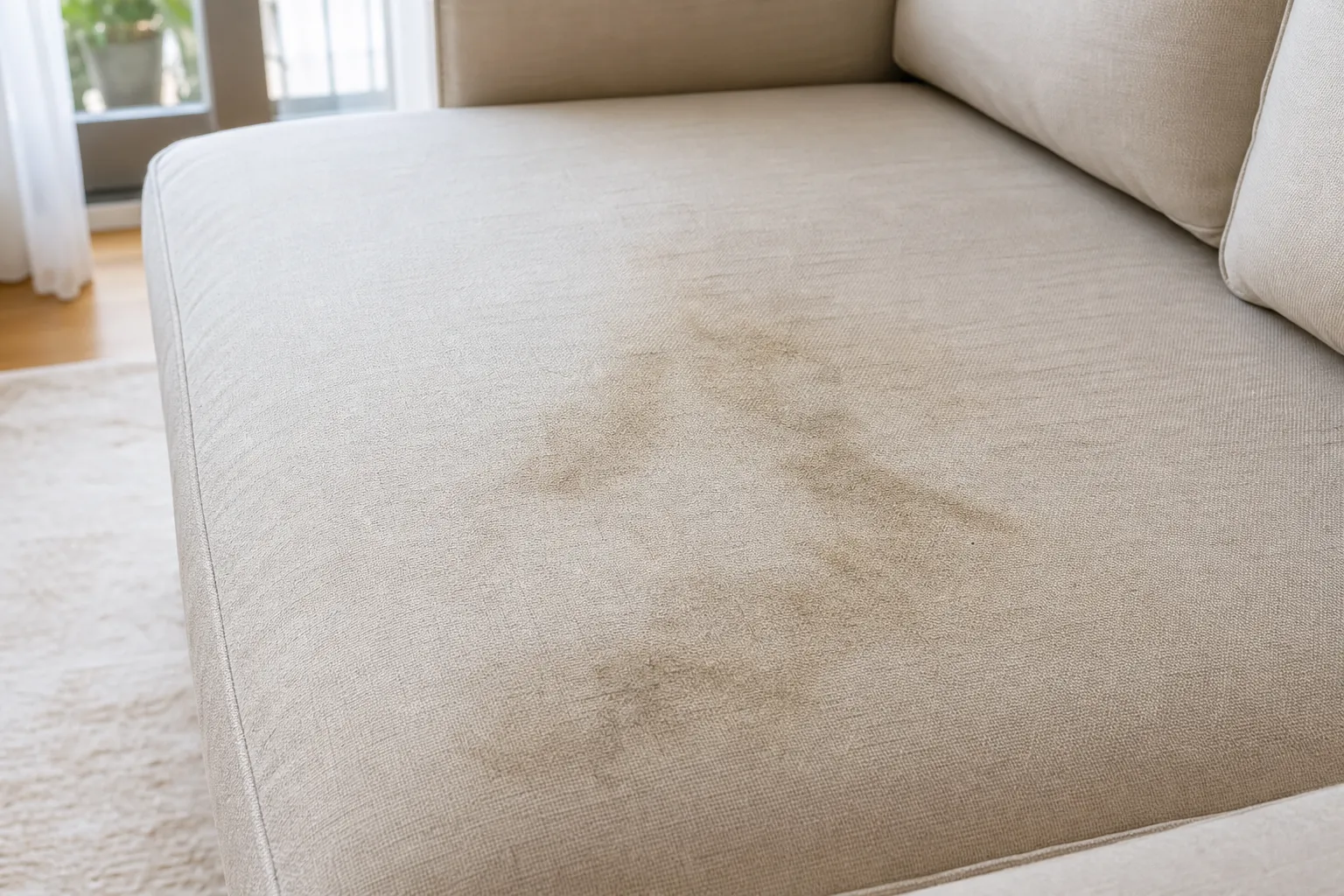
Yesterday, a customer asked about this 6 times. The answer from actual jobs is that the timefor sofa cleaningand the time spent waiting for it to dry are separate periods. A 2–3-seat fabric sofa with stains that have not deeply penetrated usually takes about 1–2 hours to clean, excluding drying time.
A corner sofa, thick cushions, cushions with multiple removable pieces, or cat urine that has soaked into the foam may take around 2–4 hours. Each groove, seam and foam layer must be checked separately. Even after the cleaning is finished, you still need to wait for the sofa to dry before using it.
The answer to how many hours sofa cleaning takes depends on the sofa’s size, number of cushions, stain depth and room conditions. Cotton and linen require careful water control to prevent water rings. Velvet requires less scrubbing, while genuine leather and PU leather are wiped with a damp cloth rather than saturated with water like upholstered fabric.
What steps make up the sofa cleaning time on site?
Technicians do not start by spraying water immediately, because two fabrics on the same sofa may react differently. First, they check the care label, seams, joins and colourfastness in a hidden area, especially for cotton, linen and velvet. They then decide whether to use a damp-cleaning method and how much water is appropriate. Genuine leather and PU leather are cleaned with wiping and products suited to the surface, not the same method used for upholstered fabric.
- Check the fabric and stained areas:Test for colour bleeding underneath the cushions or behind the sofa, and check whether the stain is only on the surface or has already soaked into the foam.
- Vacuum dust and debris:Vacuum the cushion grooves, backrest edges and underneath the cushions before using water, so dust does not turn into mud.
- Prepare the stains:Coffee stains, greasy stains and yellow-ring sweat stains require different methods. A product suited to the fabric and stain is left for approximately 10–15 minutes before continuing; the same solution is not simply left on every sofa.
- Clean and extract the water:Work on one panel or cushion at a time, extracting the water immediately. Working section by section helps control water marks on cotton and linen.
- Inspect again and finish up:Check the seams, underneath the cushions and areas affected by cat urine. If moisture or odour remains, extract again and separate any pieces requiring additional treatment before clearing the area.
The step that most often extends the job is repeated rinsing, not the first round of spraying. For example, dried coffee containing milk or sugar can remain sticky in the fibres, while yellow sweat rings contain both skin oils and salt. Wiping only the centre can spread the ring or create a water mark, so moisture must be blended across the entire panel.
Another case is when someone has poured dishwashing liquid or laundry detergent onto the sofa. Foam trapped in the cushion can require several rounds of extraction and rinsing, making the on-site job longer even when the visible stain is not large.
Typical time allowances technicians make for each type
A straight 2-seat sofa with an isolated coffee stain usually takes around 1–1.5 hours. A 3-seat sofa requiring cleaning of both the seat cushions and backrest is usually allowed 1.5–2.5 hours. A corner sofa, cushions with multiple removable pieces, or cat urine that has reached the foam may take 2–4 hours. These figures are working time, not the time when you can sit on the sofa immediately.
How many hours does a sofa take to dry after cleaning?
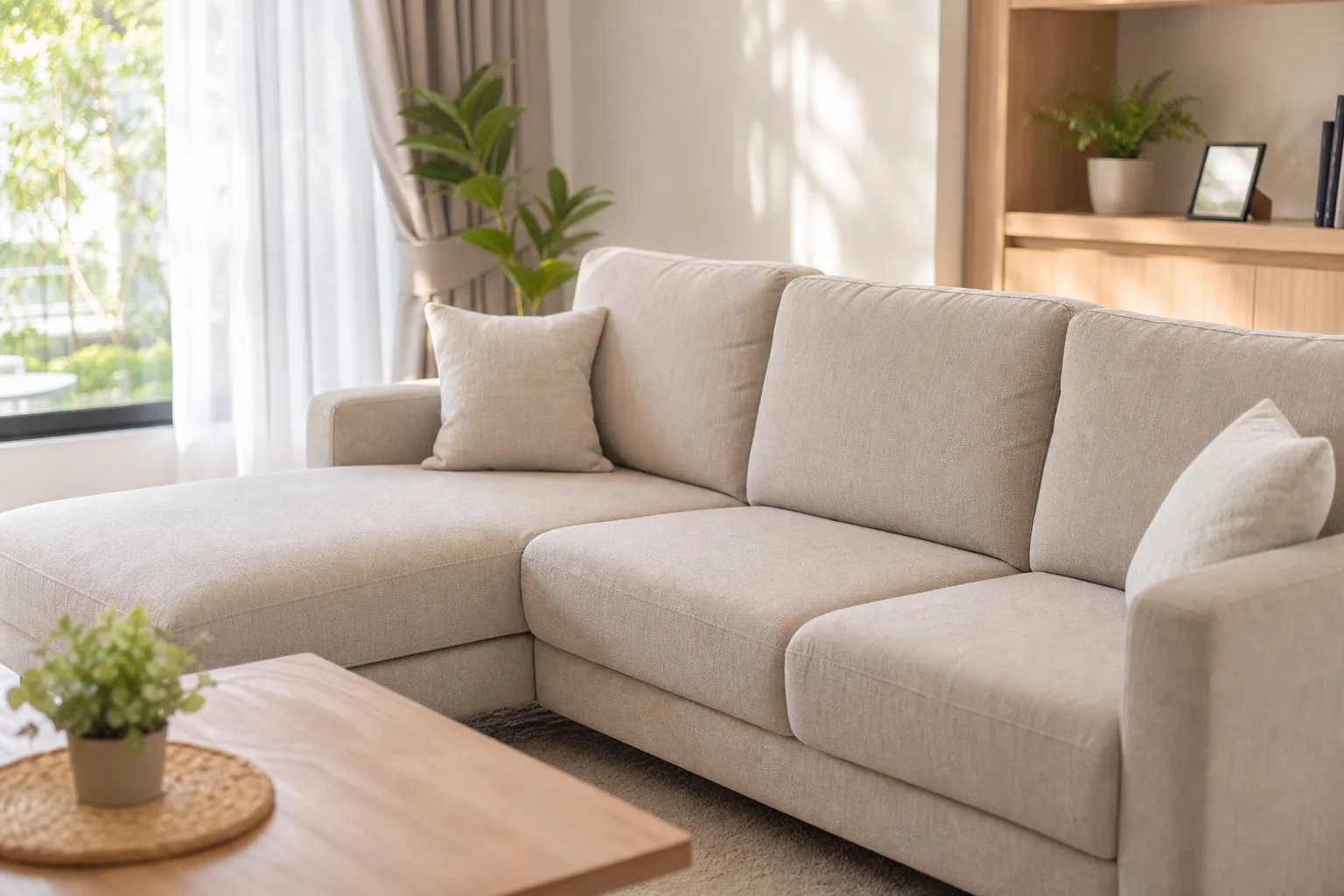
For a typical fabric sofa where the water has been extracted effectively, allow 4–8 hours for drying after the job is completed. Velvet, thick cushions and cat urine requiring deep treatment may take 6–12 hours or overnight. If the room is poorly ventilated, it is raining, or the cushions are placed against a wall, drying will take longer even when the top surface appears dry.
| Material type or job condition | Recommended drying time to allow | What to check |
|---|---|---|
| Cotton / linen | Approximately 4–8 hours | Check the joins, underneath the cushions and water marks |
| Velvet / pile fabric | Approximately 6–12 hours | Do not scrub hard; brush the pile in the direction of the fibres when dry |
| Thick cushions / dense foam | Approximately 8–12 hours or overnight | The inside dries more slowly than the surface; check the seams and underside |
| Genuine leather / PU leather, damp-wiped | Approximately 1–2 hours on the surface | This is not a saturated water-cleaning job; do not use intense heat |
The times in the table are allowances, not fixed figures. The areas technicians usually use to judge dryness are the joins, underneath the cushions and the corners of the backrest—not just the middle of the cushion surface. If these areas still feel cool and damp, continue circulating air even if the top looks dry.
Which types of stains make cleaning and drying take longer?
If coffee has just been spilled and you want to handle it yourself, blot from the outside towards the centre with a dry white cloth first. Then gently dab small amounts with a damp white cloth after testing a hidden area. Do not rub in circles until the fibres become fluffy. Coffee with milk or sugar becomes sticky and may require a stain-treatment product left for 10–15 minutes, followed by another rinse.
Yellow-ring sweat stains should not be wiped only in the centre, because skin oils and salt often spread farther than they appear. Spot cleaning alone can create a water mark or uneven colour, so the entire panel should be treated with controlled moisture, especially on cotton and linen.
Cat urine is another case where the time depends on how deeply it has penetrated. If it is only on the surface and is blotted quickly, it may be manageable in a small area. But if it has soaked through the upholstery into the foam, the surface may look clean while the odour returns after drying. Tell the technician exactly where the accident occurred and how long ago. Do not spray perfume to mask the smell or use a strong product without testing it on the fabric.
Does sofa cleaning require the AC to be on? What setting helps?
Does sofa cleaning require the AC to be on? It is not necessary to run it continuously in every home. What really helps is reducing humidity and allowing air to move across the sofa surface. If the AC has a Dry mode, you can use it, or use Cool mode together with a fan to create gentle airflow across the sofa. An AC that cools the room without circulating air may work more slowly than a fan that circulates air throughout the room.
When the outdoor air is dry and breezy, opening the windows can help ventilate the room. But if it is raining or humid, close the room and use the AC’s Dry mode or a dehumidifier instead. Removable cushions should be stood on edge with space around them, not stacked, and do not cover them quickly while the joins are still damp.
How can you check whether the sofa is ready to use?
Before putting the covers back on, check the three areas that usually dry most slowly: the seam grooves, underneath the cushions and the underside of the backrest. Press a dry white cloth against them to check for moisture and watch for any musty odour. If they are still damp, do not sit on the sofa or cover it yet, because trapped moisture can cause the smell to return. In homes with cats, keep them away from the cushions until they are completely dry.
Let Hurryclean clean your sofa at home in Bangkok and surrounding provinces
If you are unsure how to treat a sofa made of cotton, linen, velvet, genuine leather or PU leather, Hurryclean provides at-home cleaning for sofas, mattresses, carpets, curtains and car seats in Bangkok and surrounding provinces. The technician will assess the material and type of stain before choosing the cleaning method.
Send a photo of the sofa, its approximate size and whether the stain is coffee, sweat or cat urine to ask about the on-site time and the drying time to allow via LINE @hurryclean. Clear stain information helps the technician prepare the right method.