
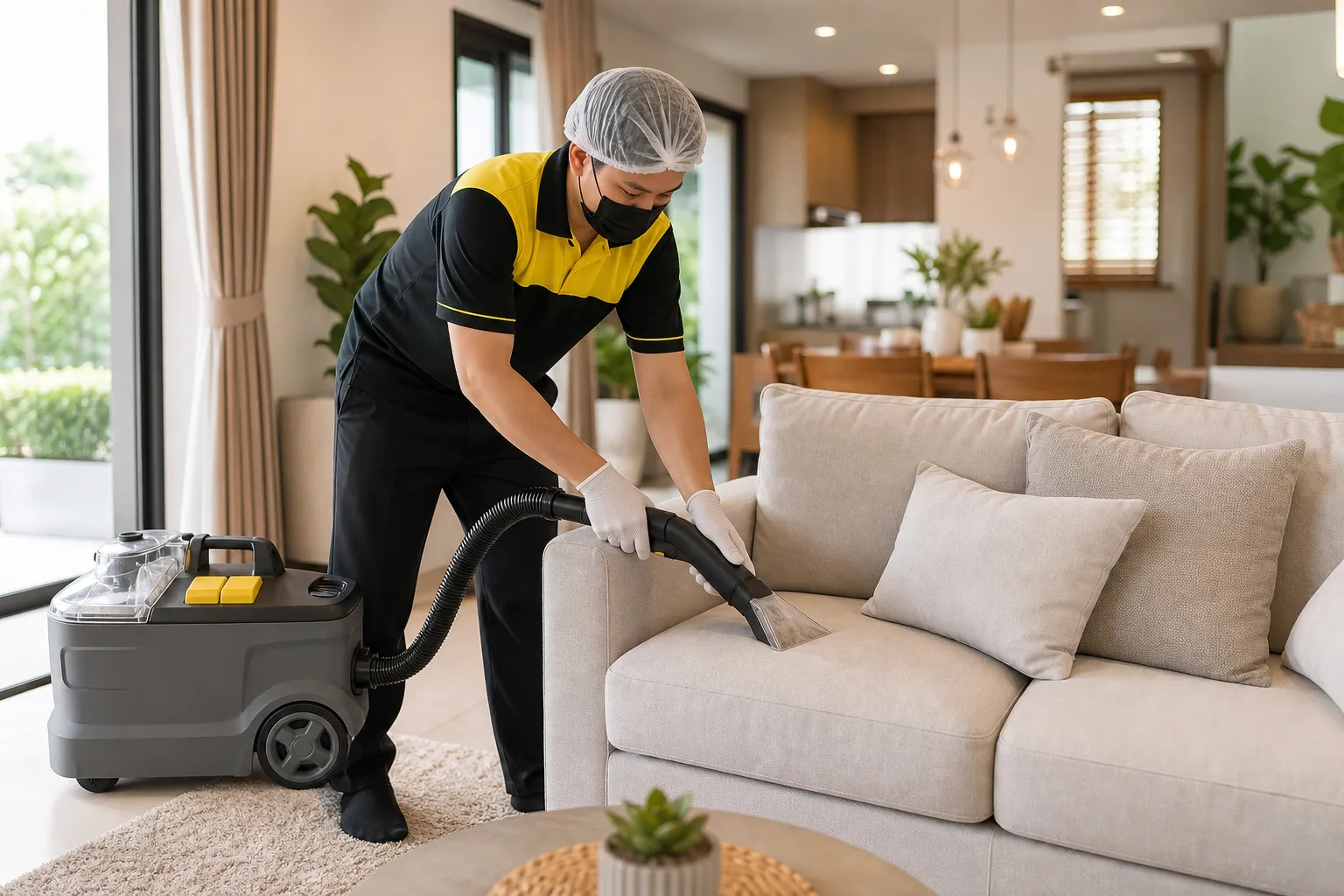
Fabric Sofa Cleaning: Water or Steam? An On-Site Technician’s Answer
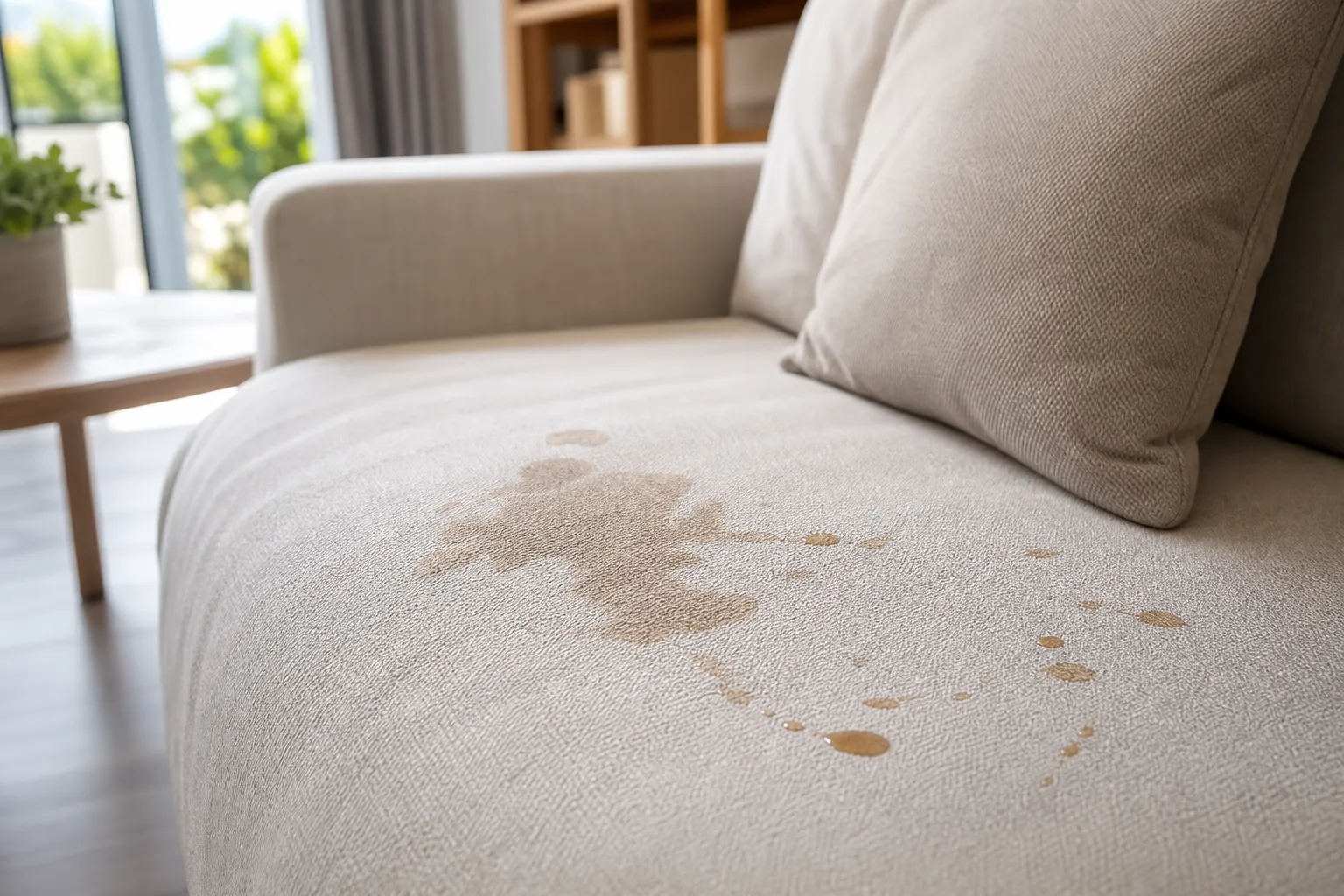
Yesterday, I was asked this question by customers 3 times: should a fabric sofa be cleaned with water or steam to stay safe and dry quickly? The answer is not about which machine gets hotter, but about the care label, fibre type, and stains already on the cushions.
If you ask me directly, What method should be used to wash a sofa?For fabrics marked W or WS with coffee stains, sweat stains, or surface dust buildup, I usually choose a small amount of water combined with immediate extraction. This leaves less water in the foam than pouring water over it. Steam should only be used after the fabric has been tested, because heat and pressure may cause shrinkage, colour bleeding, or velvet pile to flatten.
Check the care label and fabric type before washing the sofa
Before I start washing a fabric sofa, I always check the label under the cushions or on the back of the frame. W means water can be used; WS means water or solvent-based products can be used; S should be treated with a solvent-based product; and X allows vacuuming or gentle brushing only. If the label is missing or unreadable, test an inside seam and wait for it to dry before checking for colour bleeding or water rings. Do not judge based on fabric colour alone.
Cotton absorbs water easily, so water rings may form if only one area is wet-cleaned and the water is not extracted evenly. Linen may shrink or wrinkle when exposed to too much water. Washing these two types of fabric sofa therefore requires careful control of the amount of water and extraction pressure—it is not a case of wetter being cleaner.
Velvet has pile that can flatten when scrubbed hard or when a steam head is held in one place. Do not use a stiff brush on this fabric. Genuine leather and PU leather may also be used on sofas, but fabric-cleaning formulas should not be applied to them, as they may cause spotting, peeling, or colour changes. Leather requires a separate care method.
In actual jobs, I distinguish between using water and using steam roughly as follows, so it is clear that safety depends more on the material and moisture control than on the name of the method.
| Cleaning method | Best used when | Risks and drying requirements |
|---|---|---|
| Controlled water use with extraction | W/WS fabrics such as cotton and tightly woven fabrics, with surface coffee or sweat stains | Do not pour on enough water to saturate the fabric. The solution and moisture must be extracted several times. |
| Steam or high heat | Fabrics whose labels permit it and that have passed testing; certain surface stains | There is a risk of shrinkage, colour bleeding, loosened adhesive, and flattened velvet pile if heat is applied too closely or the fabric is scrubbed hard. |
Another common misunderstanding is that some machines call themselves steam cleaners, when they actually spray warm water and extract it. A true steam head relies mainly on heat and steam. Before hiring a service or doing the work yourself, ask what the machine releases onto the fabric and whether it can extract the moisture again. This affects drying more than the machine’s name.
How to Clean a Fabric Sofa Yourself Using Minimal Water
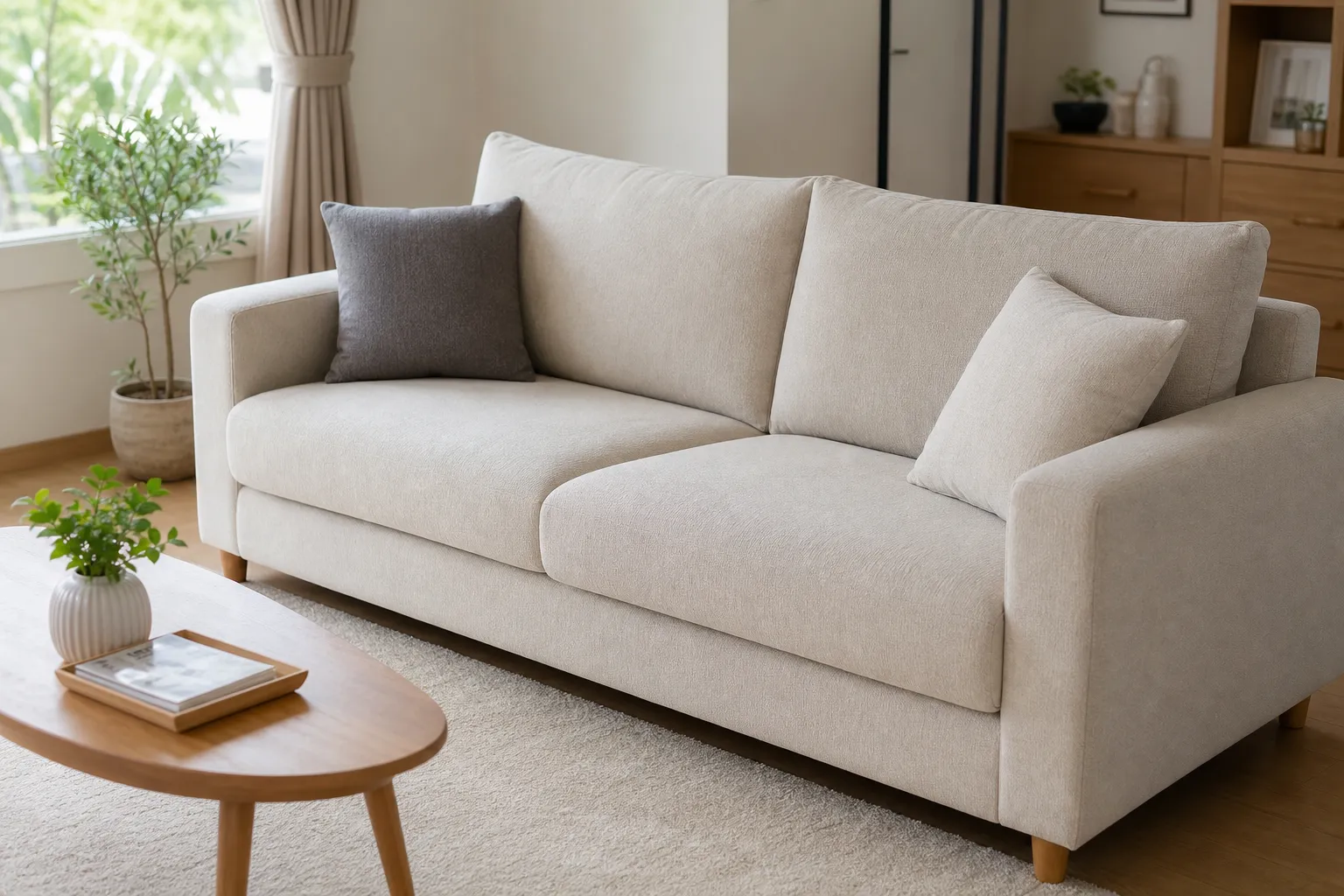
DIY cleaning is suitable for sofas marked W/WS and for small, localised stains that have not penetrated deeply, such as coffee spilled on a seat cushion or sweat around an armrest. If cat urine has soaked into the foam or the entire sofa smells musty, adding more moisture to the surface without an extraction machine may slow drying and cause the smell to return.
If the care label permits water, follow these steps and start with a small area. Blotting alone may be enough for a fresh coffee spill, but old stains or sweat stains should be tested with the cleaning solution first, while observing how the fabric colour responds.
- Vacuum thoroughlyUse a crevice tool on the seams, cushions, and underneath the cushions so dust does not turn into mud when it gets wet.
- Blot the stainWith a dry white cloth, press from the edge of the stain towards the centre. Do not rub back and forth, especially when dealing with still-wet coffee or cat urine.
- Test a hidden areaUse a diluted solution suitable for the fabric, then wait for it to dry to check for colour bleeding, spotting, or water rings.
- Apply or spray the solutionOnto a small area. Do not pour it directly onto the sofa. Leave it for 10-15 minutes according to the label, and use a soft-bristled brush only on tightly woven fabrics. Do not scrub velvet.
- Extract or blot backTo remove the solution and stain from the same area. If you do not have an extraction machine, press with a damp white cloth and keep changing the cloth until no cleaning-solution foam remains.
- Allow it to drySeparate the cushions from the frame if possible. Turn on a fan so air passes over both the front and back, then check the stains, odour, and water marks before using the sofa again.
If you do not have an extraction machine, I recommend treating only small areas. Do not wash the entire sofa until it is wet, because water remaining in the inner foam may not show on the surface immediately. If the surface is dry but the cushion still feels cool and damp or smells musty, it is not ready to use.
Deal with Coffee, Sweat, and Cat Urine Stains While Speeding Up Drying
Blot a fresh coffee stain immediately, working from the edge towards the centre. If it contains milk, cream, or sugar, I would not start with hot steam, because heat may spread the stain or set it more deeply. For an old coffee ring on cotton, moisture should be applied evenly across the whole panel—not just to the centre of the ring while leaving the edges to dry differently.
Yellow sweat rings are commonly found on seat cushions and armrests. They result from a combination of sweat, skin oil, and accumulated dust. Test the cleaning solution first, then leave it for 10-15 minutes according to the label. For linen, use minimal water and blot several times, because vigorous rubbing or uneven wetting can cause water rings and wrinkles.
Cat urine stains require more care than surface stains because the odour may penetrate into the foam and return when the air is humid. Passing a steam head over the surface may lighten the surface stain, but that does not mean the odour inside has been extracted. Blot first, use a urine-stain remover or enzyme product labelled for fabric cushions, and never mix bleach with any other cleaning product.
Fast drying starts with removing water, not adding heat. After extraction, separate the cushions from the frame if possible and turn on a fan so air passes over the front and back. Do not push the sofa against a wall or cover it with fabric or plastic while it is still damp. This removes residual water from the fabric and foam more effectively than repeatedly applying steam.
Homes with children or pets should inform the technician before work begins and ask how to ventilate the room or restrict the area. After cleaning, wait until the surface, seams, and hand-contact areas are completely dry before allowing children to sit on the sofa or letting cats and dogs climb onto it. Do not let pets lick fabric that is still damp.
If a musty or urine odour returns when humidity is high, do not quickly spray perfume to cover it. Check beneath the cushions, the joints, and the foam first, as residue may remain inside. In this situation, spraying the surface again alone is usually less effective than assessing where the odour has actually penetrated.
What to Ask Clearly Before Hiring a Sofa Cleaning Technician
Before arranging an at-home service, I recommend asking which method is suitable for this fabric, where water rings might occur, how long the work will take, and how long the sofa should be left to dry. A reliable technician should explain the process and clarify the scope of work and what is included in the appointment before starting. If the phrase “work guarantee” is used, ask what conditions apply, which types of stains are covered, and what the approach is if the fabric colour changes.
The inspection should cover the seams, cushion edges, and original stained areas together with the technician. If a stain remains, ask honestly whether it is deeply embedded, whether the fabric colour has changed, or whether moisture is still trapped. Do not scrub it again yourself immediately. Hurryclean conducts on-site result checks based on customer satisfaction, so tell the technician every area you want inspected before they leave.
Hurryclean uses modern equipment meeting European standards, but good equipment should not be the only reason for choosing a service. The technician must also check the care label, test the fabric colour, select a solution suited to the stain, and explain the risks for cotton, linen, or velvet before starting.
If you are concerned about whether an at-home service is reliable, Hurryclean’s review page shows a Google Review score of 5.0 from more than 1,700 reviews. Common praise mentions clean results, polite technicians, clear explanations, and fast admin replies. This information can support your decision, while you should still provide clear details about your own sofa and stains.
Let Hurryclean Help Choose the Right Fabric Sofa Cleaning Method at Home
If you are unsure whether to clean your fabric sofa with water or steam, do not guess and force a DIY solution. Send Hurryclean photos of the entire sofa, the care label, and close-ups of the stains. Tell us whether they are coffee, sweat, or cat urine stains and how long they have been there. The at-home service team in Bangkok and surrounding provinces can then help assess the cleaning method, ventilation, and how long the sofa should be left to dry before use. Contact Hurryclean via LINE @hurryclean.