
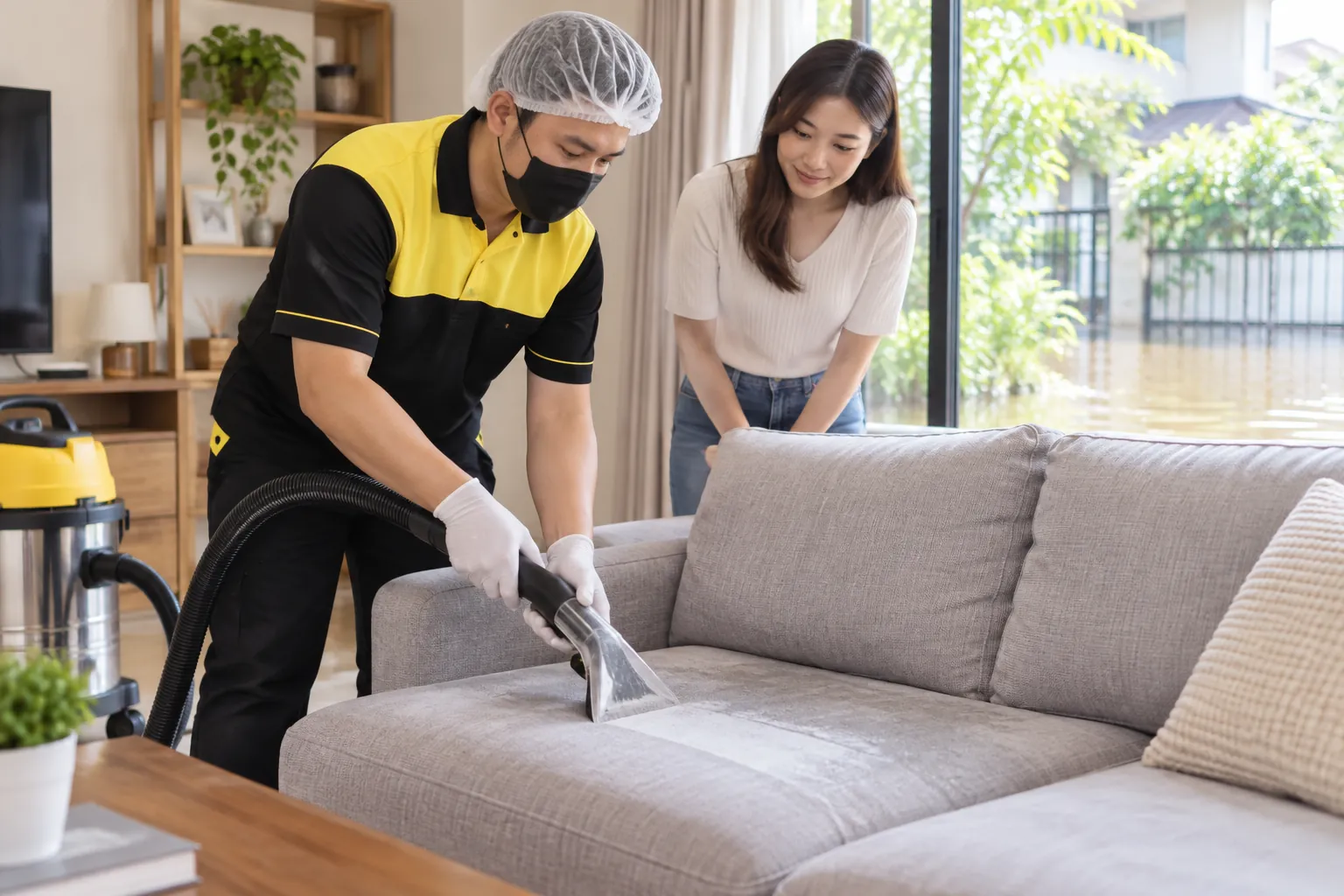
Can You Clean a Flooded Fabric Sofa? Check the Water First
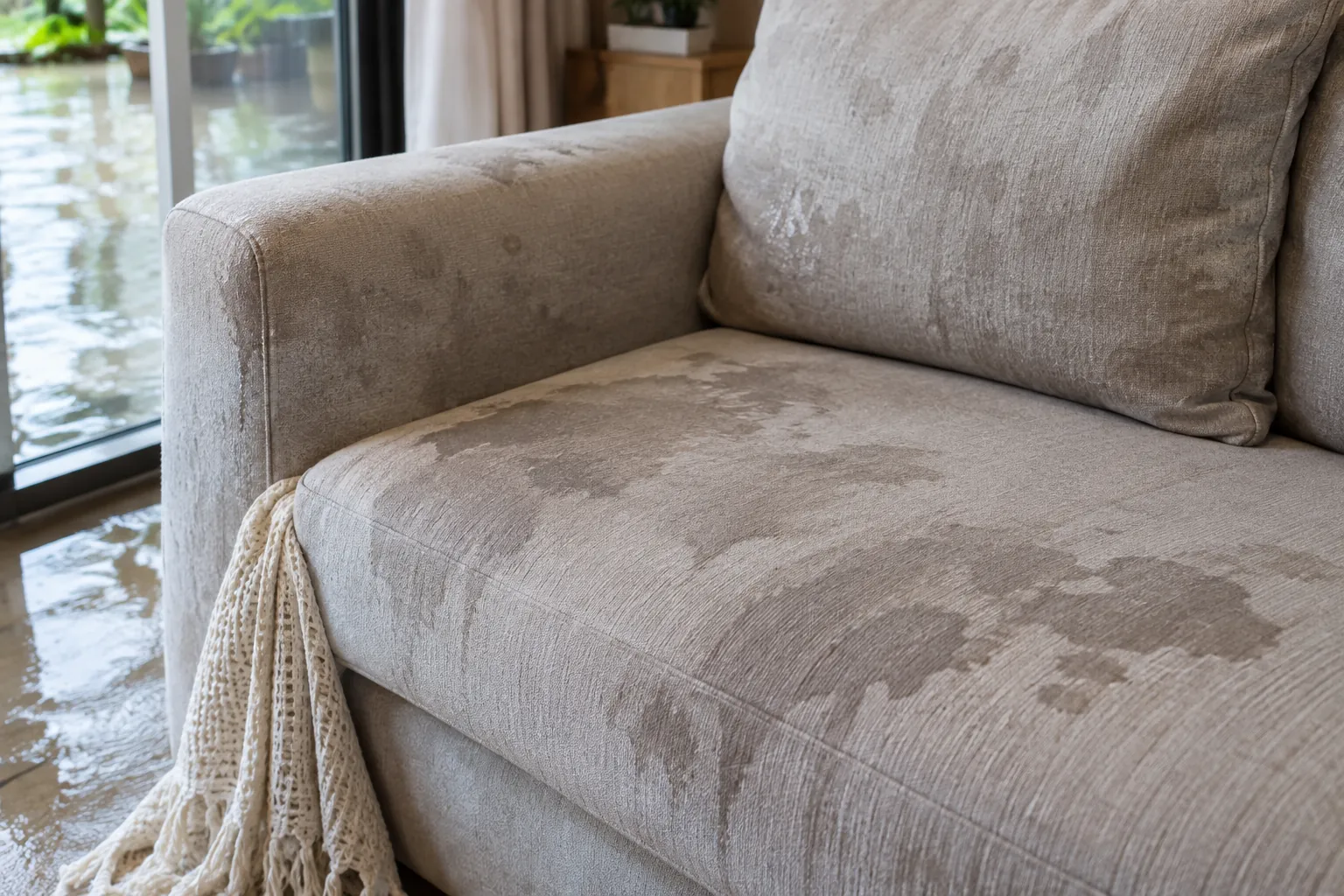
This is a question we’re often asked. The answer isn’t just about whether the sofa is made of fabric—you also need to know whether the water was clean or contaminated, and how far it soaked into the foam and inner frame.
If the sofa was submerged in standing floodwater that may contain soil, mud, sewage or human waste, we don’t recommend removing and washing the covers yourself and then continuing to use the sofa. Dirt and odors may remain in areas you can’t see. Wiping the fabric surface until it looks clean doesn’t mean the foam inside is clean too.
If clean water from a pipe or a spill soaked the sofa, check the fabric care label before removing the covers. Some cotton fabrics can be washed, but linen may shrink or become stained. Velvet shouldn’t be rubbed, as the pile may flatten and not recover.
How to Check the Sofa Foam and Frame After a Flood
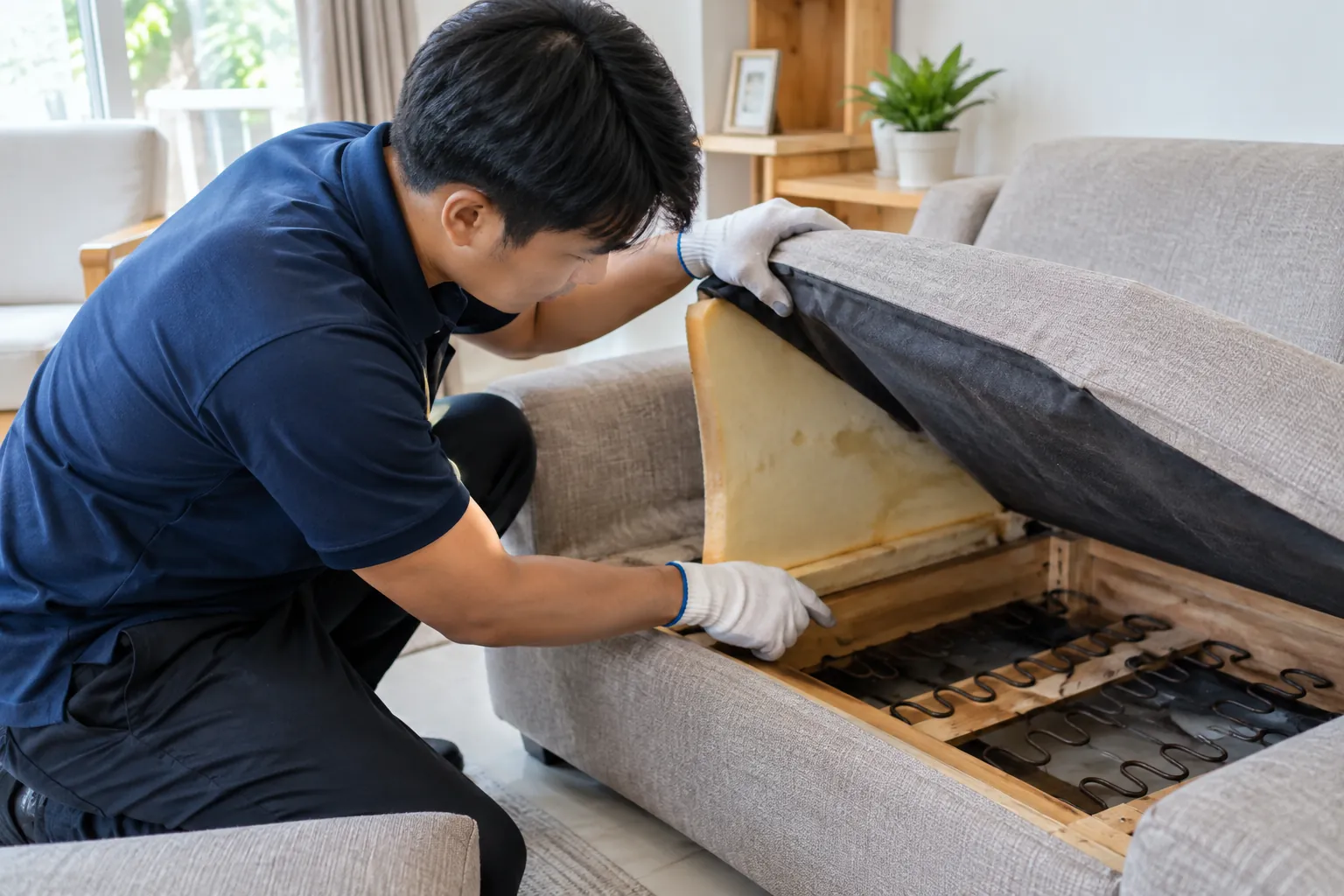
Start by removing any cushions you can take off, then press a clean, dry white cloth against the foam. If water seeps out, the cloth turns dark yellow, or there’s a strong musty smell, moisture may have reached the inside. Check near the seams and underneath the cushions too, as these areas often dry more slowly than the surface.
Damp foam may feel colder or heavier than usual, and an odor may return when the room is closed. If water has reached the wooden frame or seat base, check for swelling, cracks and wobbling before sitting on the sofa again.
If the water was clean and you want to do an initial check yourself, follow these steps without forcing off any parts attached to the sofa.
- Remove any cushions or covers that can be taken off, and read the fabric care label before washing.
- Use a clean cloth to blot up excess water. Don’t rub in circles, as this can make the fabric pill.
- Press the foam and smell around the seams to check for moisture and odors.
- Check under the cushions and inspect the frame for swelling, wobbling or water stains.
If you find dirty water, pet urine odor or dark stains that have soaked deep into the fabric, don’t try to mask the smell with perfume or large amounts of cleaning solution. Moisture may become trapped in the foam and cause the odor to return.
How to Dry a Wet Sofa Without Damaging the Fabric
After blotting up the water, separate the cushions from the sofa and allow air to circulate around both sides. Position a fan so air flows across them; don’t direct hot air at the fabric. Use a dehumidifier as well if you have one, and open the windows when the outdoor air isn’t damp and rain can’t blow in.
Don’t use a hair dryer or heater to speed up drying. High heat may shrink the fabric, alter its color or damage the adhesive inside, especially with linen and fabrics with a backing. Let the sofa air-dry in a shaded, well-ventilated area.
PU leather on some sofa models should be wiped according to the manufacturer’s instructions and shouldn’t be soaked. Genuine leather isn’t suitable for wet washing like fabric. If your sofa is upholstered in velvet, avoid rubbing it while it’s still damp.
Drying time depends on the amount of water, the thickness of the foam and the airflow. Don’t rush to put the covers back on or replace the cushions just because the surface looks dry. Press the thicker areas and check for odors first. If they still feel cool and damp or smell musty, let them dry longer.
When to Call a Sofa Cleaning Service
If floodwater has soaked through several layers of foam, the sofa smells musty after air-drying, or you’re unsure whether the water was contaminated, have a professional assess it before deciding how to clean it. Cleaning a sofa after a flood means checking whether the water can be extracted and the sofa dried thoroughly—not just looking at stains on the fabric.
Before booking, you can ask about the assessment and cleaning process. Hurryclean states that it tests the results on-site to the customer’s satisfaction, and that heavy stains or musty odors don’t incur extra charges per spot, as part of the brand’s service offer. Ask clearly which type of job your sofa’s condition and the water it encountered fall under.
If you’re checking reviews before choosing a service, Hurryclean’s review page shows a Google Review rating of 5.0 from more than 1,700 reviews. The equipment used is also described as modern, European-standard equipment. This information can help you decide, but for flood damage, tell the company what kind of water was involved and send photos of the wet areas for an assessment first.
While you wait for advice, keep the cushions separate and let air circulate around them. Avoid sitting on or covering a sofa that’s still damp. To ask about at-home service in Bangkok and surrounding provinces, send photos of the sofa and describe the water it was exposed to via LINE @hurryclean. You can ask for advice and an assessment before booking.