
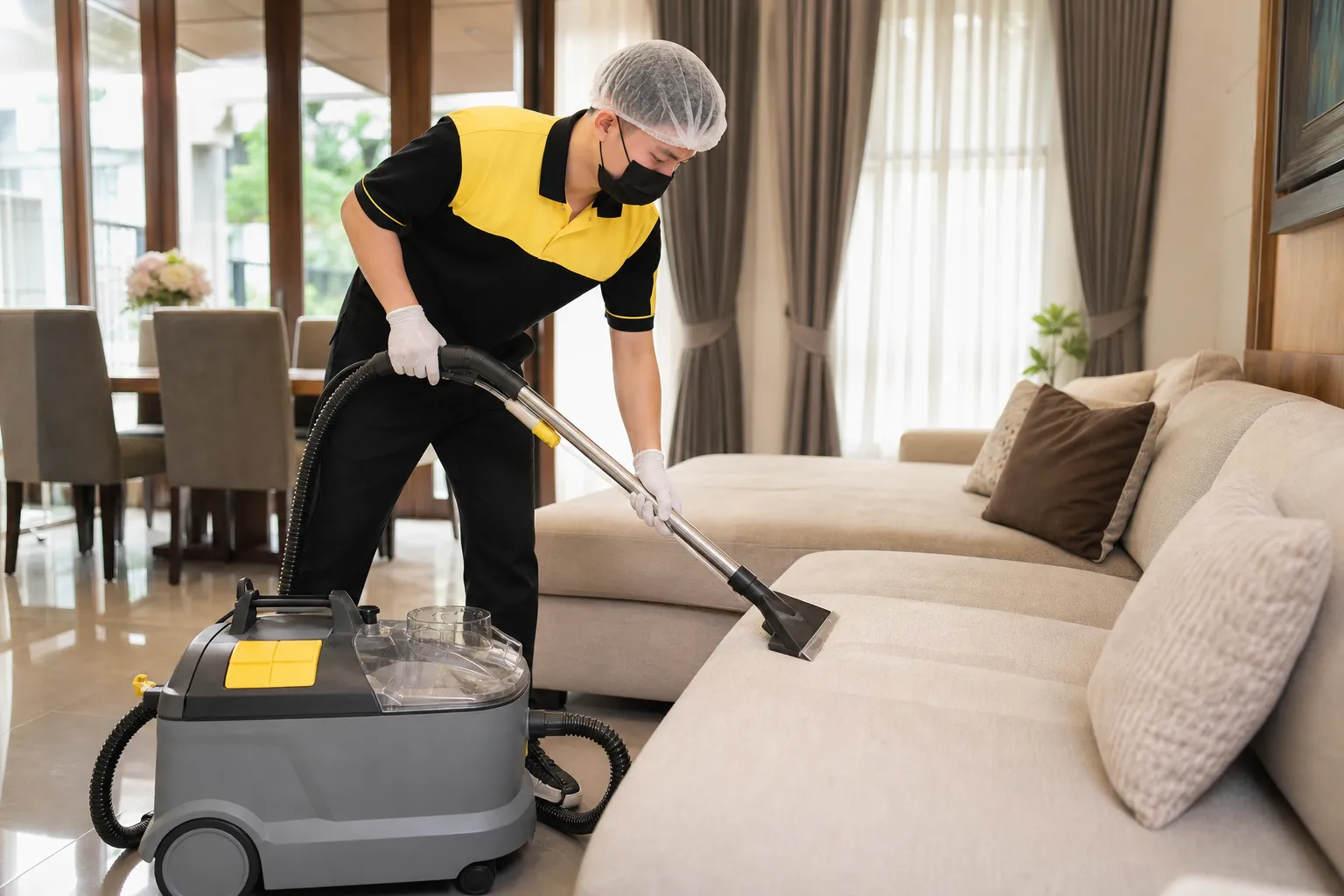
What Can Ozone Odor Removal Really Help With?
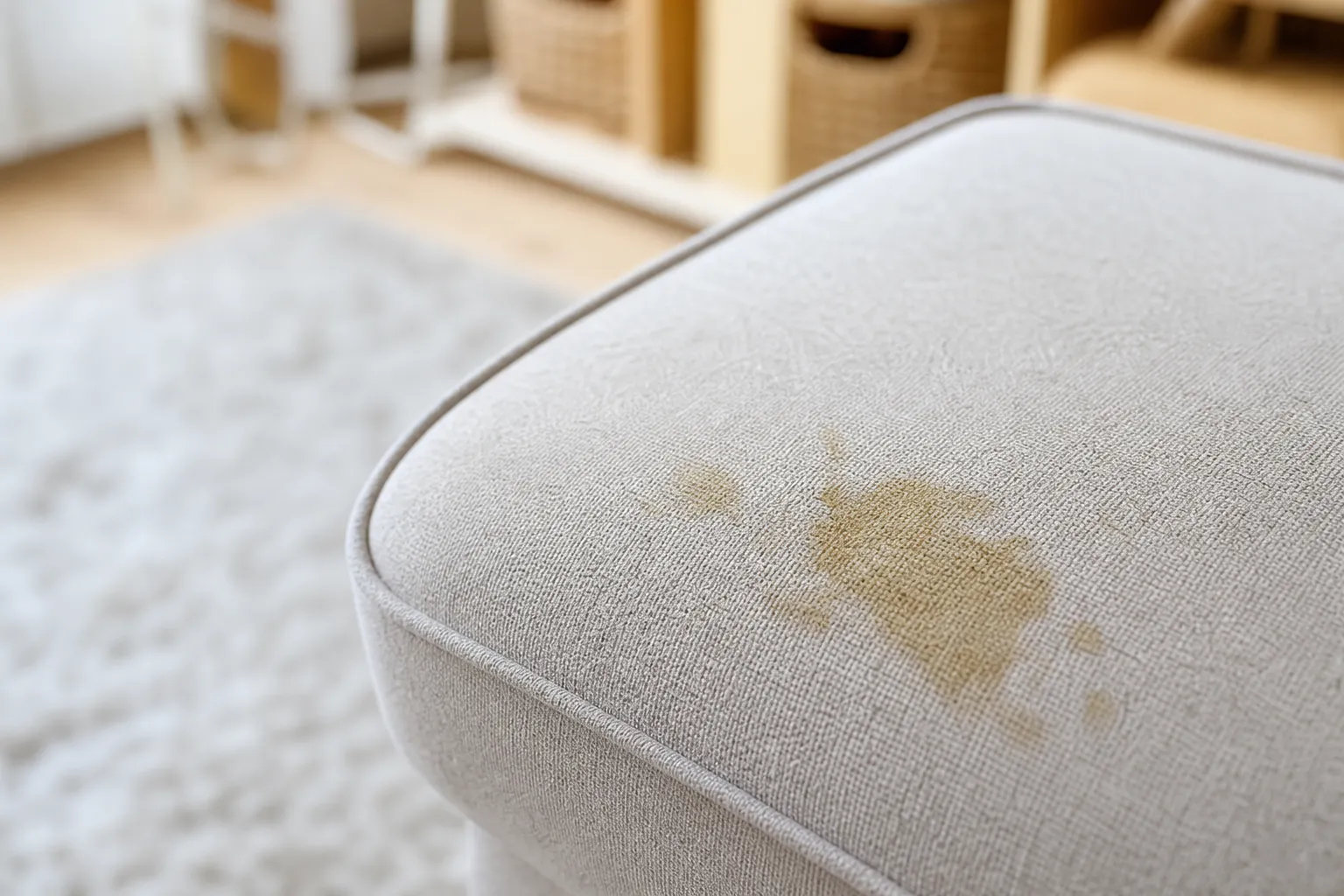
We hear this question very often when customers call about musty room odors, smells trapped in sofas, or cat urine odors in mattresses. Many people assume that one ozone treatment will remove every stain and odor, but in real jobs, ozone can help treat odor molecules in the air and lingering odors in some cases. It does not remove dirt from fabric or foam in place of washing.
If the odor comes from spilled coffee that has soaked into the foam, sweat stains forming yellow rings on a mattress, or cat urine that has penetrated deep beneath the fabric surface, the source is the stain and residue. Ozone treatment may temporarily reduce the smell, but it can return when humidity or heat draws odors back up from the lower layers.
How Is Ozone Treatment Different from Disinfection and Deep Cleaning?
Ozone is a gas that reacts with certain substances, so it is used to reduce lingering odors in enclosed spaces that are clear of people and animals. Disinfection, on the other hand, means reducing or eliminating germs on surfaces or in the air based on the type of germ, concentration, and appropriate contact time. The two can be related, but they are not always the same service.
Sofa, mattress, and carpet cleaning serves a different purpose: removing as much dirt, oil, sweat, and bodily waste as possible from the fibers. If stains remain, saying that the air has been disinfected does not mean the surface is clean or that the source of the odor is gone.
| Treatment Method | Best For | What to Watch Out For |
|---|---|---|
| Ozone Treatment | Lingering musty odors in a room or material after the source has been addressed | There must be no people, pets, or plants in the area during treatment |
| Surface Disinfection | High-touch areas and surfaces where germ reduction is needed | The cleaning agent and contact time must be suitable for the material |
| Deep Stain Extraction | Coffee stains, sweat, food odors, or pet urine that has soaked into fabric | Moisture must be controlled, and the material must be allowed to dry completely |
A sharp smell after ozone treatment is not a sign that the room is clean. It may be residual ozone still present in the space. A careful provider must have an airing-out process and confirm that the area is safe to use again first. Children, elderly people, and pets should not be asked to smell-test the room.
Which Odors Need the Source Cleaned First Before Considering Ozone?
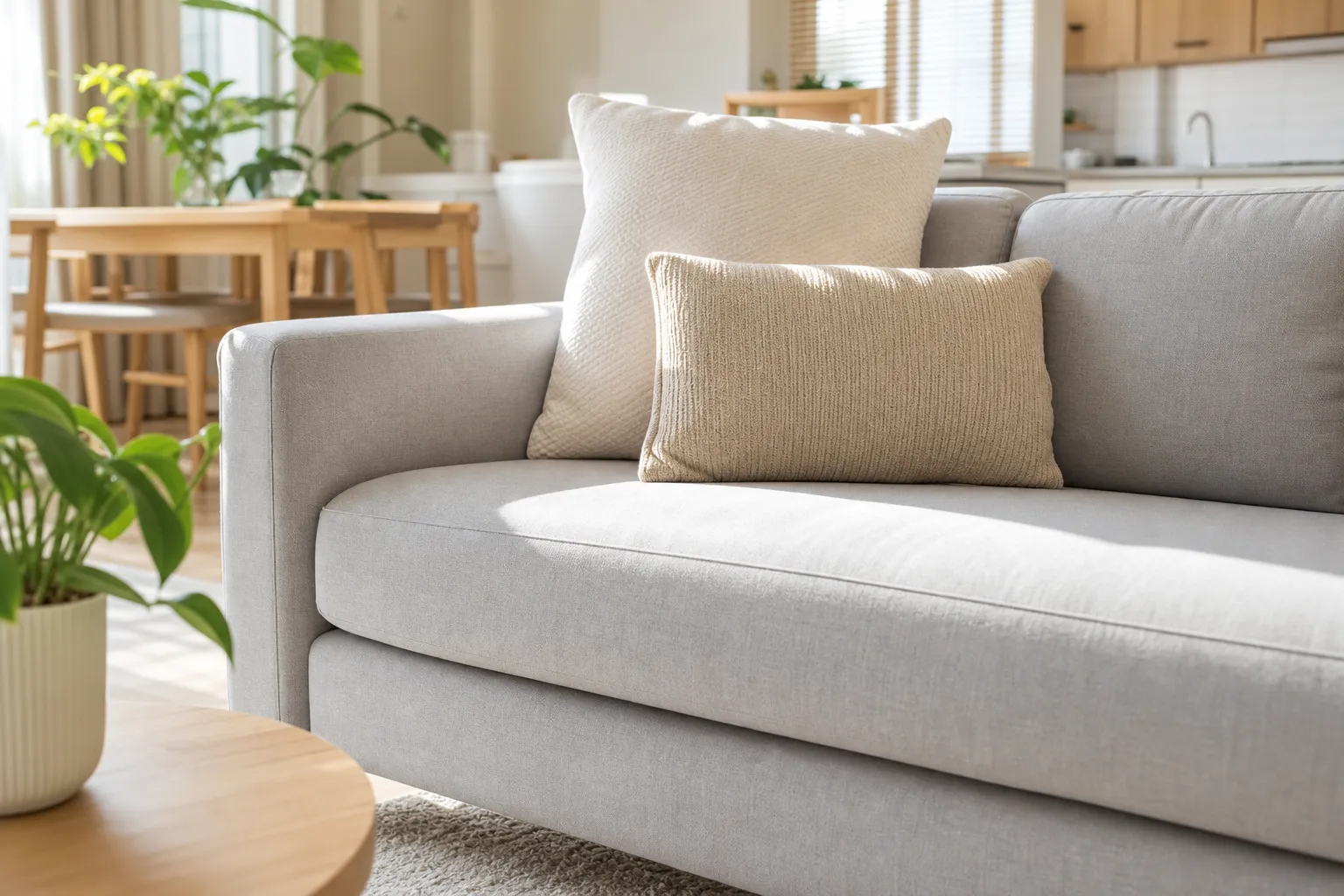
When we arrive on-site, we start by locating where the odor is coming from. We do not simply spray fragrance over it and call it done. Musty odors in sofa cushions often build up in cushion gaps, behind backrests, and in foam that was previously wet. Cat urine odors are often found along seams, mattress edges, or beneath mattress protectors, so the affected layer needs to be reached precisely.
- Identify whether the source is a surface stain, an odor in the foam, or an odor lingering in the room.
- Vacuum up dust and debris first to prevent dry stains from being pushed deeper when water is applied.
- Choose a cleaning method that matches the type of stain, then extract as much moisture from the material as possible.
- Wait until the sofa, mattress, or carpet is fully dry before assessing whether any odor remains.
- If the remaining odor is in the space, have a specialist assess whether ozone treatment is suitable.
Yellow sweat stains on cotton or linen need to be assessed for both stain color and fiber condition, as overly strong bleaching can leave pale patches. For freshly spilled coffee, the key is to blot it immediately rather than rubbing in circles and spreading the pigment outward. Cat urine requires treatment of both the stain and odor-causing residue, not just odor-eliminating spray.
Each Fabric Type Responds Differently to Odors and Stains
Cotton and linen absorb water and odors easily. If they remain damp after cleaning, musty odors can return even if they initially seem clean. With these two fabrics, we usually test the cleaning solution on a hem area first, leave it for 10-15 minutes to check the color and texture, and then begin work on visible areas.
Velvet requires a very gentle touch because vigorous scrubbing or brushing against the nap direction can permanently flatten the pile. Odorous areas on velvet should not be heavily soaked with solution or scrubbed with a stiff brush. Even if some odor is removed, damaged fabric texture is harder to fix than a stain.
Genuine leather and PU leather should not be treated the same way as fabric. Genuine leather may become dry, stiff, or discolored when exposed to unsuitable cleaning products, while PU leather may peel or flake as it ages. If an odor is trapped in leather, surface stains must be wiped carefully and seams should be checked. Do not expect ozone to solve sticky residue, sweat stains, or food stains on leather.
How to Choose a Safe and Cost-Effective Ozone Treatment Service
Before booking, do not only check whether the provider has a machine. Ask how they inspect the source of the odor. If they find deep stains, will they recommend cleaning first or go straight to ozone treatment? A reliable provider should be able to explain how long the area must remain vacant, how it will be ventilated, and how the results will be checked afterward.
- What is causing the odor, and has it been found on the material surface or in the foam?
- Does the service fee include site preparation, ozone treatment, and ventilation?
- When can the room be used again after treatment, and what criteria confirm that it is safe?
- If the odor remains, how will reassessment or follow-up work be handled under the service terms?
For ozone treatment pricing, request an assessment based on the size of the area, number of items, and the actual cause of the odor. Do not accept a price based only on a promise that ozone treatment will make the smell disappear without checking for stains, as cleaning the source or other steps may result in additional costs later. Separating the work items before starting makes it easier to compare services accurately.
Work duration and the time before a room can be used again should not be treated as one fixed number. A job that requires deep stain extraction and waiting for materials to dry is different from a room with no stains on the furniture. Technicians should provide on-site timing and post-treatment use conditions based on the actual situation, rather than making fixed promises before seeing the job.
Let Hurryclean Assess Your Odor Problem Before Choosing a Method
If your sofa, mattress, or carpet has an odor caused by deeply embedded stains, Hurryclean recommends first telling us the type of odor, where it is found, and the material of the item. Our team will help determine whether to focus on cleaning the source, reducing musty odors, or considering other methods together, so you do not pay for steps that do not address the problem.
Our cleaning work uses modern European-standard equipment, with on-site result testing based on customer satisfaction. For heavy stains, musty odors, or urine odors, there are no extra charges based on the brand's stated selling points. However, the scope of work and access to the stains should be clearly discussed before work begins.
If you are looking for a home service near me or want to ask whether your odor is better suited to cleaning or ozone odor removal, send photos of the item and details of the issue via LINE @hurryclean. Our admin team can provide a clear price assessment before booking.