
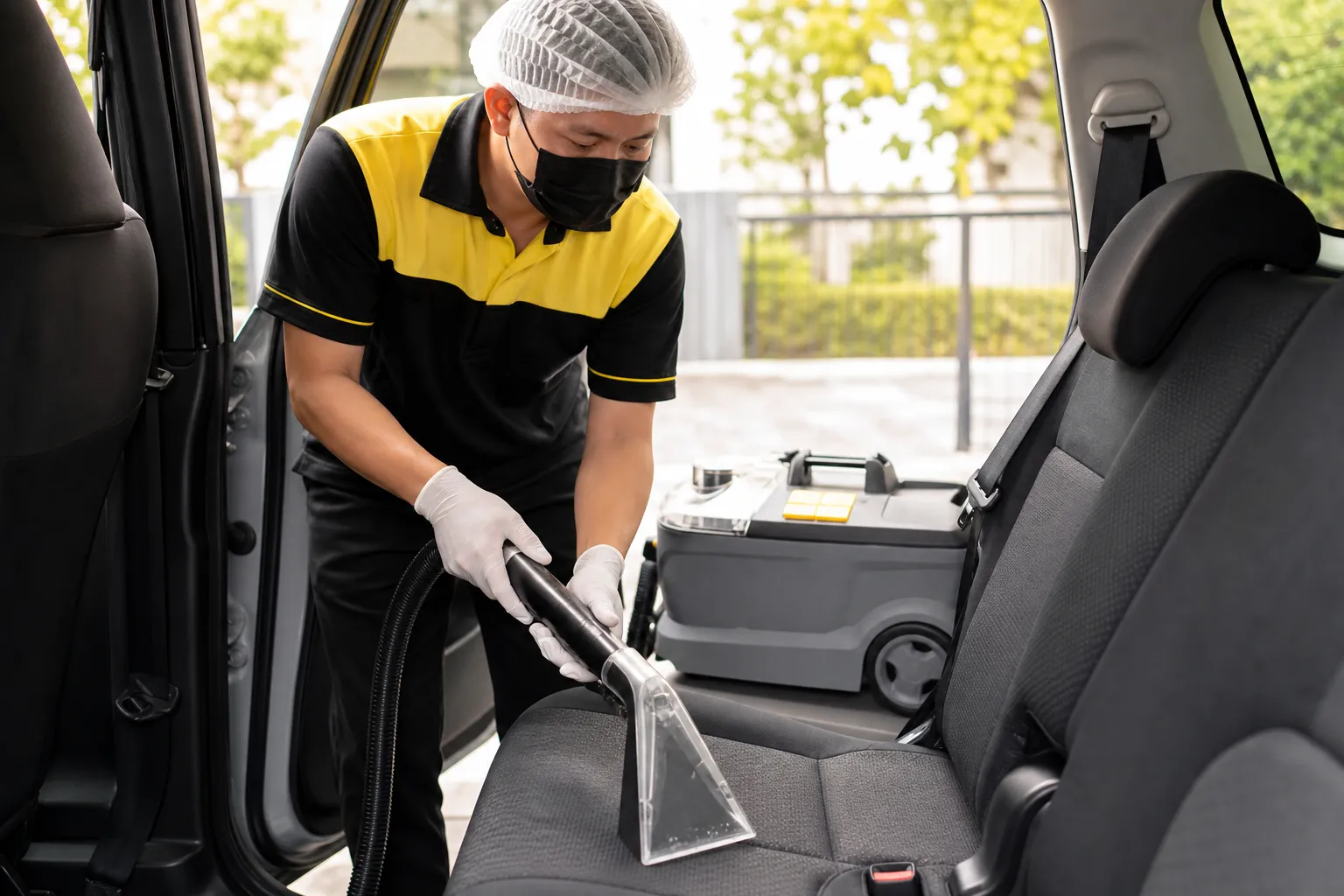
Sour milk smell in your car comes from residue that has soaked deeper than it appears.
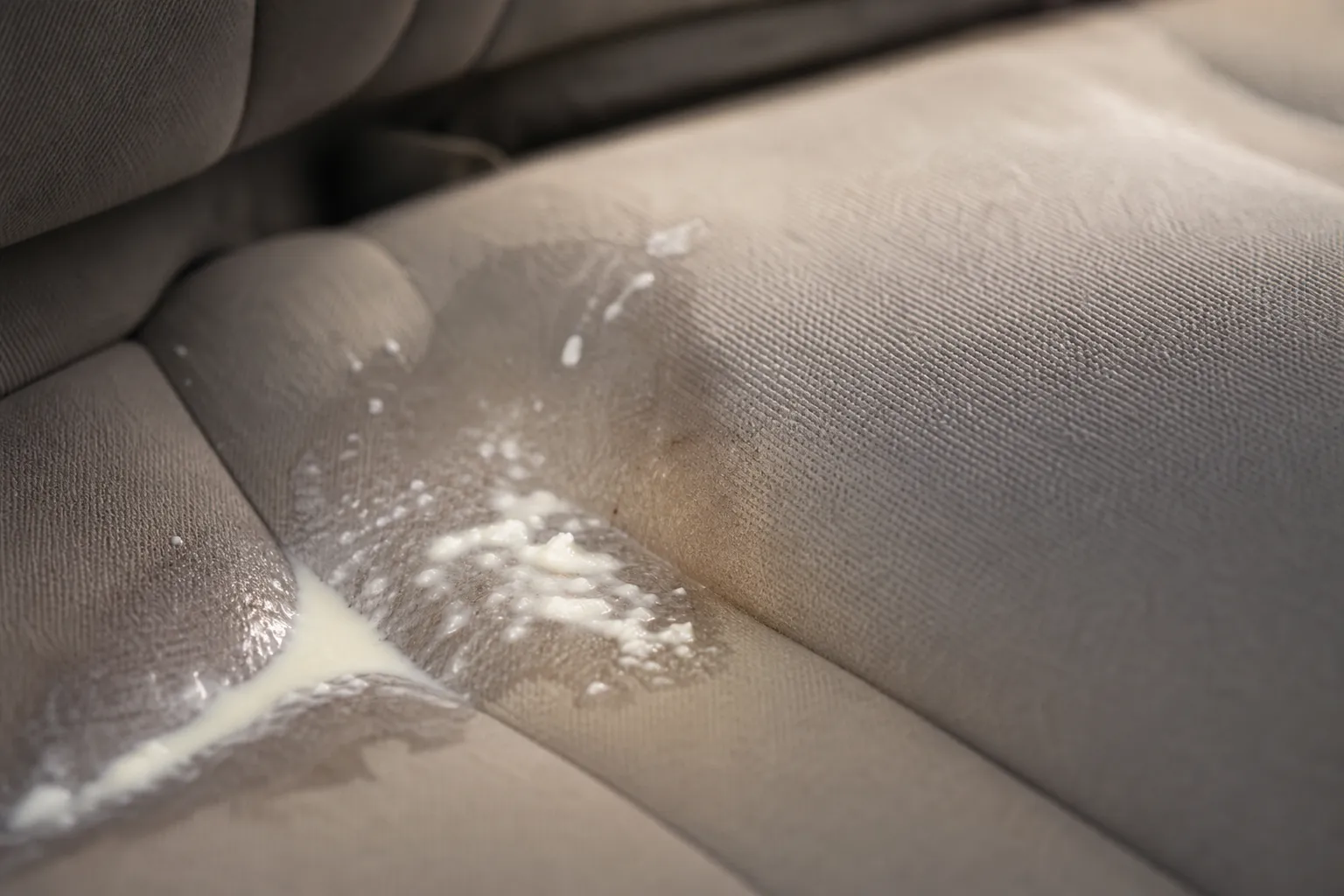
Wiping up spilled milk from a car seat until the visible mark is gone does not mean all the residue is gone. A sour milk smell often becomes noticeable after the car has been closed for several hours, especially when milk has seeped through the seams into the foam beneath the seat upholstery.
Common jobs include carton milk spilled into seat crevices, sweetened milk stuck on a car seat, or a baby bottle tipped over and soaked into the rear seat. These stains contain protein, fat, and sugar. When moisture remains trapped, the smell does not fade as quickly as a coffee stain that has only been wiped from the surface.
Check the seat material before cleaning
Before reaching for cleaner or a damp cloth, check the vehicle's material label first. If there is no label, always test on an edge beneath the seat or an inconspicuous corner. Woven fabric seats can handle more moisture than leather, but odors can penetrate the foam. Velvet and Alcantara-like materials require especially gentle handling.
| Seat material | Basic method for wiping up milk stains | What to avoid |
|---|---|---|
| Woven fabrics, such as cotton or linen | Blot with a dry cloth, then dab the area with a cloth lightly dampened with cold water. | Pouring water onto the seat until it is soaked, as this will drive the stain deeper. |
| Velvet or short-pile materials | Blot in the direction of the pile, using a damp white cloth and gentle dabbing motions. | Scrubbing hard in circles, as this can flatten the pile and leave permanent uneven patches. |
| Genuine leather | Wipe the milk off the surface with a soft damp cloth, then blot dry immediately. | Using stain remover or leaving cleaning solution to soak on the leather. |
| PU leather | Wipe with a soft damp cloth that has been wrung out until nearly dry. | Using concentrated alcohol or scouring pads, as the surface may become dull and peel. |
If the milk is still wet, the first goal is to draw out the liquid, not rub the stain around. Prepare several microfiber cloths or white towels, cold water, and a mild cleaner labelled safe for upholstery.
- Open the car doors for ventilation, then use a spoon or plastic card to lift away clumps of milk or food debris without pressing them into the seat crevices.
- Place a dry cloth over the spill and blot from the edges toward the center. Replace the cloth as soon as it becomes damp.
- Test the cleaner in a hidden corner first. If the fabric color does not run, apply only a small amount of cleaner to a damp cloth and blot the stain in small areas.
- Wipe again with a cloth dampened with cold water and wrung out well to reduce cleaner residue. Avoid warm water, as heat makes protein stains set more firmly.
- Blot once more with a dry cloth. Keep the doors open or park in a well-ventilated area until the seat is completely dry before closing the car.
If using an enzyme cleaner for upholstery, follow the product label as the main guide. Some products need to sit for 10-15 minutes to work on protein stains before being blotted away. Do not use this method on genuine leather or PU leather unless the product specifically states it is safe to use.
Dried stains and strong odors need to be handled differently from fresh milk spills.
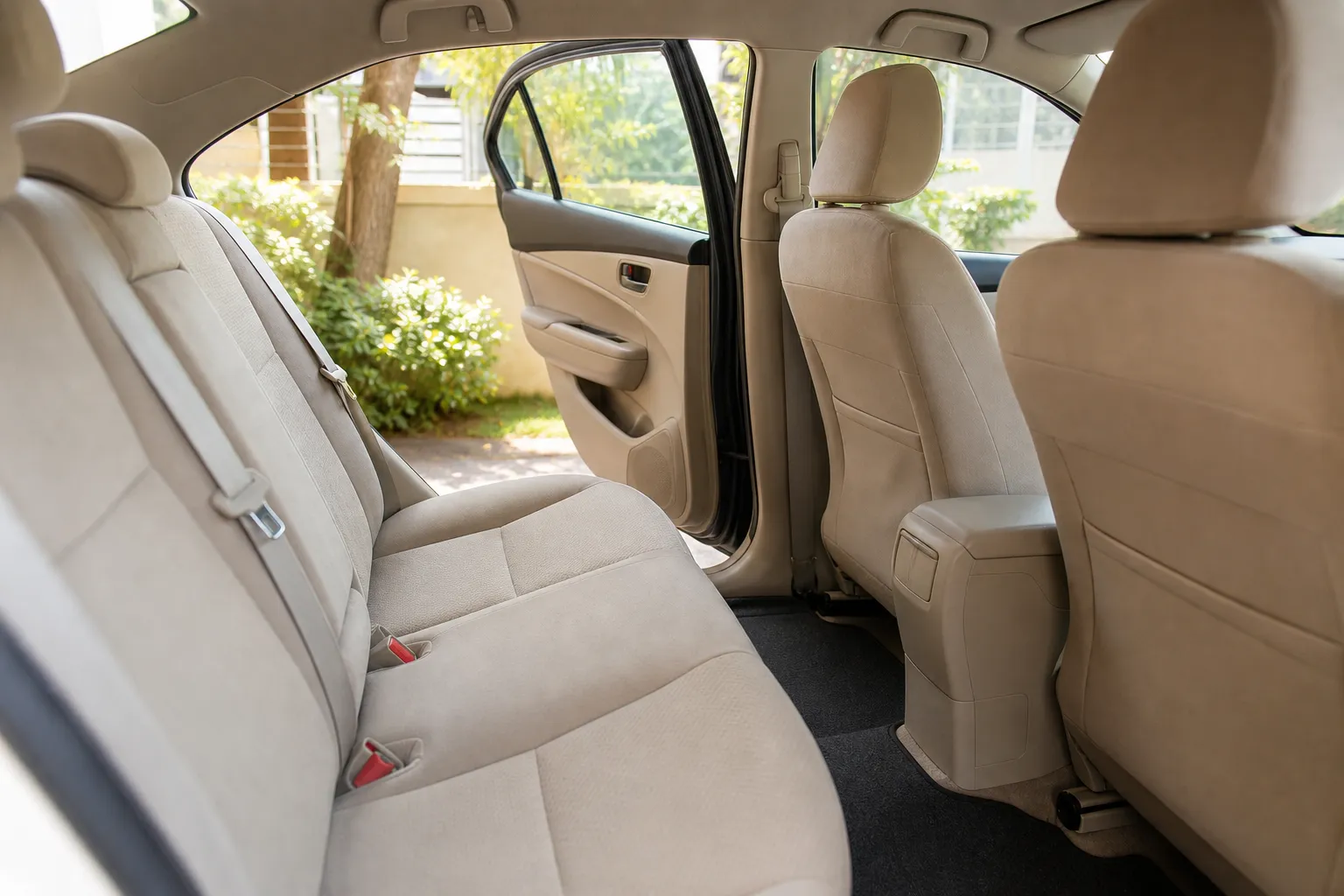
Dried milk stains often leave a hard edge or discoloration on fabric. More concerning is an odor coming from the seams, car seat edges, or beneath the seat, as this means the liquid may have passed through the fabric surface. Cleaning only the top layer is therefore often not enough.
Try pressing a dry cloth onto the same spot and smelling the cloth. If there is still a clear sour smell, or the area feels damp when pressed, stop adding water yourself. The more the seat is soaked without a machine to extract the water, the greater the chance of a new musty odor.
Vinegar, baking soda, and car air freshener are common remedies, but they should not be mixed and used on seats without proper guidance. Sprinkling powder into seat crevices may leave white residue in the seams, while vinegar can leave its own odor and will not remove milk fat that has soaked into the lower layers.
When should you call a car seat cleaning professional?
If a large amount of milk has spilled, soaked into the foam, causes an odor every time the air conditioning is turned on, or is beneath a car seat, extraction cleaning is more suitable. It is necessary to rinse and extract the liquid from the seat layers at the same time. For velvet seats, genuine leather, or seats with electrical systems underneath, you should not pour water on them yourself.
Before booking, take photos of the spill, specify the seat material, and say how long ago the milk was spilled so the job can be assessed accurately. Do not guess the price from photos or accept a vague quoted figure. Request a clear price estimate before making an appointment, and ask directly whether the seat needs to be removed, how long the on-site work will take, and when you should avoid using the car until it is dry.
For households with children or pets, tell the technician before work begins so they can choose a method and timing suitable for using the car. After cleaning, the important thing is to check the odor together at the original spot once the seat starts to dry, rather than checking only while the cleaner's scent is still masking it.
Let Hurryclean take care of sour milk smells in your car at home
Hurryclean provides at-home car seat cleaning in Bangkok and surrounding provinces. The technician will assess the stain location, seat material, and level of penetration before choosing a cleaning method. We use modern European-standard equipment and test the results on-site to ensure customer satisfaction.
If you are concerned about reliability, you can view Hurryclean's review page, which shows a Google Review score of 5.0 from more than 1,700 reviews. Customers often mention the clean results, polite technicians, clear explanations, and responsive admin team. For spilled milk stains, send photos of the seat and the area with the odor via LINE @hurryclean for a clear price estimate before deciding.