
Cleaning a new sofa with a chemical smell: Will washing make it go away?
Based on the jobs I have personally inspected, this question often comes up soon after people remove the plastic from a sofa or lay down a new carpet. The smell may come from foam, glue, backing, or surface coatings, so it does not necessarily mean there is dirt or a stain. Washing can reduce odors clinging to the surface, but it cannot always remove the source from inside the material.
The short answer is:Washing may remove the smell or make it weaker, but you need to identify where the smell is coming from.If it is a dusty smell from plastic packaging or the fabric surface, vacuuming, wiping, and ventilation can help. But if opening the cushion reveals a strong smell from the foam or the underside of the carpet, surface-only cleaning usually will not solve the problem. Making it wet without drying it quickly may instead create a musty odor.
Identify the chemical smell before you start cleaning
Chemical odors are often sharp, resembling glue, paint, plastic, or new foam, and become stronger when you bring your face close to the seams or underneath the cushions. A musty smell feels damp, like fabric stored in an enclosed space. Cat urine has a sharp, localized odor that becomes stronger in humid conditions. These three types of odor should not be treated the same way.
Before cleaning, I usually ask customers to remove any detachable cushions, open zippers only where the manufacturer permits it, and compare the smell of the upholstery with the foam. I also check the underside of the carpet. If the smell clearly comes from glue or backing, contacting the seller is more appropriate than washing it repeatedly.
If the smell is limited to the surface and there are no signs of irritation, choose a method based on the material. Cotton and linen can develop water rings or shrink, while velvet can suffer crushed pile. Genuine leather and PU leather should not be treated with the same products used on fabric. This is why professionals test a hidden area first.
DIY ways to reduce odors without damaging the material

If you want to try cleaning it yourself, start by making sure the item is dry and clean instead of rushing to spray the entire surface. Prepare a vacuum cleaner, a clean white cloth, a mild upholstery cleaner suitable for the material according to its label, and a fan. For a new carpet, vacuum the edges and the side that touches the floor as far as possible.
- Remove plastic bags, protective packaging, and tags that are not part of the product, then open the windows or move the item to a well-ventilated area.
- Dry-vacuum the seams, underneath the cushions, and the carpet before doing anything else, because spraying water while dust is still present can turn the particles into stains.
- Test a hidden area with a white cloth lightly dabbed with cleaner. Wait for it to dry, then check for color transfer, water rings, or changes to the coating. Stop if you see any of these.
- If the label permits wet cleaning, apply the cleaner only to the surface; do not pour it over the item or soak it. Leave it for 10-15 minutes only if the label specifies that time, then blot or extract the cleaner.
- Use a fan to help remove moisture, and wait until the item is completely dry before covering it, sitting on it, or allowing children and pets to use it.
After cleaning, check the smell again only when the fabric is truly dry, not while it is still wet, because the cleaner or moisture may temporarily mask the odor. If the smell returns from the foam or backing, do not wash the entire item again without a water-extraction machine. Moisture trapped deep inside a cushion or beneath a carpet can create a musty smell instead.
Different materials require different approaches to odor removal
Cotton and linen sofas can often be cleaned with moisture, but their fibers absorb water and develop water rings easily. Apply a small amount to the fabric or machine head rather than spraying heavily, and do not scrub over a wide area. If there is also a coffee stain, blot from the edges toward the center first so the stain does not spread.
Velvet requires the greatest care. Its pile can become crushed, shiny, or marked if scrubbed hard. Use a soft cloth and dab gently in the direction of the pile, testing a hidden area first. If the smell comes from the foam beneath the cushion, scrubbing the fabric harder will not help and may permanently crush the pile.
Genuine leather should not be washed like fabric, soaked in water, or treated with alcohol, vinegar, or bleach, as the surface may dry out, become discolored, or lose its coating. PU leather is easier to wipe, but alcohol and strong solvents can make it sticky, cause peeling, or lead to cracking. If the smell comes from the adhesive layer, have a professional inspect it rather than spraying the leather.
A new carpet smell usually requires checking both the pile and the backing, especially carpets with rubber or latex backing. Soaking the carpet can make the backing ripple, shrink, or take a long time to dry. For short-pile synthetic carpets, test the color and extract as much water as possible. For long-pile carpets or carpets made from unknown materials, ask the manufacturer before using any cleaner.
What should you do if the smell returns after washing?
Signs that you should stop trying to clean it yourself include a strong smell from beneath the cushions or around the carpet edges, the odor returning immediately after drying, water rings appearing after cleaning, or the material beginning to lose color. If the sofa is new, has never been used, and makes the entire room smell, speak with the seller as well. Do not repeat the same cleaning method.
Removing chemical odors from furniture must begin by finding the source, not by covering it with fragrance. If the odor disappears while wet but returns immediately when dry, or is stronger beneath the cushions and around the carpet edges, surface cleaning may not be enough. Check the backing and control moisture instead of scrubbing harder.
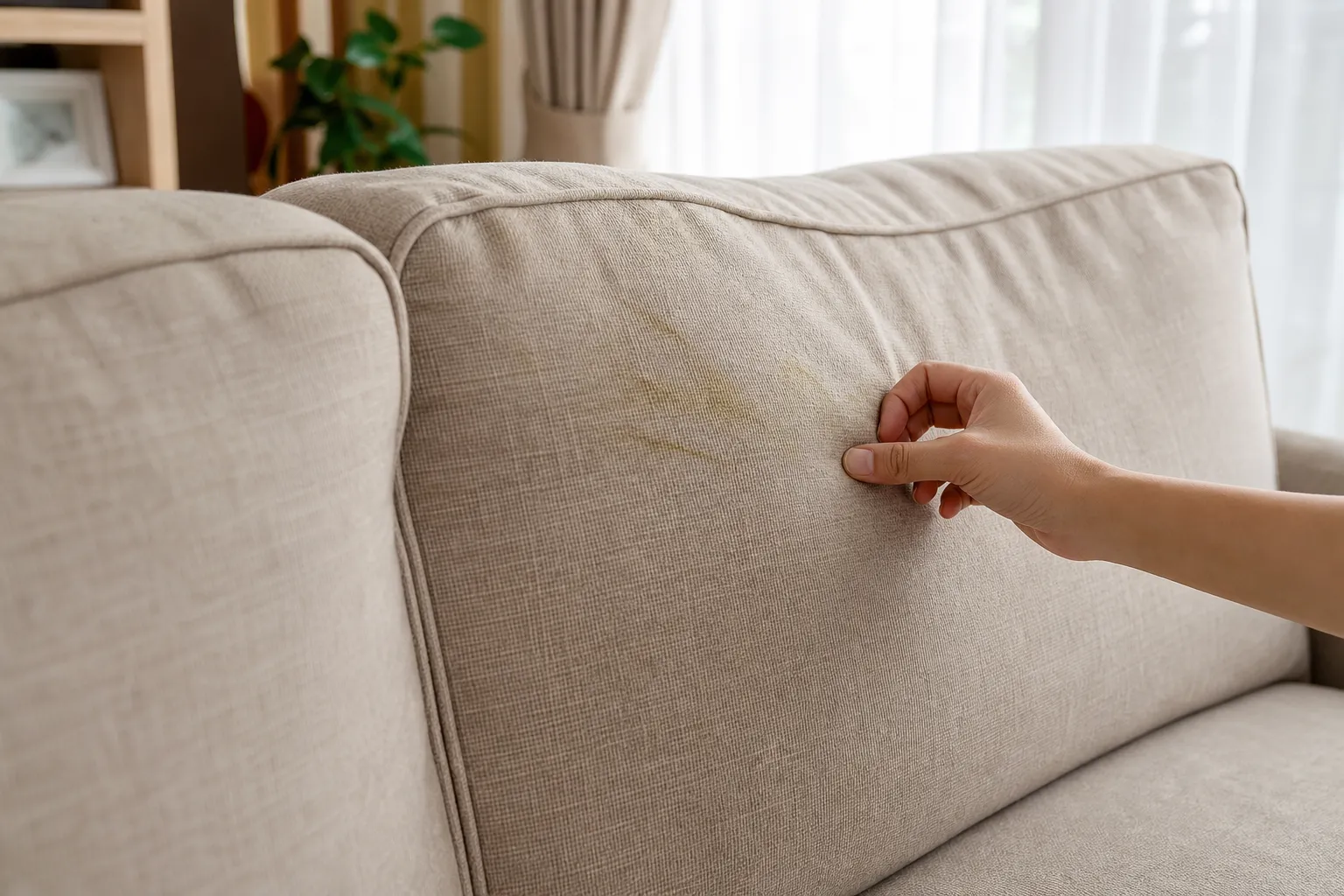
If there are stains as well, tell the professional what they actually are. Coffee stains require careful blotting to lift the color; ring-shaped yellow sweat stains may be deep along the seating area; and cat urine may have penetrated the foam or the underside of the carpet. Chemical odors should not be lumped together with these three stains, because the wrong cleaner may cause color loss or create an even stronger mixture of odors.
How Hurryclean cleans sofas and carpets at home
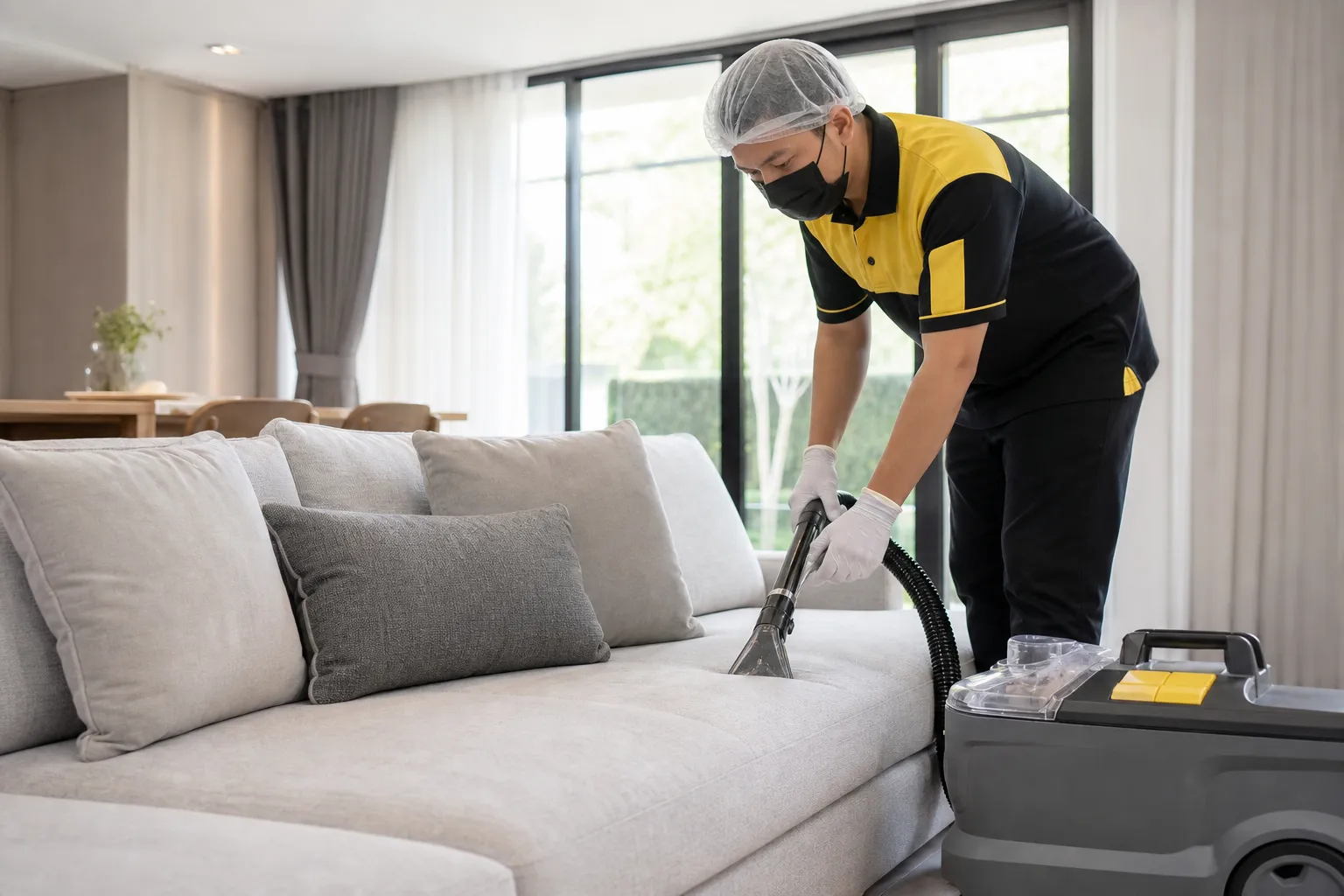
When I arrive at a job, I first ask whether the smell is on the fabric surface, beneath the cushions, on the underside of the carpet, or throughout the room. I then inspect the material, check for color transfer, and read the care label before choosing a cleaning method. This is especially important with new sofas, because stronger cleaning or more water will not make a foam odor disappear faster.
Hurryclean uses modern, European-standard equipment and selects the cleaning method according to the material and the location of the odor identified on site. After cleaning, the result is tested on site based on the customer's satisfaction, so tell the technician honestly which area still smells. There is no need to feel awkward.
On-site work time and drying time vary according to the size, cushion thickness, fabric type, and ventilation. Sofas with thick cushions or carpets with rubber backing often need longer to air out than thin fabrics. Check the smell again once the item is completely dry, and ask the technician which areas still need continued fan ventilation.
If you are wondering whether this team is reliable, Hurryclean's review page shows a rating ofGoogle Review 5.0 from more than 1,700 reviewsThe overall themes in the praise are that the technicians are polite, explain the work well, the admin team responds quickly, and prices are clearly presented. This information can help with your decision, but it does not mean every chemical odor will disappear completely, because the source may be inside the foam or glue.
Before booking, send photos of the sofa or carpet and say whether it is cotton, linen, velvet, genuine leather, or PU leather. Also specify where the smell is coming from. This information helps the admin team assess the scope of work and provide more accurate details before starting, rather than guessing from the words “new sofa.”
If you are worried about additional costs, send photos and provide the material, the odor's location, and details of any coffee stain, ring-shaped yellow sweat stain, or accompanying cat urine stain. This allows the team to separate the scope of work before booking. Do not rely on random guesses, because a surface odor and an odor from foam or backing have different sources.
If the smell is mild and there are no signs of irritation, remove the plastic, improve ventilation, and test a hidden area first. But if the odor returns from the foam, backing, or underside of the carpet, or if the material is easily damaged, do not force yourself to clean it. Send photos and tell Hurryclean the fabric type and odor location for an at-home service assessment in Bangkok and surrounding provinces via LINE @hurryclean