
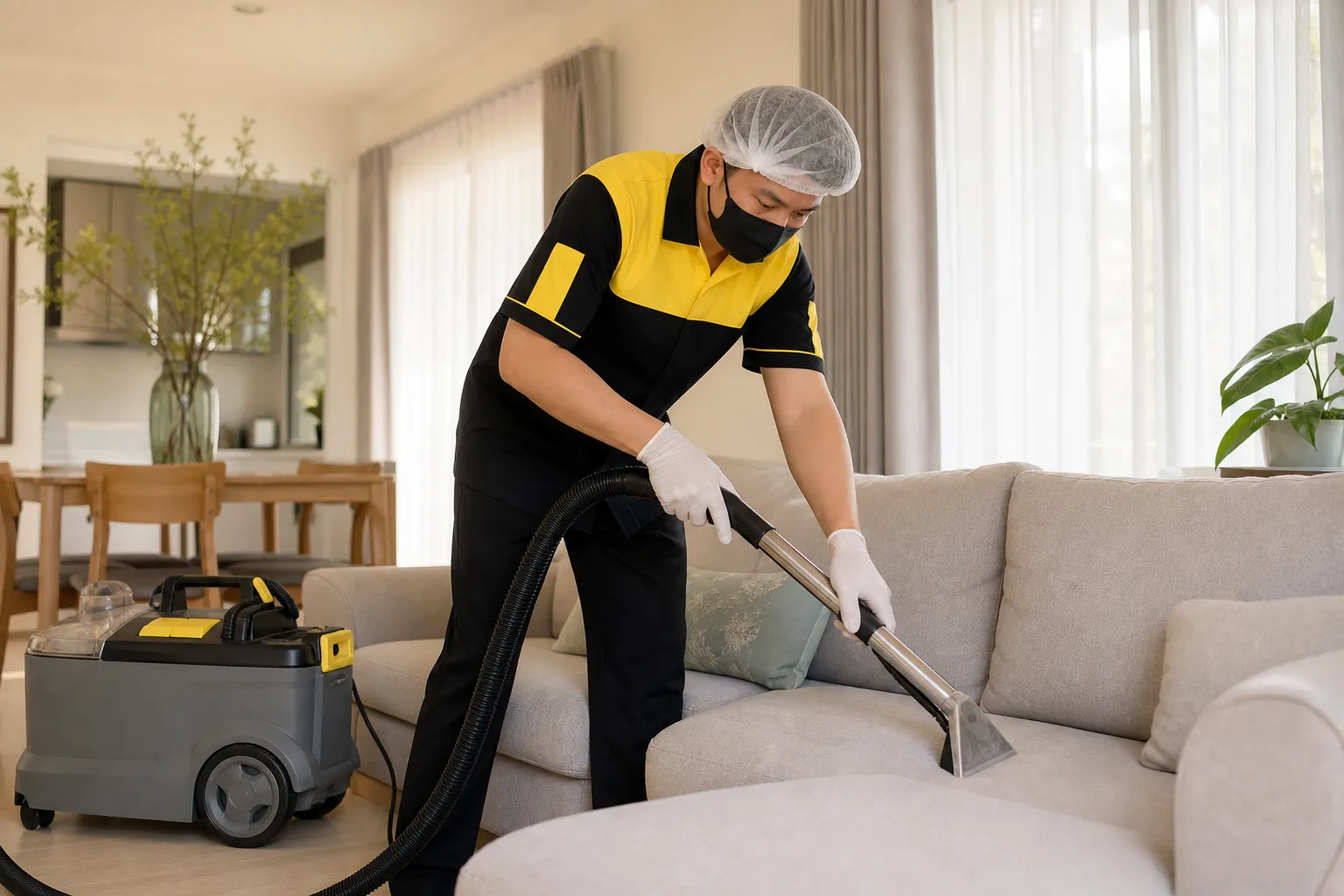
The Most Common Questions Customers Ask Before Booking a Sofa Cleaning
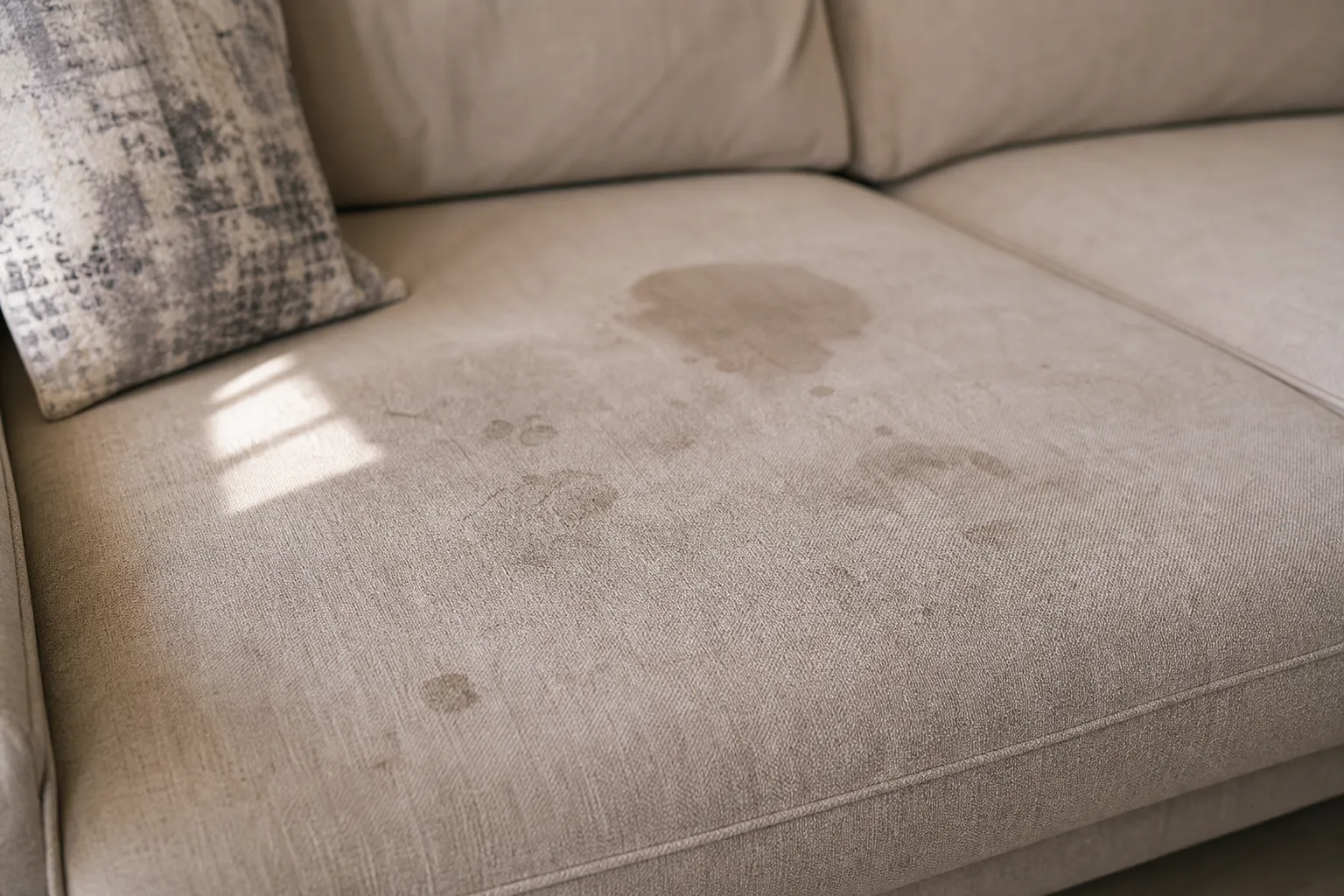
The other day, three separate customers sent in the same question on the same day — does the technician make a lot of noise at home, and is it safe for kids to be near the chemicals being used? Those are completely reasonable things to ask, especially in a home with young children or a baby sleeping in the room.
This article gives straight answers based on real jobs — covering the noise, the chemicals, and the things people rarely think to ask but really should know before scheduling a technician.
How Loud Is Sofa Cleaning?
The main sounds you'll hear are the vacuum cleaner before work begins, and either the steam machine or the wet-extraction machine during the wash. The noise level is roughly the same as a household vacuum cleaner — around 65–70 decibels. You won't need to shout over it, but it's not quiet either.
If a baby is sleeping in the same room, we recommend moving the child out before the technician arrives. The noise isn't harmful, but it will likely wake them up. Older children in another room are generally not affected at all.
The actual noise lasts around 30–45 minutes per sofa, depending on size and how dirty it is. After that comes the drying phase, which is completely silent.
Are Sofa Cleaning Chemicals Safe for Children?
It depends on which chemicals are used — and that's exactly what you should ask before booking, because not every service uses the same products.
There are several categories of sofa cleaning chemicals. Some are industrial-strength degreasers that work powerfully but have a strong smell and require good ventilation afterwards. Others are enzyme-based formulas that break down stains without leaving much residue — these are better suited to sofas that children or pets sit on regularly.
For sofas in children's rooms or homes with infants, the most suitable products are pH-neutral or natural enzyme formulas — no chlorine, no phenol, and no strong synthetic fragrance. After cleaning, let the sofa dry completely before allowing children near it. This generally takes 2–4 hours in a well-ventilated room.
How Does Cleaning Differ Between Sofa Fabric Types?
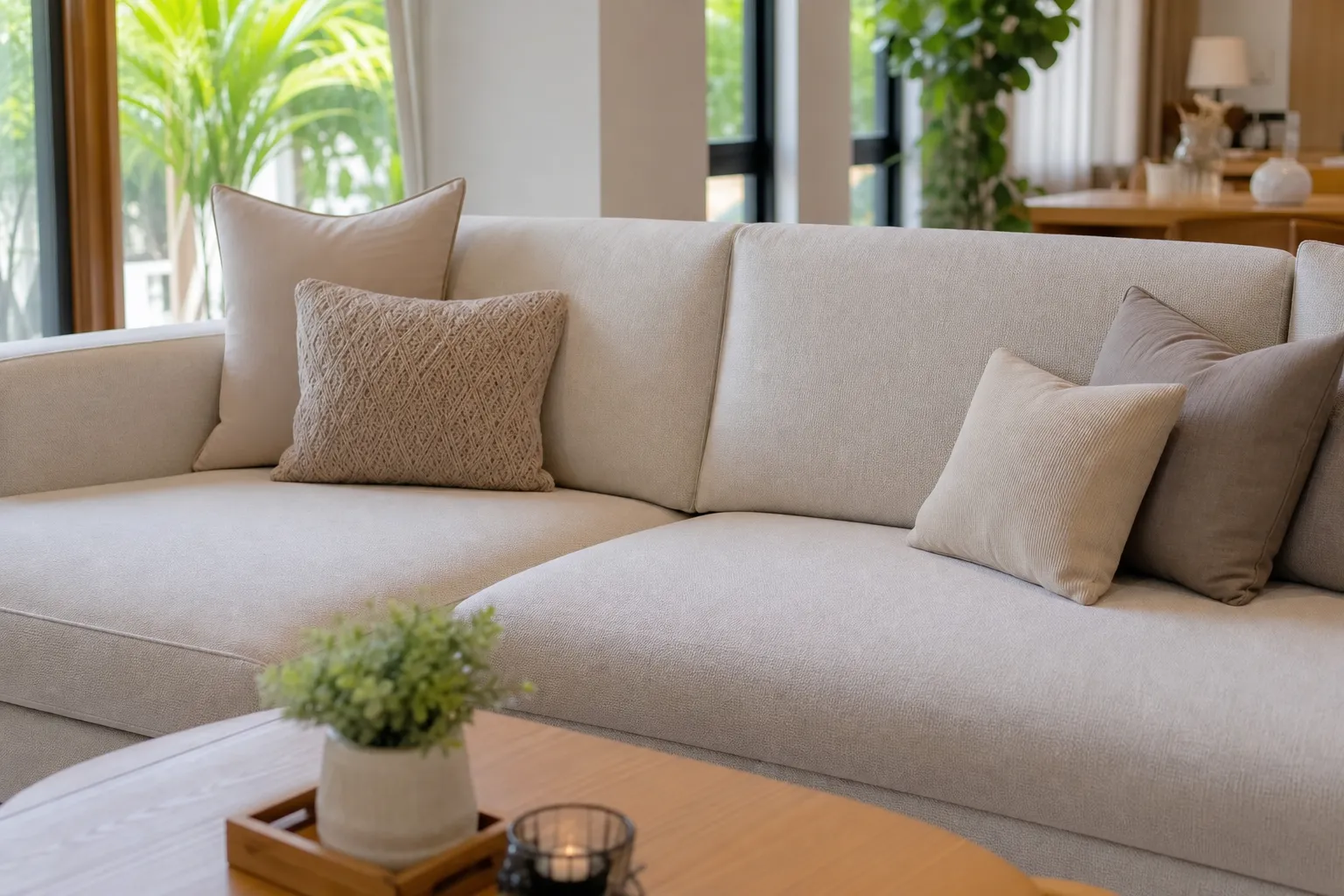
The fabric type directly affects the cleaning method and which products are used. Cotton and polyester handle water well — easy to rinse, quick to dry. Velvet, on the other hand, requires much more care. Brushing in the wrong direction will permanently flatten the pile. It needs a soft cloth applied gently and a low-suction machine to extract moisture.
Leather sofas — both genuine leather and PU leather — must never be cleaned with high-alcohol products. This will cause the surface to crack and peel faster. Use a mild formula and follow up with a leather conditioner to maintain flexibility.
| Fabric Type | Suitable Cleaning Product | What to Watch Out For |
|---|---|---|
| Cotton / Polyester | Enzyme or pH-neutral formula | Slow to dry if ventilation is poor |
| Velvet | Mild formula, minimal liquid, extract immediately | Aggressive scrubbing permanently flattens the pile |
| Genuine Leather | Leather-specific cleaner, no alcohol | Must apply conditioner after every clean |
| PU Leather | Mild low-pH formula | Watch for peeling at edges and seams |
What Should You Prepare Before the Technician Arrives?
There isn't much to do, but a few simple things will help the job go faster and keep everyone in the home safe.
- Open windows or set the air conditioner to ventilation mode before the technician arrives, so the cleaning products can evaporate more effectively during the job.
- Clear the sofa and the area around it beforehand — remove cushions, blankets, children's toys — so the technician can reach every part.
- If there's a baby or young child in the home, take them out of the room where the cleaning is being done while the technician is working.
- After the technician finishes, wait for the sofa to dry completely before letting children sit on it — at least 2–3 hours, or until it no longer feels damp to the touch.
Can You Do It Yourself, or Should You Call a Technician?
Small fresh stains — like coffee spilled just moments ago — can be handled yourself. Use a white cloth dampened with cold water, press it gently onto the stain without rubbing, leave it for a moment, then blot it away. Repeat 2–3 times and most light stains will fade enough.
But for stains that have soaked in deep, yellow sweat rings across the seat, cat urine smell trapped beneath the fabric, or a sofa that hasn't been cleaned in over two years — DIY usually only addresses the surface. The smell and any mould underneath the fabric will remain. You need a high-pressure extraction machine and specialist chemicals to actually deal with those problems.
Let Hurryclean Clean Your Sofa at Home
If you're still concerned about your sofa, or you'd like a technician to assess it first and recommend the right product, the Hurryclean team offerssofa cleaningat your home across Bangkok and the surrounding provinces — selecting the appropriate chemicals based on your fabric type and your household's specific situation, especially for homes with young children or pets.
Feel free to ask in advance what type of sofa you have, which product will be used, and how long the drying time is. Message us on LINE@hurryclean— we reply every day.