
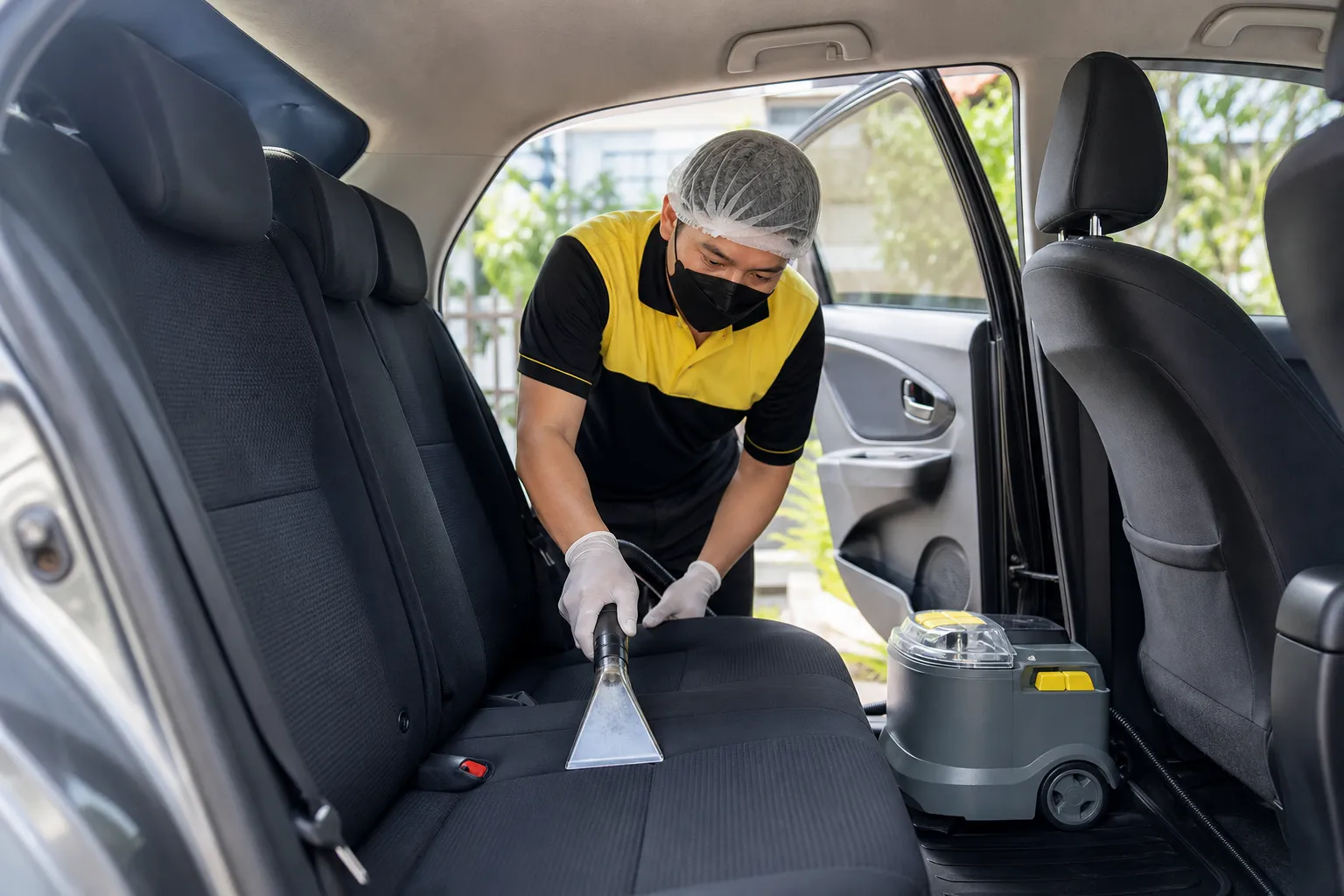
How long does car seat cleaning take?
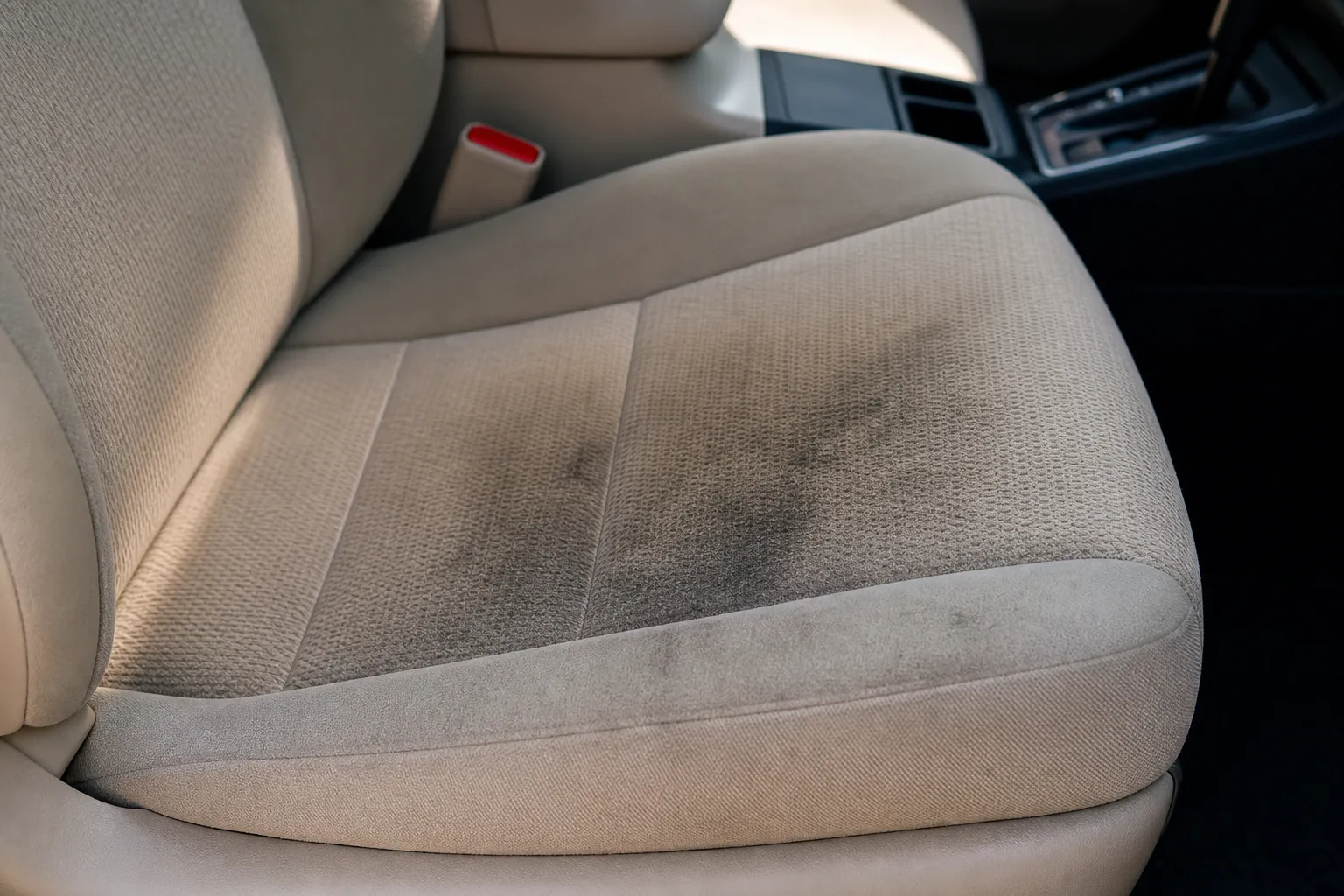
The answer I give customers before starting is that cleaning only the fabric seats of a sedan usually takes about 1.5–3 hours However, the seats need several more hours to dry before they are ready to sit on, because the foam inside holds moisture longer than the fabric surface.
If you ask, how long does interior car cleaning take the scope of work needs to be specified first. Cleaning only the fabric seats in a 5-seat sedan usually takes around 1.5–3 hours However, if the job includes the floor carpets, door panels and console crevices, the work I carry out usually takes about 2.5–4 hours This is the working time, not the drying time.
People searching for “car seat cleaning near me” usually want to know how long they will need to leave their car. A car with a freshly spilled coffee stain will not take the same amount of time as one with cat urine that has soaked into the foam. The same applies to velvet seats, which require a softer brushing technique than standard fabric seats. The actual time depends on the material, how deeply the stain has penetrated and how much water needs to be extracted—not simply the number of seats.
Car seat cleaning steps that affect the time required
I do not start by immediately spraying water onto the seats. First, I check the material, fabric color, tears and the equipment beneath the seats, because many front seats have sensor plugs or wiring underneath. If they get too wet, both the cleaning process and drying become more complicated.
For fabric seats, the actual process is carried out in this order. Skipping vacuuming or applying overly concentrated cleaning solution often means the seats need to be rinsed again, adding extra time.
- Check the fabric type and test the cleaning solution on a hidden corner for 3–5 minutes. Look for color bleeding, discoloration or changes in the fabric pile before treating the entire seat.
- Vacuum up all dust, food crumbs and pet hair. In a car with a normal amount of dust, this takes about 10–15 minutes.
- Apply cleaning solution to coffee, sweat or grease stains, then leave it for 10–15 minutes without allowing it to dry on the fabric.
- Use a soft-bristled brush to loosen the stain section by section, spending about 5–10 minutes per area. Be especially gentle with linen and velvet, and do not scrub vigorously in circles.
- Rinse with an appropriate amount of water and extract the dirty water in stages until the extracted liquid becomes clearer. This step takes about 20–40 minutes, depending on the moisture and level of dirt.
- Extract water again along the seams, check for odors and remaining stains, then improve airflow so the seats can start releasing moisture before handover.
The extra time usually goes into stain preparation and water extraction, not brushing alone. Coffee containing milk and sugar becomes sticky along the seams, while yellow sweat rings need to be treated gradually and sometimes repeatedly. Do not rush by scrubbing too hard, or the fabric color may become patchy.
If there is only dust or a few small areas of dried food, I treat those spots only and use less water than for a full-seat wash, so the job finishes faster. Seats with tightly embedded dog hair, or seats that have already been sprayed with water and are damp, need extra time for hair removal and multiple rounds of water extraction.
What affects car seat drying time
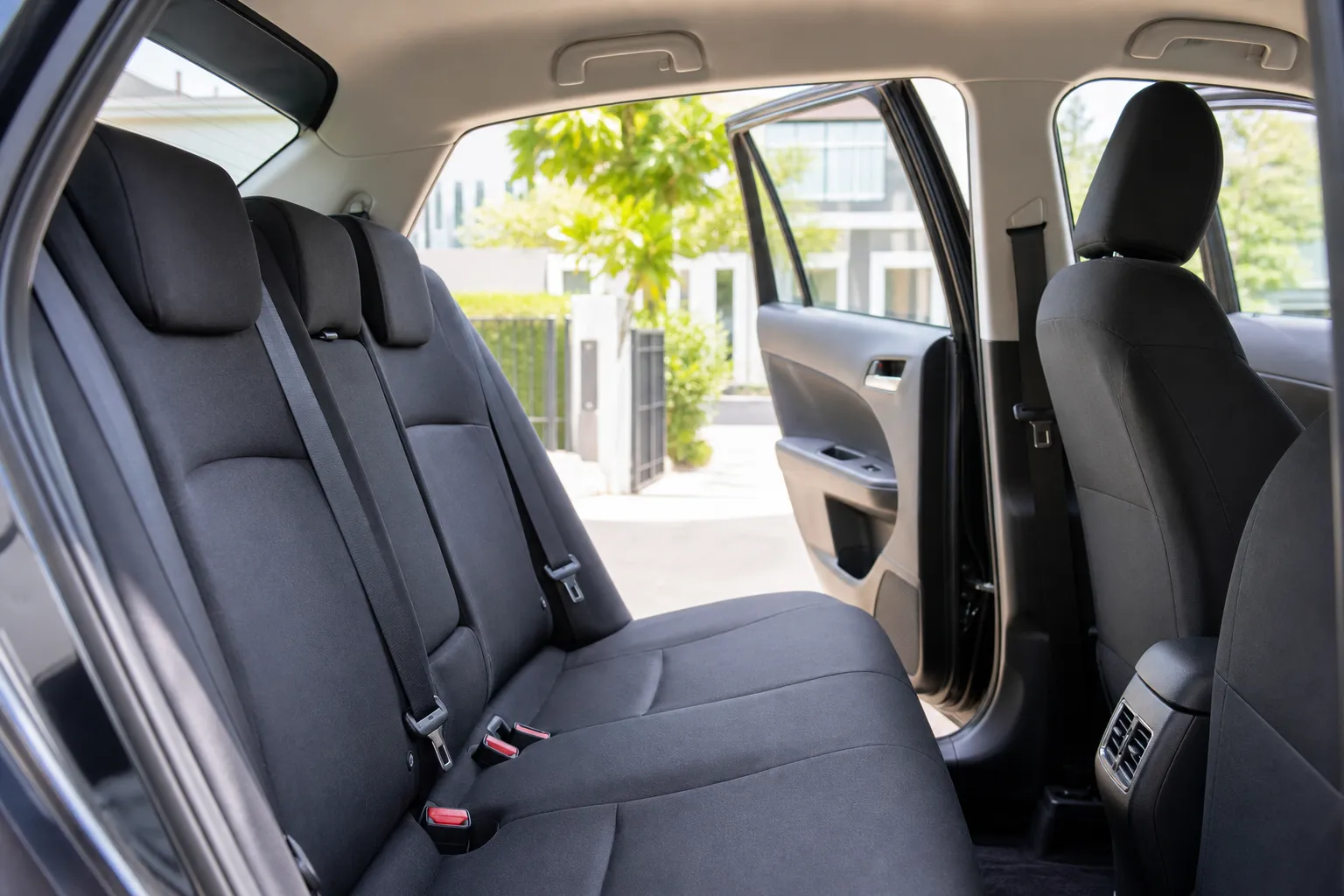
After extracting the water, I explain to customers that “surface dry” and “foam dry” are two different things. The seat surface may feel dry to the touch, but if it feels cool and damp when pressed or leaves moisture on a towel, the foam is not yet ready for extended sitting.
Cotton and linen seats usually retain more water in their fibers and seams than synthetic fabric, so allow approximately 4–8 hours with proper airflow. Velvet seats require careful water use and time for the pile to recover before use. In humid weather or inside a closed building, they may need to be left overnight.
A car parked in direct sunlight with all the windows closed will not necessarily dry properly. Heat warms the top quickly, but moisture can remain in the foam. I recommend opening the doors or windows where safe, and allowing air to circulate around the seats and floor.
An easy way to check before using the car is to press a white towel onto thicker areas, such as the edges of the backrests and the seat creases. If it still shows damp marks or has a strong cleaning-solution smell, continue ventilating the car. Do not use fragrance to mask a musty odor.
Which stains and materials require extra time?
Fresh coffee stains should be blotted from the edges toward the center immediately. Do not rub them outward. Coffee with milk or sugar leaves sticky residue along the stitching, while yellow sweat rings are often found on the seat bolsters and backrests. These need to be treated layer by layer, because spraying a strong solution once may pull the fabric color out along with the stain.
Cat urine stains are another situation where I cannot promise that wiping the surface will remove the odor. The liquid may have reached the foam and the seat base, requiring several extraction cycles while taking care not to let water run into the wiring channels. If the smell returns after drying, the source may still be deeper than the fabric surface.
Cotton and linen require color testing and controlled water use because they are more prone to water marks and discoloration than synthetic fabrics. Velvet must also be brushed in the direction of the pile. Brushing against the pile or pressing too hard can permanently flatten it, and this cannot always be fixed by washing it again.
Genuine leather should not be rinsed until saturated like fabric seats. I wipe away dust and sweat stains with a leather-safe solution, then dry the surface and apply a thin layer of conditioner. With PU leather, take care not to damage the coating. Do not repeatedly scrub it with alcohol or concentrated stain remover.
Genuine leather and PU leather jobs therefore usually take less time on site than fabric-seat cleaning, and the surface is generally ready for use in about 30–60 minutes after being wiped dry and ventilated. However, if the leather is cracked or peeling, or has embedded dirt in the creases, I may need to pause for periodic checks rather than scrubbing and causing further peeling.
How to dry your car quickly without damaging the seats
If you want to do it yourself, start by vacuuming and blotting the stains. Do not pour cleaning solution or water over the entire seat. A household vacuum can remove dust, but it should not replace a wet vacuum, because water remains in the foam and stitching longer than it appears to.
Before booking a technician or starting the job yourself, remove belongings from the car, take out the rubber mats and remove the car seats if possible. This allows the doors to be opened for maximum airflow. Park in a safe, well-ventilated area, and explain from the start whether the stains are coffee, sweat, cat urine or vomit, because each requires different preparation.
For small stains on colorfast fabric, blotting and spot treatment is usually better than wetting the entire seat. However, if the stain has spread widely, there is an odor coming from the foam or several cleaning products have already been tried and caused discoloration, stopping further experiments can reduce the risk of damaging the material.
Car seat cleaning with Hurryclean at your home
If you are unsure whether your car seats are cotton, linen, velvet, genuine leather or PU leather, or do not want to risk water reaching the foam and the plugs beneath the seats, Hurryclean provides at-home cleaning for sofas, mattresses, carpets, curtains and car seats in Bangkok and surrounding provinces. Telling us the stain type and material from the beginning helps us give clearer advice about the process and on-site time.
Send the car model, number of seats and whether the stains are coffee, sweat or cat urine. Also tell us when you need the car again, then contact the Hurryclean team via LINE @hurryclean to discuss the best cleaning method and drying time for your vehicle.