
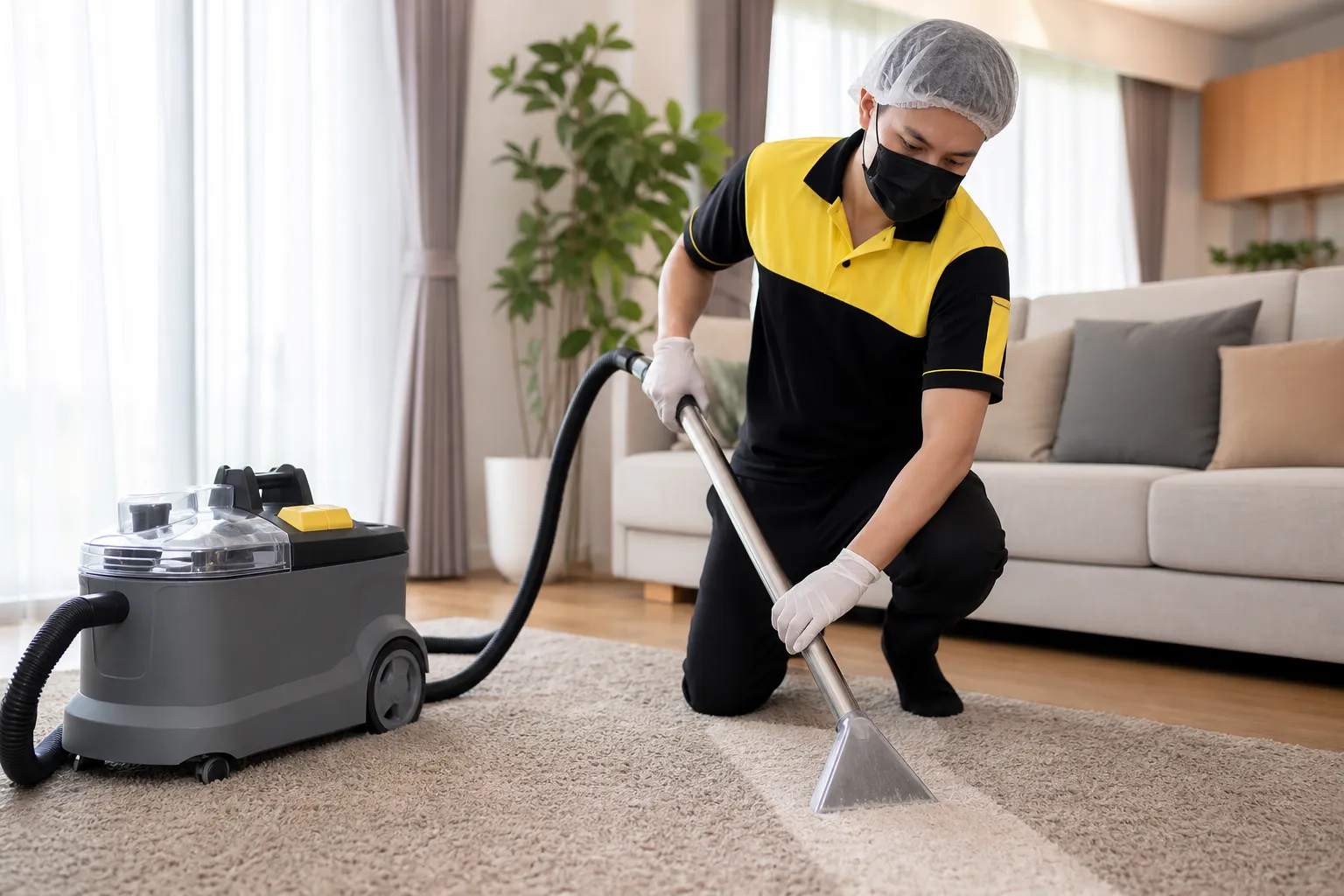
Stubborn carpet stains do not necessarily mean they cannot be removed.
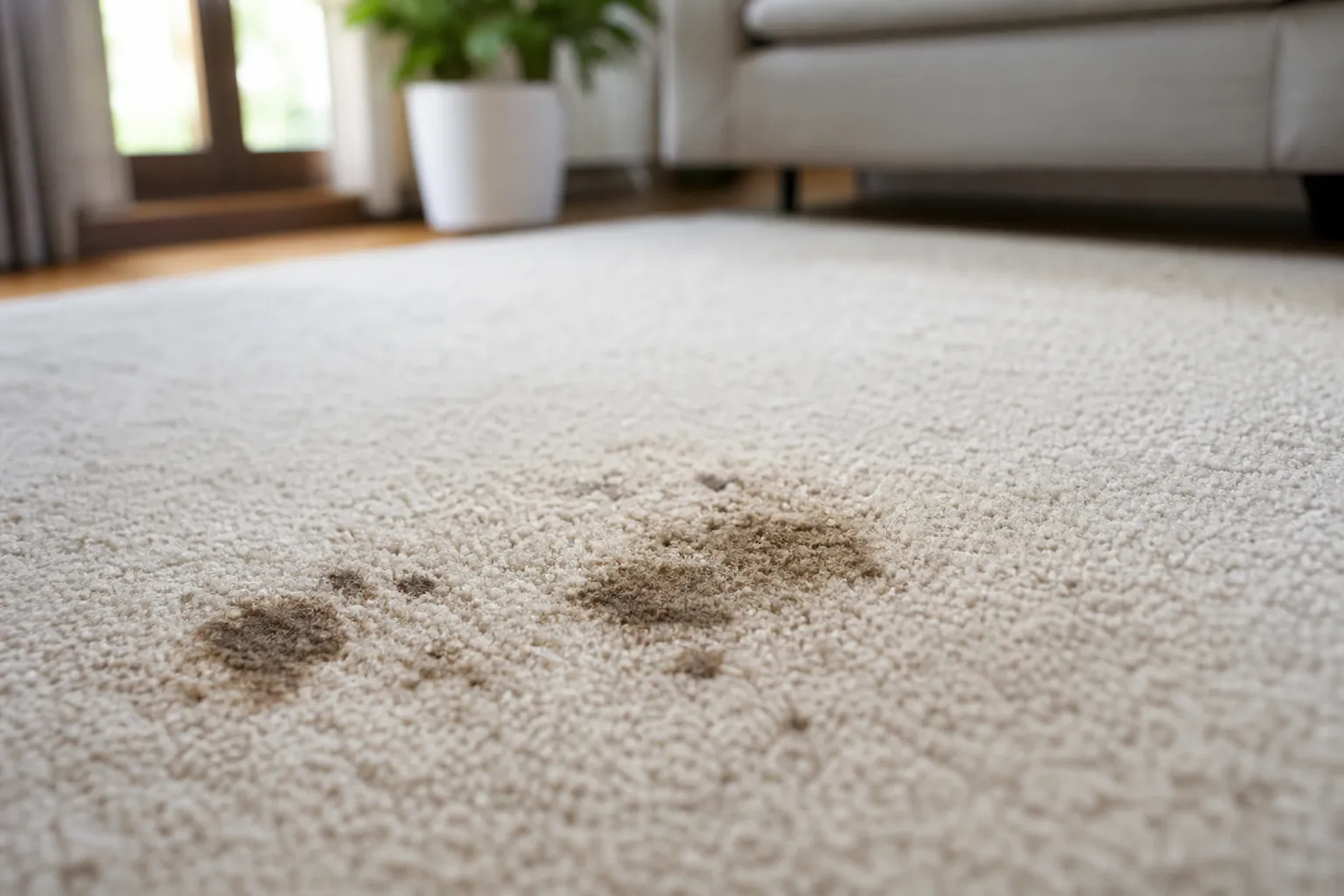
Based on the jobs we see, the termstubborn stainsoften refers to two things mixed together: residue such as sugar, grease or salt still trapped in the fibres, and discolouration where the fibres have already been changed by heat, cleaning products or scrubbing. They may look similar, but cleaning produces different results.
If it is a fresh coffee spill on a colourfast synthetic carpet, or food residue that is still sticky, blotting and extracting can often lift much of the stain. Yellow sweat rings that have been left for a long time, cat urine that has reached the underlay, and bleach marks may only be reduced in appearance or odour, because some of the damage is no longer residue sitting on the surface but a change in the colour and structure of the fibres.
Check the stain type and carpet type before choosing a cleaning product.
Cotton and linen carpets absorb water quickly, so they can develop water rings or shrink if left soaking wet to dry on their own. Velvet-textured carpets need particular care: one vigorous scrub can permanently flatten the pile in patches. If the stain is on a genuine leather or PU leather seat or furniture edge attached to the carpet, the care method must be handled separately, as carpet cleaner may discolour genuine leather or make PU leather sticky and cause it to peel.
Before trying it on the actual stain, check the material label and test the product on a hidden corner or underneath the carpet edge. Use a white cloth to dab on a small amount of diluted product, leave it for 10–15 minutes, then blot to check whether any colour transfers to the cloth. If the white cloth picks up colour, the surface becomes fluffy, or a distinct water mark appears, stop first. Do not increase the concentration to speed up the result.
If you are treating a small isolated stain, use equipment that lets you control the amount of water and easily see any colour that comes out. The following is sufficient for an initial test, not for cleaning the entire carpet.
- Several clean white absorbent cloths or white microfibre cloths
- A vacuum cleaner for removing dust and dried stain particles
- Clean room-temperature water and an adjustable-mist spray bottle
- A mild carpet cleaning product labelled as suitable for that fibre type
- An enzyme-based stain and odour remover for cat urine, used according to the label
Choosing a product suited to the stain is better than choosing the strongest formula. Coffee and food stains can sometimes be treated with a mild formula according to the label, depending on the carpet type. Cat urine requires consideration of both an enzyme product and how deeply it has penetrated the underlay. Do not pour on enough product to soak the entire carpet in the hope of eliminating the odour.
How to clean a carpet yourself when the stain is still on the surface
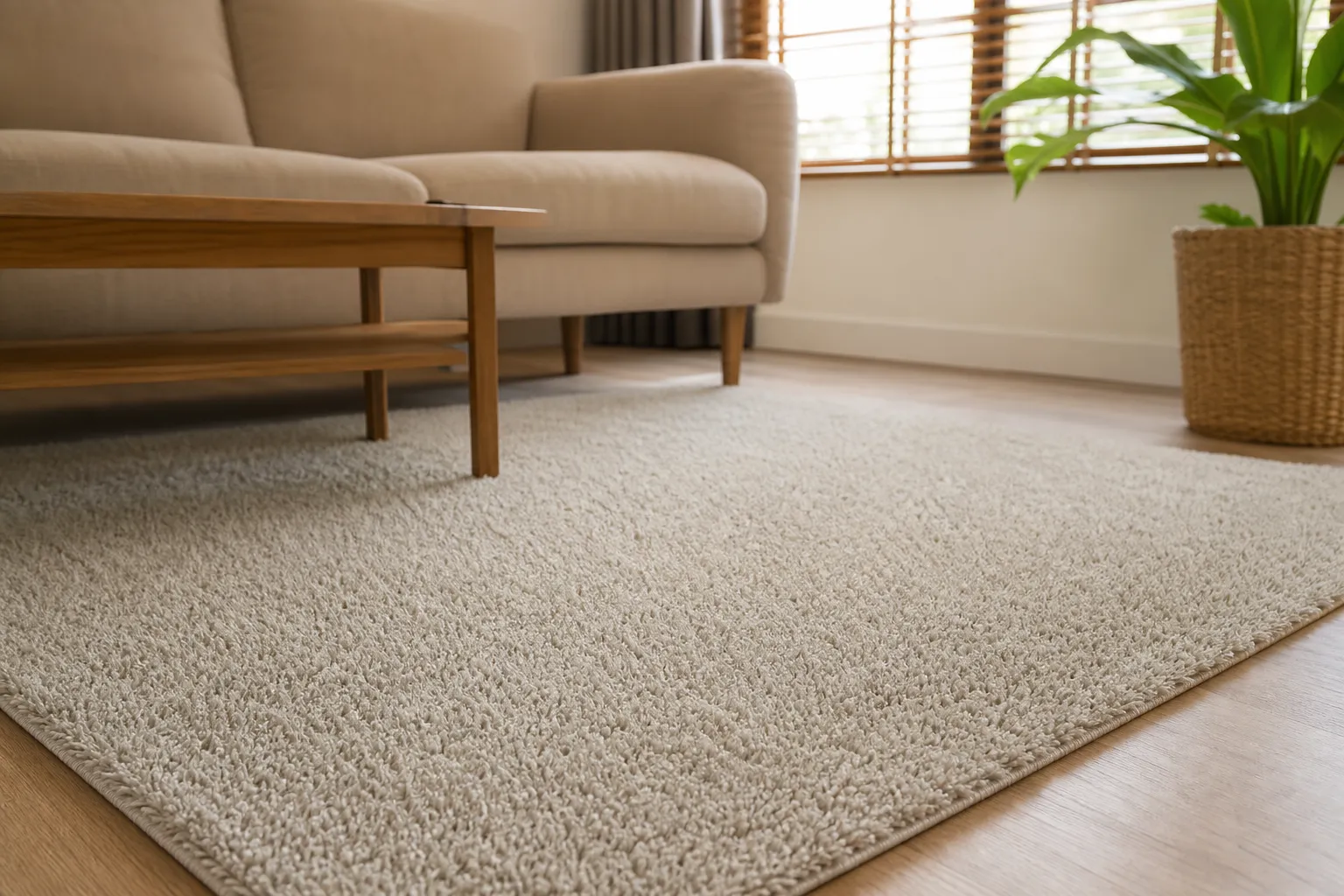
The following steps are suitable for small stains still on the carpet surface, such as spilled coffee or dripped food, and only after testing has confirmed that the colour does not run. If the entire carpet is wet, there is a strong cat urine odour, or it is a handwoven carpet or one with a glued-on underlay, stop after blotting and ask a technician to inspect it.
- Remove food scraps or clumps of mud first. If the mud is wet, wait until it dries and then vacuum it. Never rub it while wet, because the soil will be pushed deeper into the fibres.
- For coffee stains, place a white cloth over the stain and press to blot from the edge towards the centre. Keep changing to a clean side of the cloth until less liquid comes out. Do not scrub back and forth in circles.
- Dilute the mild carpet cleaning product according to the label. Dab on a small amount at a time, working from the edge towards the centre. Leave it for 10–15 minutes, then blot with a cloth dampened with clean water to remove the cleaning product.
- For cat urine, use an enzyme product according to the label and let it work for the stated time. Do not mask the odour with perfume. Then press to blot and run a fan until the area is completely dry.
After blotting, touch the area around the stain with your hand and compare it with a dry spot. If it still feels cool and damp or smells of cleaning product, water is still trapped in the fibres. Do not walk on it or place anything over it until it is dry. Coffee stains often improve when blotted at the right time, while yellow sweat rings may still leave a faint edge if the fibre colour has already changed.
Coffee stains and yellow sweat rings
Coffee stains contain both the colour of the drink and, in some cups, milk residue or sugar, so start by blotting the liquid rather than spraying product over the entire area. Yellow sweat rings often appear on seating areas or places that are touched frequently. If a ring appears after drying, do not scrub it repeatedly in circles, as this will widen the ring and make the pile in that area reflect light differently.
Cat urine that has reached the underlay
Cat urine on the surface may look lighter after wiping, but if the urine has reached the underlay or the back of the carpet, the odour will return when the air is humid or the area is stepped on. An enzyme product must come into contact with the actually contaminated area to have a chance of helping with the odour. However, soaking the carpet without knowing its construction may cause the backing adhesive to deteriorate and create a musty smell. If the odour returns after drying, have a technician inspect both the carpet surface and the back.
What cleaning method should be used for large stains to avoid water rings?
Large stains should not be treated by spraying concentrated product and scrubbing only the affected spot, because the wet and dry areas will differ and may leave a ring. Large-carpet cleaning should begin with dry vacuuming, checking for colourfastness and inspecting the back of the carpet, followed by selecting spraying, fibre agitation and extraction methods that match the fabric and underlay.
A heavily soaked cotton or linen carpet may shrink or develop water marks. Velvet-textured carpets should not be cleaned with a stiff brush, as the pile may remain permanently flattened even after the stain fades. For a large carpet that cannot be lifted, the technician must control the amount of water and the drainage route so it dries evenly—not merely leave the surface clean while the underside remains damp.
If the stain covers the entire area, colour transfers to a white cloth, the carpet remains damp overnight, or the cat urine odour returns after drying, stop adding product and write down the names of all products used. This means the technician will not have to guess at the ingredients again and can assess whether to continue cleaning, remove the odour, or explain honestly that the mark is damage to the fibre colour.
How Hurryclean carpet cleaning services assess stains at home
Before booking a technician, Hurryclean asks you to send a photo of the entire carpet, a close-up of the stain, and information about how long it has been there, what products have been used, whether the carpet is cotton, linen, velvet or synthetic, and whether it can be lifted from the floor. This information helps ensure an accurate discussion before arriving on site.
Hurryclean provides at-home carpet cleaning services in Bangkok and surrounding provinces. The technician will check the fibre type, stain location, and moisture on the back or in the underlay before choosing a method. If the stain is deep or the fibre colour has been damaged, the technician will explain the realistic results based on its actual condition rather than promise that every stain will disappear completely.
While waiting for advice, do not apply any new product, do not cover a carpet that is still damp, and keep the labels of the products used. If you would like a technician to help determine whether it is a cleanable stain or permanent discolouration, message LINE @hurryclean with photos of the carpet and stained area.