
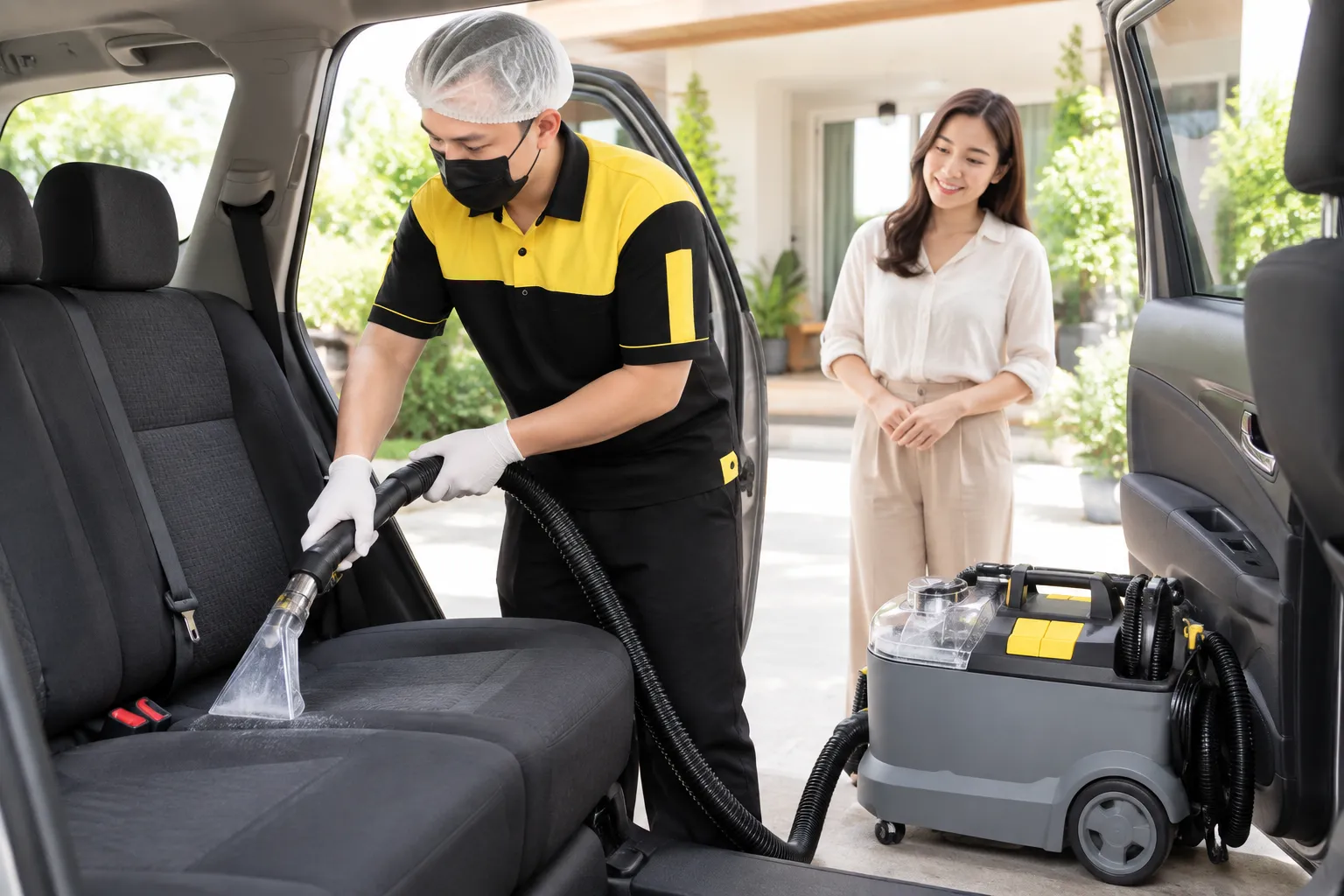
How Car Seat Cleaning Differs from Car Seat Bleaching
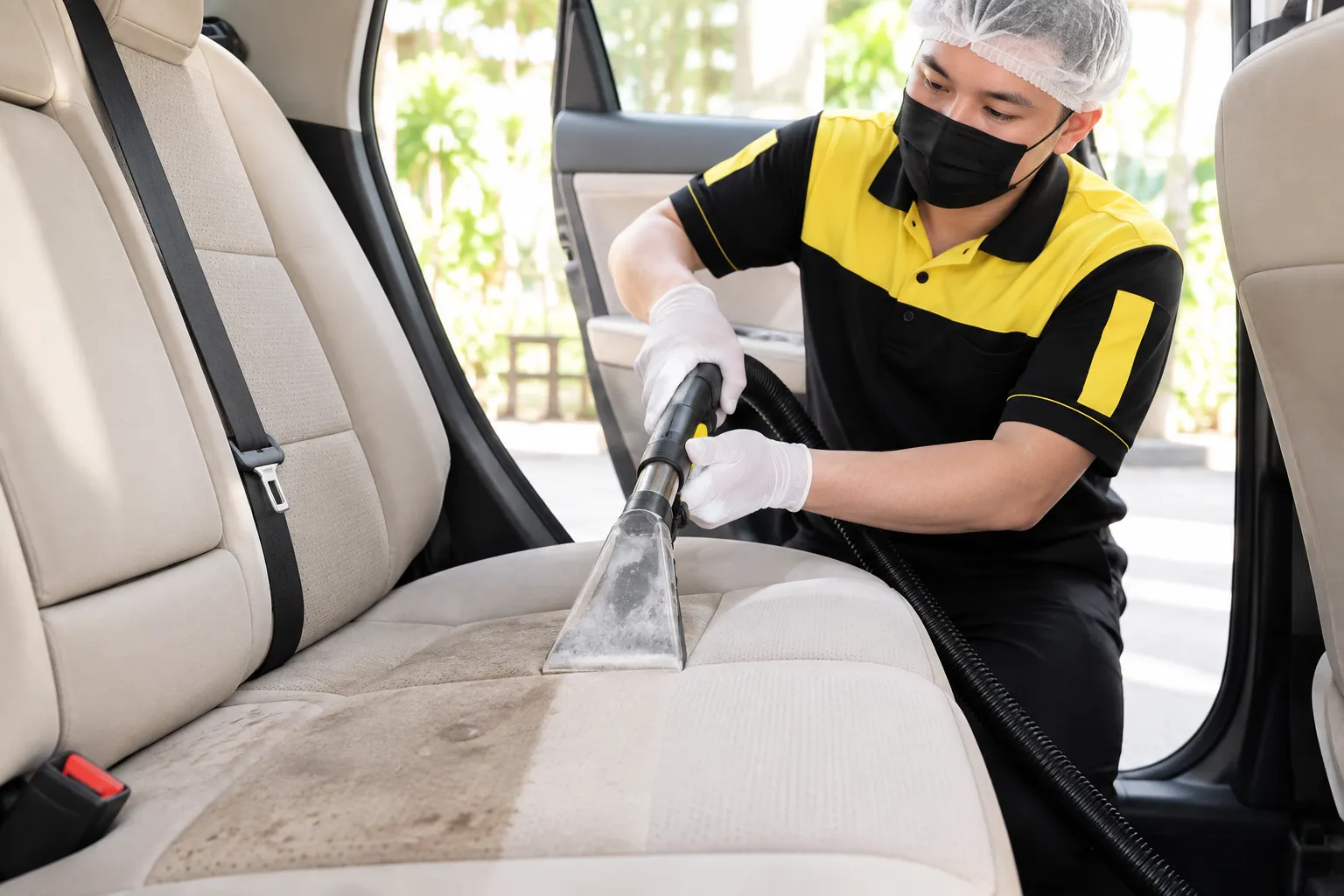
A common question we get on site is whether dull or yellow-ringed cream car seats need bleaching. In most cases, car seat cleaning should come first, because the marks are often built-up sweat, dust, coffee stains, or dye transfer from jeans in the fibres—not fabric colour that always needs bleaching.
Bleaching can leave the fabric uneven in shade or fade its original colour, especially when only one spot is treated and becomes whiter than the surrounding area. Technicians therefore need to assess the fabric type and stain location, then test an inconspicuous area before choosing a method.
Car seat bleaching changes colour—it does not remove stains.
Car seat cleaning uses products suited to the upholstery surface, then extracts the solution and dirt with a moisture extraction machine. Bleaching, on the other hand, uses agents that reduce the pigment in stains or fabric. This does not solve every type of stain and may leave colour differences more visible once the seat dries.
| Method | Best suited for | Risks to consider |
|---|---|---|
| Car seat cleaning | Rinses away stains and extracts moisture from the fabric surface. | Using too much water can make the foam underneath slow to dry and cause a musty smell. |
| Spot bleaching | Reduces the colour of certain stains after testing the fabric. | Uneven patches, faded colour, or more visible rings, especially on cream car seats. |
| Dyeing or colour repair | Fixes surfaces where the original colour has worn away or faded, rather than dirt stains. | The shade must be matched to the original seat colour, and this is a different service from cleaning. |
If a stain remains after wiping but the fabric has not become stiff or changed colour from within the material, there is often still a good chance of cleaning the fabric seat effectively. However, permanent fading caused by sunlight, unsuitable chemicals, or excessive scrubbing will not return to its original colour through cleaning.
Different stains on cream car seats require different treatment.
Fresh coffee stains should be blotted immediately with a white cloth. Do not rub in circles, as this pushes the stain deeper and can create a water ring. Old stains often leave a brown shadow, so they may need cleaning in stages rather than being rushed into becoming white in one treatment.
Yellow rings from sweat or moisture are often found on seat backs and seat edges. These stains need treatment for both the surface stain and any cleaning solution left in the fibres. With cat urine, the key issue is not just the mark but the odour, which may have penetrated the foam. Simply spraying a fragrance can allow the original smell to return in humid weather.
The fabric type determines when to stop.
Cotton and linen seats absorb water easily, so the amount of water must be controlled and the whole area blotted thoroughly. Otherwise, new water rings may appear. Velvet requires an especially gentle touch, because vigorous scrubbing against the pile can permanently flatten it and leave patches visible even after the stain is gone.
Genuine leather and PU leather should not be cleaned with the same spray-and-extract method used for fabric seats. Genuine leather can become dry, tight, or damaged, while peeling PU leather can show marks more clearly after exposure to harsh chemicals. Each material requires a wiping method and products specifically suited to it.
Basic DIY Fabric Car Seat Cleaning
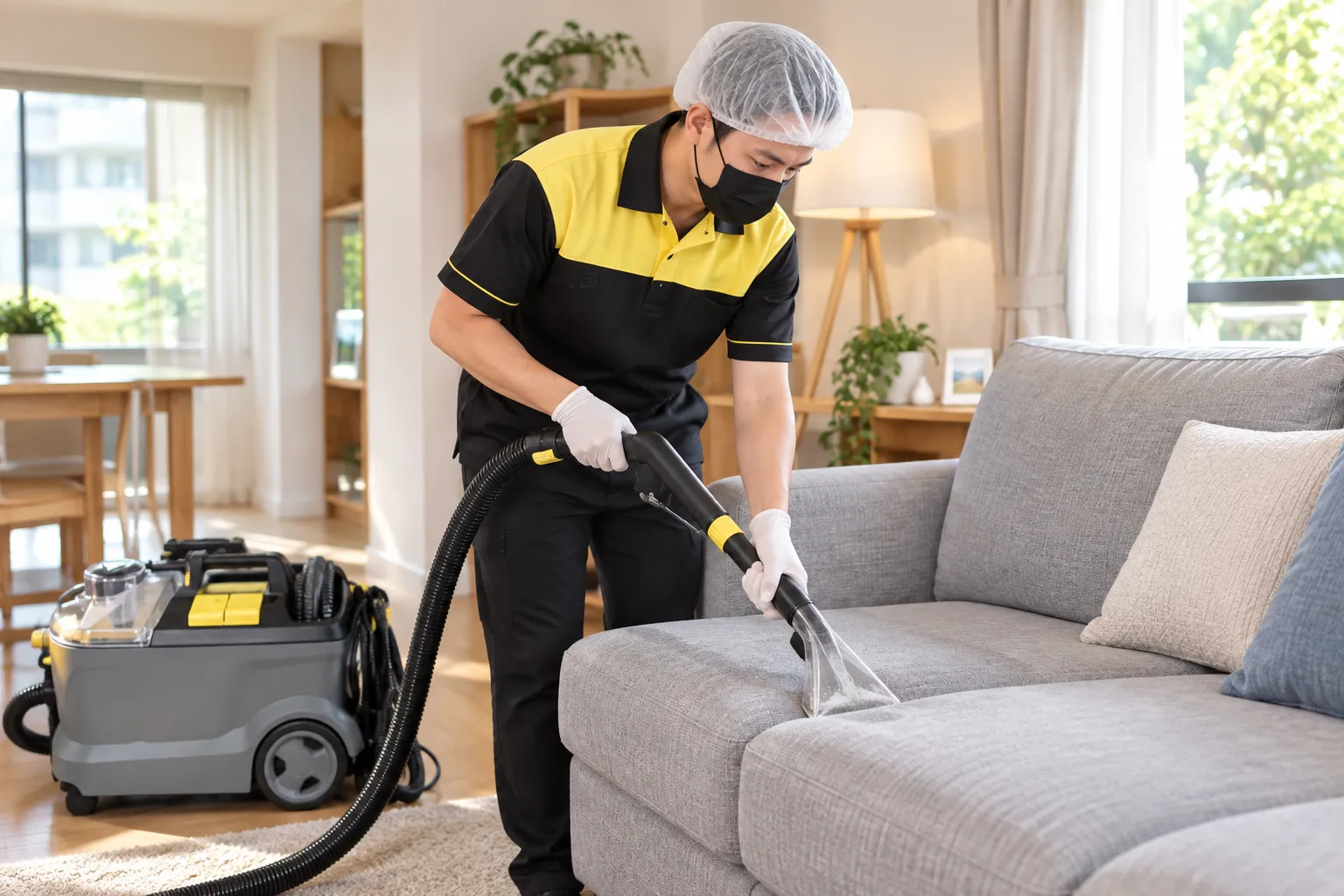
For small stains that have not set deeply, you can try cleaning them yourself first. Prepare a vacuum with a narrow nozzle, at least two white microfibre cloths, clean water, and a fabric upholstery cleaner with clear instructions. Do not use all-purpose stain removers or chlorine on car seats.
- Test the cleaner on a seam or hidden area beneath the seat, then check whether the fabric bleeds colour or develops spots.
- Vacuum up dust and sand first, so grit does not act like sandpaper while you wipe the stain.
- Blot coffee stains with a dry cloth first. For cat urine stains, use a cleaner for organic stains as directed on the label instead of masking the odour with fragranced spray.
- Apply a suitable amount of cleaner to the cloth or stained area, then leave it for 10-15 minutes as appropriate, without allowing the cleaner to dry on the seat.
- Blot away the cleaner with a damp, well-wrung cloth. Then blot with a dry cloth until the moisture is reduced, and keep the area ventilated until the seat is completely dry.
After blotting a stain, do not pour water onto the seat in hopes of cleaning it faster. Water can easily run into the seams and soak into the foam. A seat that feels dry on the surface may still be damp inside, causing a musty odour the following day.
How Long Does Car Seat Cleaning Take, and When Will It Dry?
The actual service time is not just the spraying and extraction stage. It also includes stain inspection, colour testing, vacuuming, spot treatment, and moisture extraction. Yellow sweat rings and old coffee stains often need the cleaning solution to work for around 10-15 minutes, so the job should not be rushed with heavy scrubbing.
Total service and drying time depend on the number of seats, the amount of moisture in the foam, fabric type, and on-site weather conditions. Cars with deeply absorbed cat urine stains also need more time for odour treatment than surface stains. Giving a fixed time based on a single photo is therefore not a reliable answer.
If you need to use the car the same day, tell the technician from the start so they can assess the work sequence and drying conditions based on actual use. While the seats are still damp, children and pets should not sit on them, and the car should not be left closed in a stuffy area, as damp odours can linger in the cabin.
What Should You Ask Before Hiring a Car Seat Cleaning Service?
Send photos of the full row of seats, close-up photos of the stains, and complete details on whether the material is fabric, genuine leather, or PU leather. This helps the technician determine whether the mark is a stain, dye transfer from clothing, or material deterioration. You should also ask where colour testing will be done, how moisture will be extracted, and whether you can inspect the results on site before the job is completed.
For heavy stains, do not accept a promise that everything will be removed without the technician seeing the seats in person, especially urine stains that have reached the foam or fabric previously exposed to chlorine. An honest assessment of how much each stain can be improved is more useful than advertising that bleaching makes every car look new.
Let Hurryclean Inspect Your Seats Before You Decide to Bleach Them
Hurryclean provides at-home service in Bangkok and surrounding provinces, using modern European-standard equipment and on-site result testing based on customer satisfaction. This is suitable for car seats that need a clear assessment of whether they have stains that should be cleaned or surface colour that requires a different type of repair.
If you are concerned about whether the service is reliable, Hurryclean’s review page shows a Google Review score of 5.0 from more than 1,700 reviews. Customers often praise the clean results, polite technicians, and clear explanations, but stains in every car should still always be assessed based on their actual condition.
Take photos of coffee stains, yellow rings, or areas you suspect may be cat urine stains. Include the material and when you need to use the car, then contact us via LINE @hurryclean. Our team will help assess the right car seat cleaning approach for your vehicle before booking.