
What determines the cost of furniture cleaning?
When customers send photos to ask about the cleaning estimatemany expect an immediate figure. However, at the actual site, materials that look similar may absorb water and respond to cleaning products differently. The technician therefore needs to check the size, surface type, stain condition and access to the area before defining the scope of work.
An assessment is not based on area alone. A cotton sofa with dried coffee stains may require a completely different approach from linen with water rings, or velvet whose pile has started to flatten. These details affect the cleaning method, helping prevent uneven colouring, fibre distortion or moisture remaining in the inner foam.
Factors technicians use when assessing the work before providing details
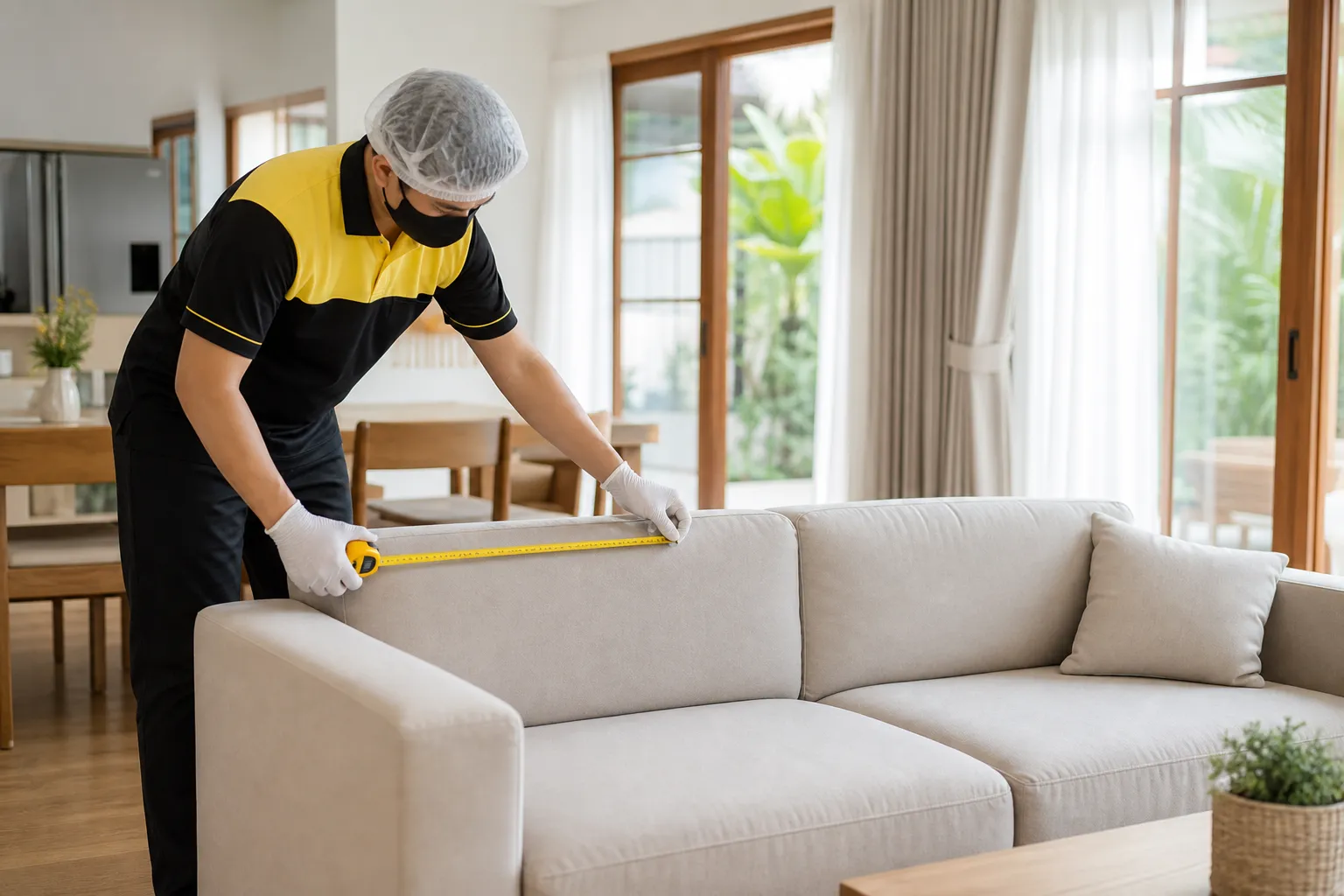
The first factors are size and quantity. The technician will look at the width, length, height, number of seats or surface area to be cleaned—not just whether it is called a sofa or a wall. A fabric-material wall measured in ตรม. and a piece with deep gaps, non-removable cushions or multiple sections require different procedures.
The material type determines suction strength, moisture levels and the choice of cleaning product. Cotton must be checked for colourfastness when wet. Linen may wrinkle or develop water rings, while velvet requires the pile direction to be preserved. Do not use a stiff brush or scrub aggressively in circles, as the pile may flatten permanently. Genuine leather and PU leather also require different care methods and should not be treated with the same products as fabric.
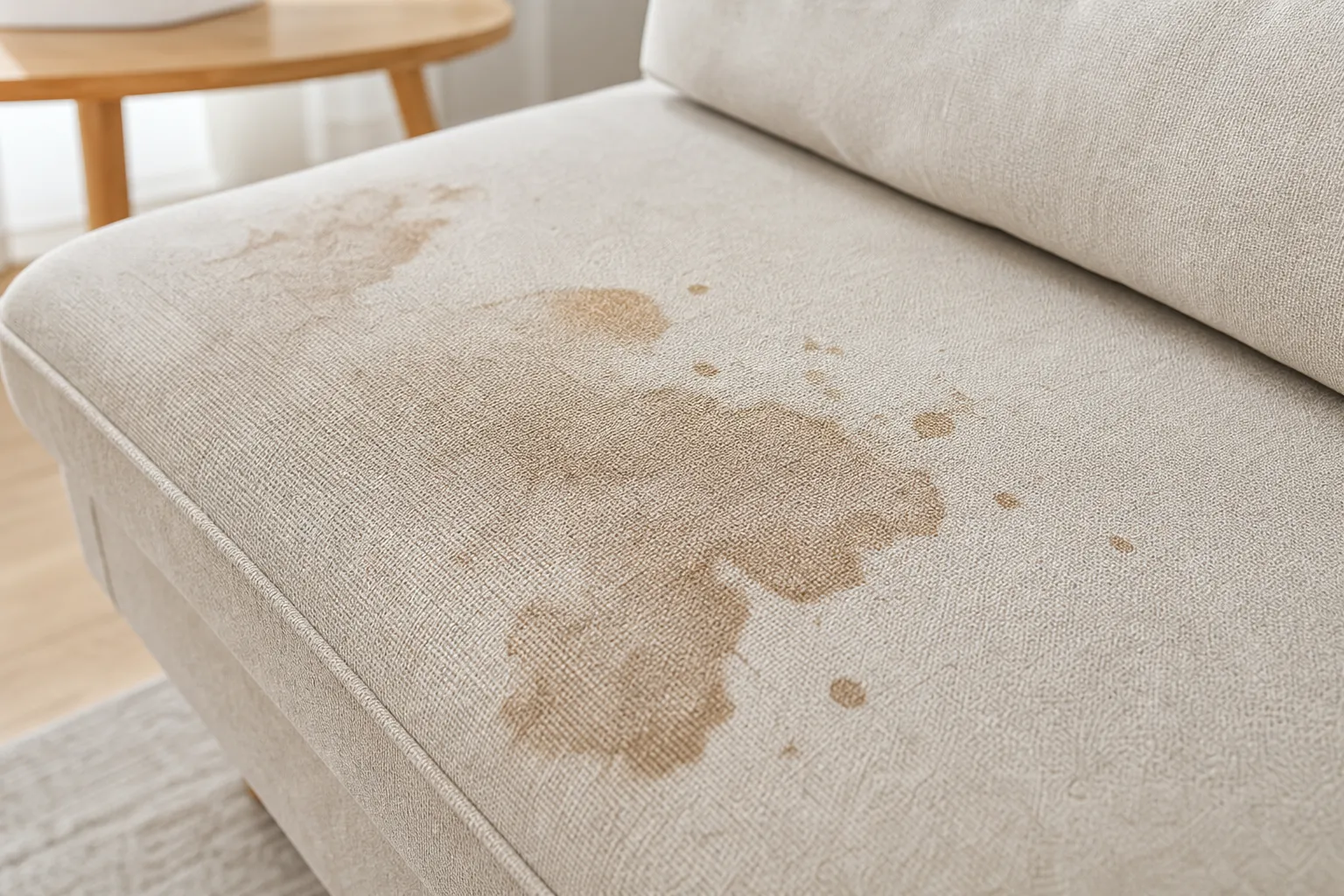
Stain condition also has a major impact. A freshly spilled coffee stain, a yellow-ringed sweat stain and cat urine that has soaked into the foam are not at the same level. If dishwashing liquid, laundry detergent or another spray has been used before, tell the technician, because residue may create excessive foam or make the cleaning-product test produce misleading results.
For fabric jobs where photos cannot show how the surface will react to cleaning products, the technician may apply a small amount to an inner seam or beneath the cushion edge and leave it for 10-15 minutes to check for colour bleeding, flattened pile or surface changes before expanding the treatment area. This is a spot test, not the total working time, and it should not be generalised to every material.
Site access is also important—for example, a narrow lift, several flights of stairs, parking far from the room or a workspace where the furniture cannot be moved. This information directly affects bringing equipment inside, arranging power cables and controlling moisture, so it may relate to travel fees or overtime charges in some cases.
Information to send the technician before requesting a cleaning estimate

Before requesting an estimate, preparing a few complete details will reduce follow-up questions and help the technician quickly distinguish standard work from special services. The information does not need to be lengthy, but it should be verifiable from the actual site.
- An overall photo of the piece and close-ups of the stains, showing the material, seams and stained areas
- Approximate dimensions, number of pieces, number of seats or wall area requiring cleaning
- The known material type, such as cotton, linen, velvet, genuine leather or PU leather
- The type and age of the stains, such as coffee, yellow-ringed sweat or cat urine, including any odour that remains
- Address, floor, building, lift, parking location and a convenient time for an assessment visit
If you are unsure what type of fabric it is, do not guess just to get an estimate faster. Instead, photograph the care label, model label or the underside of the cushion where the construction is visible. For leather, take close-up photos of the surface and any peeling or cracked edges, because genuine leather and PU leather respond differently to cleaning and conditioning.
How to take photos for a more accurate assessment
Photos used for an assessment should include both a wide shot showing the size and position in the room, and close-ups showing the actual stain texture. Take them in normal lighting without filters, and show the seams, cushion edges, beneath the seats or areas where the colour has changed. These locations can indicate whether the stain is on the surface or has penetrated deeply.
For coffee stains, photograph the ring around the stain and any area that has already been wiped. For yellow-ringed sweat stains, photograph the entire ring rather than cropping to only the darkest spot. For cat urine, tell the technician where the animal repeatedly urinated and where the odour is strongest, even if the stain is not visible, because the smell may be in the underlayer or foam rather than just on the fabric surface.
Measure the dimensions with a tape measure and send the width, length, height or approximate area. Also say whether the cushions can be removed or the components opened. This information clearly helps distinguish work measured in ตรม., such as a fabric-material wall, from special services or pieces requiring a specific spot assessment.
Which jobs should have an on-site assessment?
Special services are suitable for work whose scope cannot be identified from the name alone, such as mixed-material walls or other special materials measured in ตรม., or pieces containing several materials in one item. The technician must inspect the joins, water absorption and actual surface strength before choosing a method. Sending photos in advance helps with screening, but some cases still require an on-site inspection.
A fabric-material wall measured in ตรม. and a leather-material wall measured in ตรม. should not be treated as the same, even though both are walls. Fabric requires care with water penetration and uneven rings, while leather requires care to prevent the surface from drying out or its coating from being damaged. If it is a mixed material or other special material, send photos of the joins and state whether it is permanently installed or removable.
If you want ongoing care, furniture maintenance should also be mentioned from the start—whether it is after-cleaning care or work to address stains and odours. This allows the technician to assess the existing surface condition and the actual scope required, rather than combining different types of work in one request and causing misunderstandings.
If the work must be done outside normal hours, or the location is far away and has travel limitations, mention this together with the address. The service list has separate travel and overtime charges. Providing the information in advance allows the technician to check the conditions before scheduling, rather than changing the plan upon arrival.
What should you ask before confirming an estimate with Hurryclean?
For other service categories, the actual price list states a range of 100-100 baht. However, the actual price depends on the size/condition of the job, and some items are charged as an on-site assessment package. This figure should therefore be used as preliminary information, not as confirmation of the price for a piece whose details have not yet been seen.
Before confirming the job, ask clearly what inspections are covered by the estimate, whether travel or overtime charges apply under the site's conditions, and which special service or service category the photos you sent fall under in the work list. Asking these questions helps ensure that the scope is agreed before the technician travels.
Hurryclean accepts jobs in Bangkok and the surrounding provinces, with frequently serviced areas including Chatuchak, Watthana, Khlong Toei, Pathum Wan, Ratchathewi and Khan Na Yao. If you have a fabric-material wall, leather-material wall, mixed material or a piece whose material cannot be identified, send photos, dimensions, stain type and address via LINE @hurrycleanso the technician can advise what information to prepare or what type of on-site assessment is needed before the appointment.